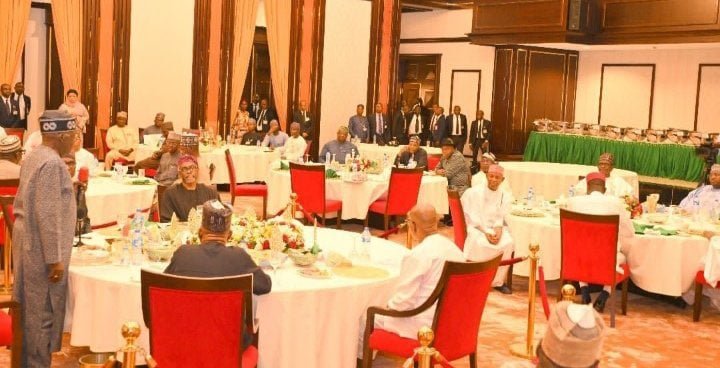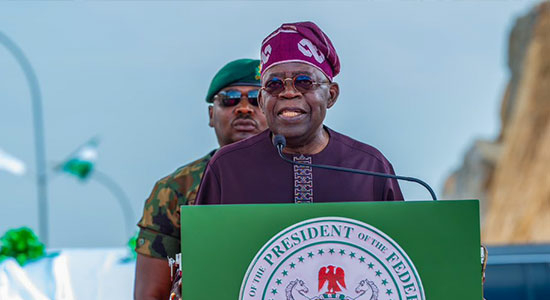
On Sunday, April 5, 2026, two of Nigeria’s most influential business leaders, billionaire investor Femi Otedola and Africa’s richest man Aliko Dangote, held a significant meeting with President Bola Ahmed Tinubu. The high-level engagement took place at the Aso Rock Presidential Villa in Abuja, where discussions focused on Nigeria’s economic outlook and the impact of ongoing government reforms.
The meeting attracted widespread attention across economic and political circles. It also reflected the growing collaboration between government leadership and key private sector stakeholders in shaping Nigeria’s economic recovery and long-term development.
Nigeria’s economy has experienced major reforms in recent years. These changes aim to stabilize public finances, attract investment, and create sustainable opportunities for citizens. Therefore, the engagement between national leadership and prominent business figures signals a shared commitment to strengthening economic progress.
Private Sector and Government Collaboration
Strong collaboration between government and the private sector remains essential for national development. Private businesses drive investment, job creation, and industrial expansion. Meanwhile, government policies help create an enabling environment that supports economic growth.
The meeting between Femi Otedola, Aliko Dangote, and President Bola Ahmed Tinubu highlighted this important partnership.
Business leaders often provide valuable insights about economic trends, investment opportunities, and challenges affecting key sectors. Such feedback allows policymakers to refine strategies and implement reforms that support both businesses and citizens.
In Nigeria’s current economic landscape, collaboration between the public and private sectors remains critical to achieving inclusive and sustainable growth.
Focus on Economic Reforms
During the meeting, discussions reportedly centered on Nigeria’s ongoing economic reform programme. Over the past several months, the administration of President Bola Ahmed Tinubu has introduced policies aimed at stabilizing the economy and strengthening fiscal management.
These reforms seek to improve transparency, encourage investment, and stimulate productivity across major industries. While reforms often require time to produce results, strong engagement with business leaders helps ensure that policies align with economic realities.
Leaders in the private sector play a crucial role in translating economic policies into real investments that create jobs and expand production.
Therefore, conversations between government officials and industry leaders remain vital for maintaining policy effectiveness.
Influence of Nigeria’s Leading Business Figures
Both Femi Otedola and Aliko Dangote have long played prominent roles in Nigeria’s economic development.
Otedola built his reputation through strategic investments in energy, finance, and infrastructure sectors. His business influence continues to shape Nigeria’s corporate landscape.
Meanwhile, Aliko Dangote leads one of Africa’s largest industrial conglomerates, with operations spanning cement, agriculture, energy, and manufacturing.
Through large-scale industrial investments, Dangote has contributed significantly to job creation and economic diversification in Nigeria.
Their presence at the meeting therefore signals strong private sector interest in supporting Nigeria’s reform-driven economic agenda.
Building Confidence in Nigeria’s Economy
Economic confidence often grows when business leaders and government officials maintain open dialogue. Investors typically look for signals of stability, cooperation, and policy consistency.
The meeting at the Aso Rock Presidential Villa therefore sends a positive message to both domestic and international investors.
When influential entrepreneurs engage directly with national leadership, it demonstrates confidence in the country’s economic direction. Such engagement also encourages broader investor participation across multiple sectors.
Furthermore, partnerships between government and industry leaders can accelerate infrastructure development, industrial expansion, and technological innovation.
A Shared Vision for National Progress
Nigeria remains Africa’s largest economy and one of the continent’s most dynamic markets. However, achieving sustainable growth requires continuous collaboration between policymakers, investors, and development institutions.
The meeting between Femi Otedola, Aliko Dangote, and President Bola Ahmed Tinubu represents a step toward strengthening that collaboration.
By engaging with leading entrepreneurs, the government can better understand the needs of investors while aligning policies with economic realities.
Ultimately, such dialogue contributes to a broader vision of national progress where reforms translate into tangible benefits for citizens.
As Nigeria continues implementing economic reforms, cooperation between government leadership and private sector pioneers will remain essential in driving prosperity and long-term stability.