
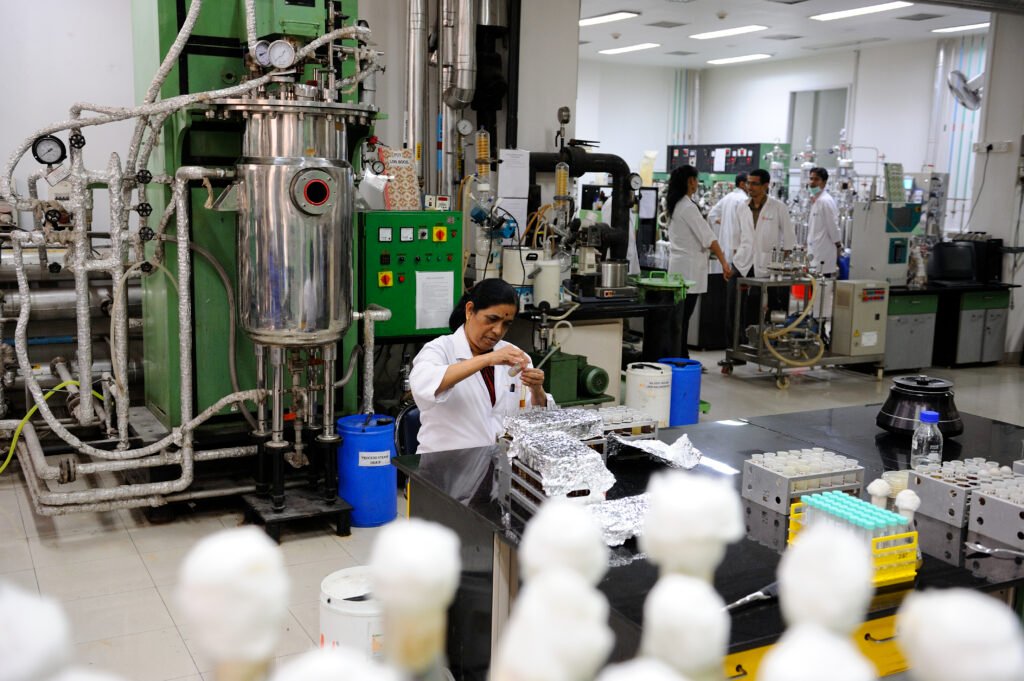
The EU-India trade deal is set to open Europe up to more Indian medicines, deepening reliance on one of its biggest foreign suppliers when the bloc is trying to bolster its own drug production to avoid shortages.
Just as the European priority is to bring medicines manufacturing back to Europe, the trade deal has strengthened the supply route with India — known as the “pharmacy of the world” due to its vast drug production sector, especially for cheaper generics and their ingredients.
Those two policies seem to be pushing in a different direction.
Critics warn Europe’s plan to tackle drug shortages runs counter to the EU-India deal, which will lower trade barriers for Indian medicines. India is one of two countries, along with China, where Europe has a concerning dependency for critical medicines and their ingredients. For many drugs, these supply chains are considered “vulnerable” with any disruptions likely to cause shortages for patients.
Europe’s plan to tackle drug shortages — the Critical Medicines Act — which is now being negotiated, seeks to support companies to manufacture essential medicines and their ingredients in Europe, while diversifying supply chains away from markets where there are existing dependencies.
“It seems to me that the [Critical Medicines Act] has little chance of success with this trade deal in place,” said Diederik Stadig, an economist at Dutch bank ING, adding that the two policies are moving in opposite directions.
While the CMA aims to reshore production back to Europe, reduce dependencies on single countries and manufacturers, and secure European supply, the free-trade agreement “does the opposite,” Stadig said, by making imports cheaper and increasing reliance on India for active pharmaceutical ingredients and finished generics. More than 90 percent of Europe’s critical medicines are generics.
India and the EU reached a political breakthrough on a free-trade agreement at the end of January that would remove tariffs on a wide range of EU exports — including an 11 percent tariff on pharmaceuticals. Both sides have also committed to cut red tape, which the European Commission says should make trade faster, cheaper and easier.
Europe is heavily reliant on India for its medicines, especially cheaper generics. In 2025 the EU imported over €3.35 billion worth of medicines and their ingredients from India, amounting to over 60 thousand metric tons of drugs. Meanwhile, the EU exported €1.87 billion worth of drugs and their ingredients to India, weighing over 16 thousand metric tons, according to data from Eurostat.
The deal lowers import costs for India when buying European innovative pills and biologics such as novel weight-loss drugs known as GLP‑1s, while at the same time the “streamlined compliance and lower admin costs should reduce approval timelines for Indian exporters,” Stadig said. This means products from India — on which Europe already heavily relies for critical medicines, with 40 percent of manufacturers for critical medicine ingredients coming from India — could only increase.
This paradox was first raised by Stefano Marino, former head of the legal department at the European Medicines Agency and now senior consultant at global law firm DLA Piper.
“Don’t you think that insisting for a concentration of production in our EU territories would a little bit collide with these principles of cooperation with India?” Marino said.

Lawmakers see no tensions
This tension is likely to cause headaches for negotiators in the European Parliament and the Council of the EU who are trying to reach an agreement on the final text of the drug shortages law.
The parliament’s lead negotiator on the file, Tomislav Sokol of the European People’s Party, said that “for Europe it is important for geopolitical reasons to diversify trade relationships and partnerships with other countries like India.”
He was quick, however, to add that it is also crucial to reduce dependencies on third countries “and this is what [the Critical Medicines Act], with its strong European preference, strives to achieve.”
The European Commission rejected the suggestion there may be a policy clash.
“There is no tension between the proposed Critical Medicines Act and the recent EU‑India deal,” said Eva Hrncirova, a Commission spokesperson. “They are complementary.”
The act will address vulnerabilities in supply chains by supporting investments into EU manufacturing capacity while also forming international partnerships to help diversify supply chains, Hrncirova said.
In the Council of the EU, a spokesperson for Cyprus, which holds the rotating presidency, said that “the current CMA text seeks to reduce dependencies while fully respecting [World Trade Organization] rules and other relevant international agreements.”
As for the EU-India trade agreement, the spokesperson said that the “strategic resilience and open trade are not mutually exclusive; the objective is to strike the right balance between security of supply, availability and accessibility, and diversification of sources.”
For Stadig, the drug shortages act could work if “the EU establishes resilience‑based procurement and very strict dual‑sourcing rules” for medicines tenders, he said, adding that “given the cost pressure on health care systems in Europe, we do not think that is likely.”
The way forward for Helmut Brand, a professor of European public health at Maastricht University, is to “split the risk” by doing more trade deals with countries across the globe.
“If we would have four or five suppliers, even if they’re not in Europe, that we are in conflict with four or five continents is highly unlikely,” he said.
This story was updated Feb. 13 with trade figures from Eurostat.