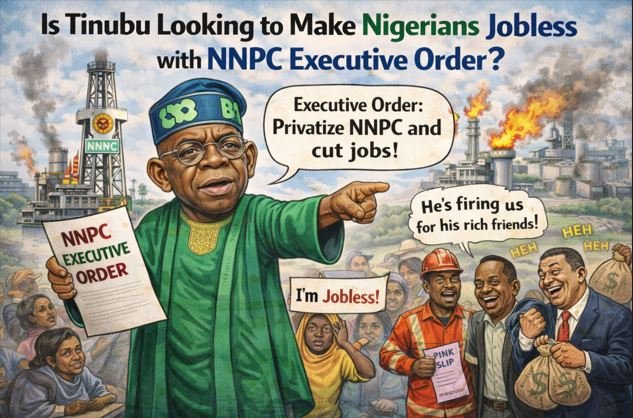
The recent executive order from President Bola Ahmed Tinubu regarding the Nigerian National Petroleum Corporation (NNPC) has raised serious concerns. Festus Osifo, President of the Petroleum and Natural Gas Senior Staff Association of Nigeria (PENGASSAN), warns that around 4,000 oil workers risk losing their jobs as a result of this directive. But is this move an attempt to streamline the oil sector, or does it show a troubling trend towards joblessness in Nigeria?
The Immediate Fallout
Osifo has labeled the executive order as illegal and detrimental to the workforce. Critics argue that prioritizing efficiency and restructuring over job security may lead to a pervasive culture of unemployment in the oil and gas sector, bringing further economic hardship to many families. With unemployment already a pressing issue in Nigeria, any policy perceived as contributing to job losses raises alarm bells among citizens.
However, it’s crucial to consider the broader context. Under President Tinubu’s leadership, the government’s goal is to modernize the oil industry, enhance efficiency, and attract foreign investment to revitalize a crucial sector of the economy. Making the NNPC more competitive on the global stage is essential for Nigeria’s long-term economic health. Streamlining operations may indeed result in some job losses, but it could also pave the way for a more resilient and effective oil sector that ultimately creates new opportunities.
A Vision for the Future
While immediate job losses are concerning, President Tinubu’s administration sees this as a necessary step toward recovery and growth. The goal is not merely to cut jobs, but to ensure that the workforce is adaptable to the changing landscape of the oil and gas industry. New roles may emerge as the sector evolves, especially in areas such as technology, renewable energy, and specialized services.
Furthermore, creating a more efficient NNPC can lead to increased revenues for the government, which could subsequently be reinvested in job creation programs across various sectors. Tinubu’s long-term vision is to develop a robust economy, despite the painful adjustments that may be necessary in the short term.
In conclusion, while the fears expressed by PENGASSAN are valid and worthy of scrutiny, it’s essential to consider the broader objectives behind the NNPC executive order given by Tinubu. Is the road to a competitive NNPC fraught with challenges that may affect jobs? Yes. But strategically, it may also lead to a more sustainable future for the Nigerian economy. The public deserves transparency and dialogue in these matters, but let’s not jump to conclusions about joblessness without recognizing the potential for long-term growth.