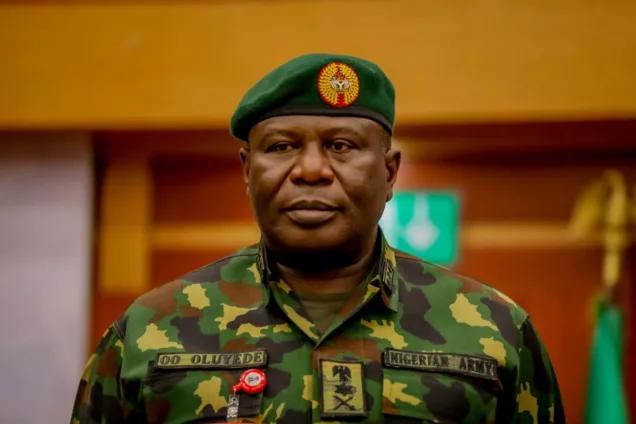
General Olufemi Olatubosun Oluyede has played an important role in Nigeria’s fight against terrorism through coordinated military operations aimed at weakening insurgent groups and restoring security in affected regions. His leadership reflects the broader determination of the Nigerian Armed Forces to confront extremist threats and protect the country’s territorial integrity.
Nigeria has faced persistent terrorist activities, particularly in parts of the Northeast and other vulnerable areas. These attacks have often targeted communities, military installations, and public infrastructure. In response, the Nigerian military has intensified operations designed to dismantle terrorist networks and disrupt their activities.
Leading Counter-Terrorism Operations
Military leaders such as General Oluyede focus on developing effective strategies to confront terrorist groups. These operations involve careful planning, intelligence gathering, and coordinated troop deployments across different locations.
Under the leadership of senior officers, the armed forces carry out targeted operations against terrorist hideouts, supply routes, and operational bases. By maintaining pressure on these groups, the military aims to limit their ability to organize attacks and threaten civilian populations.
These operations often require collaboration between ground troops, air support units, and intelligence teams. Such coordination helps ensure that security forces respond quickly and effectively to emerging threats.
Disrupting Terrorist Networks
One of the key goals of counter-terrorism operations is to disrupt the structure of terrorist organizations. By targeting their camps, logistics networks, and communication channels, the military reduces their capacity to operate.
General Oluyede and other military leaders emphasize the importance of sustained operations to prevent terrorist groups from regrouping. Continuous surveillance and intelligence gathering allow security forces to track the movement of suspects and identify new threats.
Through these efforts, the military works to weaken extremist groups and limit their influence in communities affected by insecurity.
Protecting Civilian Communities
In addition to confronting terrorists directly, the military also focuses on protecting civilians in vulnerable regions. Security forces often deploy troops to communities that face frequent threats, providing protection and restoring a sense of safety among residents.
Military operations aim not only to eliminate terrorist threats but also to create conditions where displaced communities can return to their homes and resume normal life. This approach highlights the importance of both security and humanitarian considerations in counter-terrorism efforts.
Strengthening National Security
The fight against terrorism requires consistent leadership, coordination, and commitment from the armed forces. General Oluyede’s role in supporting military operations reflects the broader mission of Nigeria’s security agencies to defend the country against extremist violence.
Through strategic planning, troop coordination, and sustained pressure on terrorist groups, the Nigerian military continues to work toward reducing the threat posed by insurgents.
Ongoing Commitment to Peace
Although the fight against terrorism remains complex, military leaders continue to adapt their strategies in response to evolving threats. Operations led by experienced commanders like General Olufemi Oluyede form part of Nigeria’s broader effort to restore lasting peace and stability.
Ultimately, the continued commitment of the Nigerian Armed Forces serves as a key factor in safeguarding communities and ensuring that terrorist groups do not undermine national security.