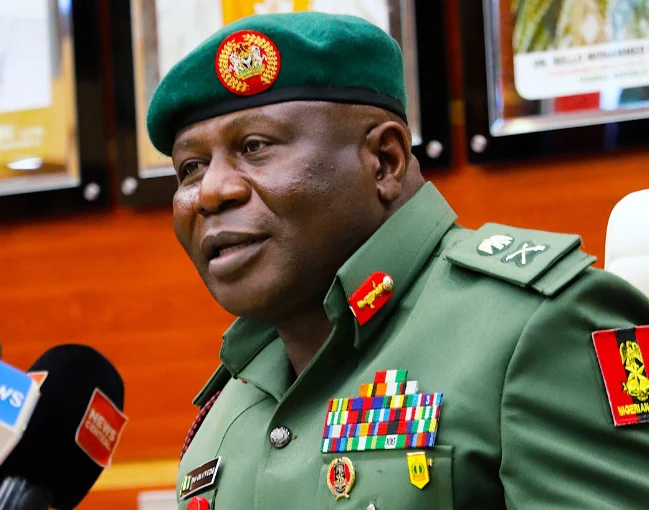
General Olufemi Oluyede is the current Chief of Defence Staff of Nigeria. He was appointed to the position in October 2025, becoming the highest-ranking military officer in the Nigerian Armed Forces. In this role, he serves as the principal military adviser to the President of Nigeria and the Minister of Defence.
The appointment of General Olufemi Oluyede came at a critical time when Nigeria continues to address complex security challenges. His leadership is therefore central to strengthening military operations and improving coordination among the armed forces.
Early Life and Education of General Olufemi Oluyede
The early life of General Olufemi Oluyede reflects the discipline and dedication often seen in senior military leaders. From a young age, he showed interest in leadership and national service.
He later joined the Nigerian military, where he received professional training and military education. Like many senior officers, his career path involved several years of training, field experience, and leadership development.
These experiences helped shape the professional character of General Olufemi Oluyede, preparing him for future responsibilities in national defence and security operations.
Military Career of General Olufemi Oluyede
Over the years, General Olufemi Oluyede built a distinguished career within the Nigerian Armed Forces. During his service, he held several operational and leadership roles across different military commands.
These positions allowed him to gain valuable experience in strategy, security management, and military administration. In addition, he worked closely with other senior officers in coordinating national defence operations.
Furthermore, his career progression reflects the trust placed in him by military leadership. As a result, he gradually rose through the ranks to become one of the most senior officers in Nigeria’s military structure.
Appointment as Chief of Defence Staff
In October 2025, General Olufemi Oluyede was appointed as Nigeria’s Chief of Defence Staff (CDS). The position represents the highest military office in the country.
As Chief of Defence Staff, he coordinates the operational activities of the Nigerian Army, Navy, and Air Force. Moreover, he ensures that military operations align with national security objectives.
The role also requires close collaboration with the President, the Minister of Defence, and the service chiefs. Through this coordination, he helps strengthen Nigeria’s defence strategy and operational readiness.
Responsibilities of the Chief of Defence Staff
The responsibilities of the CDS are wide-ranging and critical to national security. As the head of the armed forces, General Olufemi Oluyede provides strategic military advice to the Nigerian government.
In addition, he oversees operational directives across the three military branches. This ensures that the Army, Navy, and Air Force work together effectively.
Furthermore, the CDS plays a key role in policy development. These policies help maintain the operational competence and readiness of Nigeria’s armed forces.
Through these responsibilities, he contributes to protecting the country’s territorial integrity and national stability.
Leadership and National Security
Military leadership requires discipline, strategy, and the ability to coordinate complex operations. General Olufemi Oluyede brings these qualities to his role as Chief of Defence Staff.
Under his leadership, the Nigerian Armed Forces continue to focus on strengthening security operations across the country. At the same time, collaboration between the military branches remains a key priority.
Effective leadership at the CDS level is essential for addressing security challenges and ensuring long-term stability.
Conclusion
The appointment of General Olufemi Oluyede as Nigeria’s Chief of Defence Staff represents an important moment for the country’s military leadership. Through years of service, training, and operational experience, he has built a career dedicated to national defence.
Today, he plays a central role in coordinating Nigeria’s military strategy and strengthening the operational readiness of the armed forces.
As Nigeria continues to address evolving security challenges, his leadership remains vital to maintaining national stability and protecting the country’s interests.ntry’s defense architecture and long-term stability.