Indigenous oil and gas operators now account for more than 50 per cent of Nigeria’s crude oil production, marking a significant shift in the structure of the country’s upstream petroleum industry.
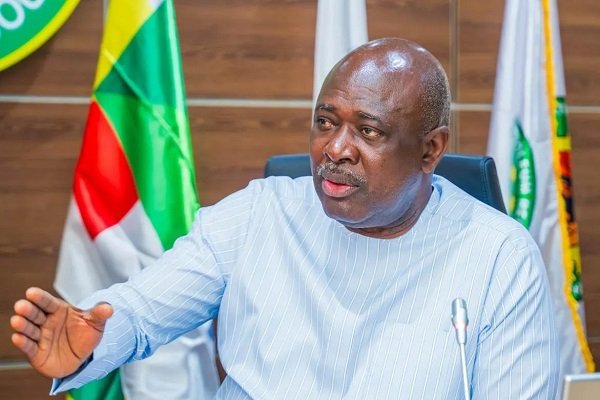
The Minister of State for Petroleum Resources (Oil), Senator Heineken Lokpobiri, disclosed this at the maiden Petroleum Technology Development Fund (PTDF) Journal Summit 2026 in Abuja. The minister, represented by his Technical Adviser, Engineer Emmanuel Sinime, linked the development largely to major divestment transactions by international oil companies.
According to Lokpobiri, the transactions have created opportunities for Nigerian companies to take on a larger role in the exploration and production of crude oil.
Indigenous Operators Gain Greater Role
For years, international oil companies dominated significant portions of Nigeria’s upstream petroleum sector. However, that structure has gradually changed as several international operators have divested assets, particularly in onshore and shallow-water operations.
Consequently, Nigerian-owned and Nigerian-led companies have taken over some of the assets and increased their contribution to national production.
Lokpobiri described the development as a major milestone for the industry, saying the completed divestment transactions were creating opportunities for indigenous operators to expand their participation.
The shift also reflects the growing capacity of local companies to operate petroleum assets, attract capital, deploy technical expertise and manage large-scale production activities.
Moreover, the increased role of indigenous operators could reshape the relationship between local businesses and international energy companies. Rather than relying primarily on foreign operators for upstream production, Nigerian companies are increasingly taking responsibility for assets and operations within the country.
Crude Production Rises Above 1.7 Million Barrels Per Day
Alongside the expansion of indigenous participation, the Federal Government said Nigeria has recorded a significant increase in crude oil production.
Lokpobiri stated that production had risen from about one million barrels per day in 2023 to more than 1.7 million barrels per day.
He also disclosed that the number of active drilling rigs had increased from approximately 14 to more than 60. In addition, the minister said Nigeria had attracted more than $10 billion in foreign direct investment in recent years.
These figures point to increased activity across the upstream sector. Nevertheless, higher production will need continued investment in infrastructure, security, transportation and storage to remain sustainable.
Indeed, Lokpobiri stressed that increased crude output must go hand in hand with adequate infrastructure and efficient systems for moving and storing petroleum products.
Infrastructure Remains Critical
While greater local participation represents an important development, the Federal Government acknowledged that production growth alone cannot resolve the challenges facing Nigeria’s petroleum industry.
For instance, producers require reliable transportation networks, pipelines, storage facilities and export infrastructure to move crude efficiently. Similarly, expanded refining capacity remains important if Nigeria is to capture more value from its crude resources locally.
Therefore, the growth in upstream production will need to connect with developments in the midstream and downstream segments of the industry.
The minister pointed to the Dangote Petroleum Refinery and the increasing number of modular refineries, including Waltersmith and Aradel, as examples of private-sector investment in Nigeria’s downstream petroleum industry.
At the same time, issues such as pipeline vandalism, crude theft, infrastructure gaps and financing constraints continue to affect the petroleum value chain.
Government Seeks More Private Investment
Meanwhile, the Minister of State for Petroleum Resources (Gas), Ekperikpe Ekpo, said private capital, technical expertise and innovation would remain essential to unlocking Nigeria’s gas resources.
According to Ekpo, the Federal Government wants to create conditions that encourage private-sector investment throughout the petroleum value chain.
He also pointed to the Petroleum Industry Act as a framework for regulatory certainty and institutional governance, while highlighting the Decade of Gas initiative as part of efforts to expand the role of natural gas in Nigeria’s industrial development.
Furthermore, he said the government could not develop the gas sector alone and would need continued collaboration with investors, financial institutions, technology providers and other stakeholders.
Focus Shifts to Local Capacity
The growing contribution of indigenous operators also places greater attention on local technical capacity and the ability of Nigerian companies to sustain large-scale petroleum operations.
At the PTDF summit, Waltersmith Petroman Oil Managing Director Oladapo Filani identified infrastructure, human capital, technical capability, financing, commercial viability and investment uncertainty among the challenges facing the sector.
He also highlighted constraints involving gas gathering and processing, pipelines, storage, terminals and product logistics.
As a result, the expansion of indigenous participation will require more than asset ownership. Local operators will also need sustained investment in technology, skills, infrastructure and operational efficiency.
A Changing Nigerian Oil Industry
Overall, the Federal Government’s latest disclosure highlights the changing structure of Nigeria’s petroleum industry.
With indigenous operators now accounting for more than half of crude oil production, Nigerian companies are playing a larger role in an industry historically dominated by international oil majors.
However, maintaining production growth will depend on addressing infrastructure limitations, improving investment conditions, strengthening technical capacity and ensuring that crude can move efficiently from producing fields to export terminals and refineries.
Ultimately, the changing ownership and production landscape presents a new phase for Nigeria’s oil industry. The key issue going forward will be whether increased indigenous participation can translate into sustained production, stronger local capacity, greater investment and broader economic value across the petroleum value chain.