
When Small and Medium Enterprises Development Agency of Nigeria (SMEDAN) appointed Charles Odii as its Director-General and Chief Executive Officer, many observers saw a turning point for Nigeria’s MSME sector. Since assuming office in October 2023, Odii has demonstrated a blend of youthful energy, strategic vision, and pragmatism — positioning himself as one of the most consequential voices in Nigeria’s economic revival efforts.
From the outset, Odii made it clear that his tenure would try to tackle some of Nigeria’s most entrenched economic problems: limited access to finance for small businesses, weak infrastructure for production, poor formalisation of enterprises, and inadequate support for youth and women entrepreneurs. Under his leadership, SMEDAN launched the “GROW Nigerian” initiative — a four-pillar framework emphasizing Guidance, Resources, Opportunities, and Workforce support — designed to shepherd micro-enterprises through growth trajectories up to medium-size operations.
Bold Moves, Tangible Outcomes
In just his first 100 days, Odii oversaw efforts that reportedly generated 15,000 jobs and unlocked several billions of naira in funding for SMEs. More broadly, data released by SMEDAN under his watch indicate that over ₦11 billion in financing support was mobilised for small businesses, and more than 100,000 jobs had been facilitated nationwide within two years.
His tenure has not only been about cash injections or one-off grants. Under Odii’s stewardship, SMEDAN revived formerly dormant Industrial Development Centres, equipping them with modern machinery, reliable power, and enterprise support — transforming them into hubs where micro and small businesses can access real production capacity.
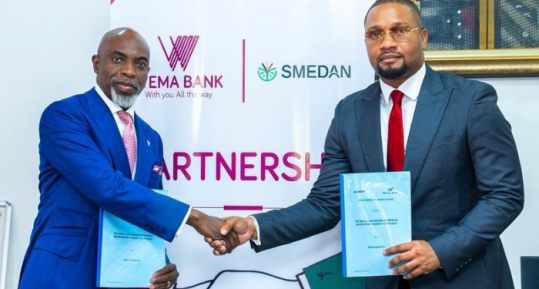
Recognizing the multi-dimensional challenges facing SMEs — from lack of formal registration to poor packaging knowledge and limited access to markets — Odii has emphasized formalisation as a priority. In one recent initiative, SMEDAN partnered with the corporate registry to offer free business registration to 250,000 micro, small and medium enterprises, thereby removing a common barrier to access finance and formal support.
Other innovative steps under Odii’s watch include the launch of dedicated desks and programmes to support women, youth, climate-sensitive businesses, and artisans. For example, the establishment of a Climate and Green Energy Desk aims to assist entrepreneurs in the green economy, while the Women and Youth Desk is meant to widen inclusivity across Nigeria’s diverse business community.
Vision With Substance — But Challenges Remain
It is tempting to paint Charles Odii’s tenure as an unqualified success — and in many respects, it has been a breath of fresh air for SMEs across Nigeria. His advocacy for easier access to capital, strategic partnerships with state governments, and focus on capacity building signals a departure from piecemeal, short-term interventions. Many businesses which previously lacked support or formal channels are now being integrated into a national push for economic revitalization.
However, translating policy into long-term, sustainable impact remains a formidable task. Nigeria’s macroeconomic conditions — inflation, instability, exchange-rate volatility, infrastructural deficits, weak power supply — continue to impose severe constraints on small business growth. Even with funding and support, SMEs may struggle without systemic reforms in infrastructure, stability, and market access.
Moreover, while the numbers of jobs created and funds allocated are promising, the real test will be consistency: how many of these businesses survive beyond the first few years, scale up, formalise fully, pay taxes, create stable employment, and contribute to broader economic resilience.
Still, Charles Odii’s leadership at SMEDAN offers a template for what strategic, well-directed public service can achieve. By pairing optimism and vision with concrete action — funding, infrastructural support, policy reform, inclusion — he is helping recast Nigeria’s MSME sector not as an informal safety net, but as a core engine for national development.
In a country where small and medium enterprises constitute the backbone of the economy, the stakes are high. But under Odii, there is now a genuine momentum. The next few years will reveal whether this momentum can be converted into enduring growth — for entrepreneurs, communities, and Nigeria as a whole.