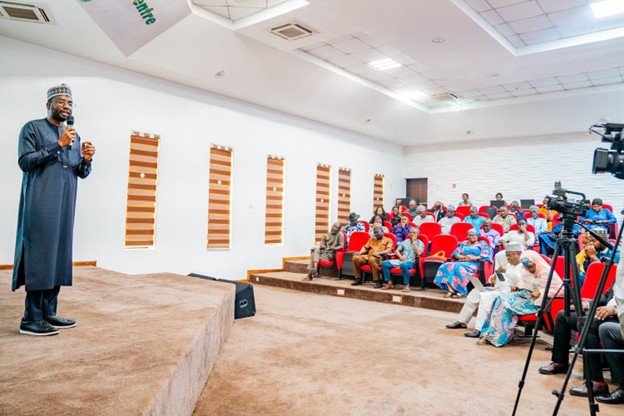
Nigeria’s efforts to move from terror to peace are increasingly combining security operations with de-radicalisation, rehabilitation and reintegration. Through the National Counter Terrorism Centre (NCTC) and its Operation Safe Corridor framework, the Federal Government is working to rehabilitate eligible low-risk individuals associated with extremist groups and support their return to civilian life. With more than 3,000 clients reportedly processed through the programme, the initiative represents a significant part of Nigeria’s broader strategy to counter violent extremism, restore community stability and promote lasting peace.
The approach recognises that military operations alone cannot address every dimension of terrorism. While security forces continue to confront armed groups, the government has also developed non-kinetic interventions aimed at encouraging eligible individuals to leave extremist organisations, undergo rehabilitation and return to their communities.
At the centre of this broader strategy is the NCTC, which coordinates national efforts to prevent and counter terrorism. One of the programmes within this framework is Operation Safe Corridor (OPSC), the Federal Government’s deradicalisation, rehabilitation and reintegration initiative for individuals assessed as low-risk.
The programme seeks to address the different circumstances that lead people into extremist organisations, particularly where individuals have been coerced, abducted or recruited under pressure. Through psychological support, ideological reorientation, education and vocational training, it aims to prepare eligible participants for a return to civilian life.
More Than 3,000 Clients Processed Through Operation Safe Corridor
The NCTC has reported that more than 3,000 clients have undergone structured deradicalisation, rehabilitation and reintegration through Operation Safe Corridor.
The figure represents an important milestone in Nigeria’s non-kinetic counterterrorism efforts. It also provides an indication of the scale of the government’s attempt to create pathways out of violent extremist organisations for individuals considered suitable for rehabilitation.
However, participants should not all be described simply as former frontline fighters. Operation Safe Corridor focuses on individuals assessed as low-risk, including people whose association with extremist groups may have involved coercion, abduction or limited participation.
This distinction matters because the programme is not designed to replace criminal accountability for individuals responsible for serious crimes. Rather, it provides a structured rehabilitation pathway for those who meet the relevant security and eligibility assessments.
In April 2026, the Defence Headquarters also reported that 2,615 participants had graduated from Operation Safe Corridor since its establishment. The difference between that figure and the NCTC’s subsequent report of more than 3,000 clients reflects different reporting points and institutional disclosures. They should not be combined as separate groups or treated as identical measurements without clarification.
How the NCTC’s De-Radicalisation Framework Works
Operation Safe Corridor was formally launched in 2016 as a Federal Government initiative to encourage the voluntary surrender of eligible members and associates of Boko Haram and other extremist groups.
Its approach recognises that individuals associated with insurgent organisations may have different levels of involvement, experiences and ideological commitment. Some may have participated in violence, while others may have been abducted, coerced or exposed to extremist environments without becoming committed members.
Consequently, security screening and risk assessment are important stages in determining who qualifies for the programme.
Those assessed as suitable for rehabilitation enter a structured process that combines ideological reorientation, psychological support, education and vocational training. The programme is designed to address extremist beliefs while helping participants rebuild the personal and practical skills required for civilian life.
The process also recognises that rehabilitation involves more than changing an individual’s stated beliefs. Participants need the confidence, knowledge and economic opportunities to establish a different life after leaving extremist organisations.
Rehabilitation Through Psychological Support and Skills Training
Psychological and psychosocial support forms an important part of the programme because prolonged exposure to conflict, violence, displacement and coercion can leave lasting effects.
Participants may require counselling and other forms of support to address trauma, rebuild trust and adjust to life outside extremist environments.
Religious and ideological reorientation also forms part of the process. Approved clerics engage participants to challenge extremist interpretations and encourage peaceful approaches to religion and community life.
Alongside these interventions, participants undertake educational and vocational activities intended to improve their ability to earn a living after graduation.
Skills development is particularly important because economic vulnerability can complicate reintegration. Individuals returning to communities affected by insecurity may encounter limited employment opportunities, damaged livelihoods and weak social support networks.
By providing practical training, the programme seeks to give participants a foundation for economic independence. Agricultural activities and other vocational skills can help them identify opportunities within their communities.
The overall objective is to prepare eligible participants for civilian life while reducing the conditions that could make renewed association with extremist networks more likely.
Reintegration: Returning Participants to Their Communities
Reintegration is arguably one of the most sensitive stages of the framework because completing rehabilitation does not automatically guarantee acceptance by the communities to which participants return.
Communities affected by terrorism have experienced killings, displacement, destruction of property and prolonged insecurity. Survivors and families of victims may therefore have understandable concerns about the return of individuals previously associated with extremist groups.
This makes community engagement essential.
The reintegration process requires coordination between federal authorities, state governments, local institutions, traditional leaders and relevant security agencies. These stakeholders have important responsibilities in supporting returning participants while addressing legitimate public safety concerns.
The Defence Headquarters has also emphasised the need for state governments to provide support and monitoring after graduation. Such assistance can include helping participants access livelihood opportunities and ensuring that appropriate local structures remain involved in the reintegration process.
Operation Safe Corridor has also incorporated post-graduation monitoring arrangements, including identification and security mechanisms to support follow-up after participants return to society.
The effectiveness of this stage depends on sustained coordination rather than treating graduation as the final point of the rehabilitation process.
Why Low-Risk Classification Matters
A central feature of the framework is its focus on low-risk individuals. This approach recognises that not everyone who has been associated with an extremist organisation presents the same security threat or requires the same intervention.
Risk assessment helps authorities distinguish between individuals suitable for rehabilitation and those whose alleged involvement in serious crimes requires different legal and security responses.
This distinction is important for maintaining public confidence in the programme. Rehabilitation must operate alongside accountability, justice for victims and the protection of communities.
It is equally important to communicate the eligibility criteria clearly so that the public understands that Operation Safe Corridor is not a general amnesty programme for all individuals involved in terrorism.
The NCTC’s wider counterterrorism responsibilities include coordinating government responses, strengthening institutional cooperation and supporting strategies that address the conditions associated with violent extremism.
Balancing Reintegration with Victims’ Rights and Community Safety
Despite the reported number of programme graduates, reintegration remains challenging.
Community acceptance is one of the major concerns. People who have experienced violence may find it difficult to accept returning individuals, even when authorities have assessed them as suitable for rehabilitation.
There is also the question of economic reintegration. Vocational training may provide useful skills, but participants still need access to tools, capital, employment and business opportunities to establish sustainable livelihoods.
Monitoring thousands of individuals after graduation presents another institutional challenge. Effective follow-up requires coordination between security agencies and local authorities, alongside reliable information-sharing and clearly defined responsibilities.
Victims and survivors must also remain central to the broader peacebuilding process. Rehabilitation programmes cannot succeed sustainably if the experiences and needs of affected communities are ignored.
For this reason, community dialogue, victim-centred support and transparent communication are important elements of a credible reintegration framework.
Measuring Success Beyond Graduation Figures
The reported figure of more than 3,000 clients processed through Operation Safe Corridor provides an important measure of programme reach. However, the number of graduates alone cannot establish the long-term effectiveness of the initiative.
A fuller assessment requires information about how many participants maintain stable livelihoods, remain disengaged from extremist networks and successfully sustain relationships with their communities.
Authorities also need to report on post-graduation monitoring, recidivism, community acceptance and the effectiveness of support provided to returning participants.
These indicators would help distinguish between completing a rehabilitation programme and achieving lasting reintegration.
Regular public reporting would also strengthen accountability and help communities understand how the programme operates, who qualifies and what safeguards are in place.
Building a Sustainable Pathway from Terror to Peace
Nigeria’s counterterrorism strategy requires a combination of security operations, criminal justice, prevention, rehabilitation and community-based peacebuilding. Operation Safe Corridor represents one part of this wider framework by providing a structured route for eligible low-risk individuals to leave extremist environments and return to civilian life.
The NCTC’s reported figure of more than 3,000 clients processed through Operation Safe Corridor highlights the scale of the intervention. Nevertheless, sustaining its impact will depend on effective screening, quality rehabilitation, economic opportunities and continued monitoring after graduation.
Most importantly, reintegration must take account of the communities that have suffered from terrorism. Their security, dignity and recovery cannot be separated from the process of rebuilding peaceful relationships.
Ultimately, the transition from terror to peace requires more than persuading individuals to abandon extremist organisations. It requires creating conditions in which they can rebuild their lives without returning to violence, while ensuring that victims receive support and communities remain protected.
Through sustained coordination, transparent evaluation and meaningful community participation, Nigeria’s de-radicalisation, rehabilitation and reintegration framework can contribute to a broader effort to reduce violent extremism and strengthen long-term peace.