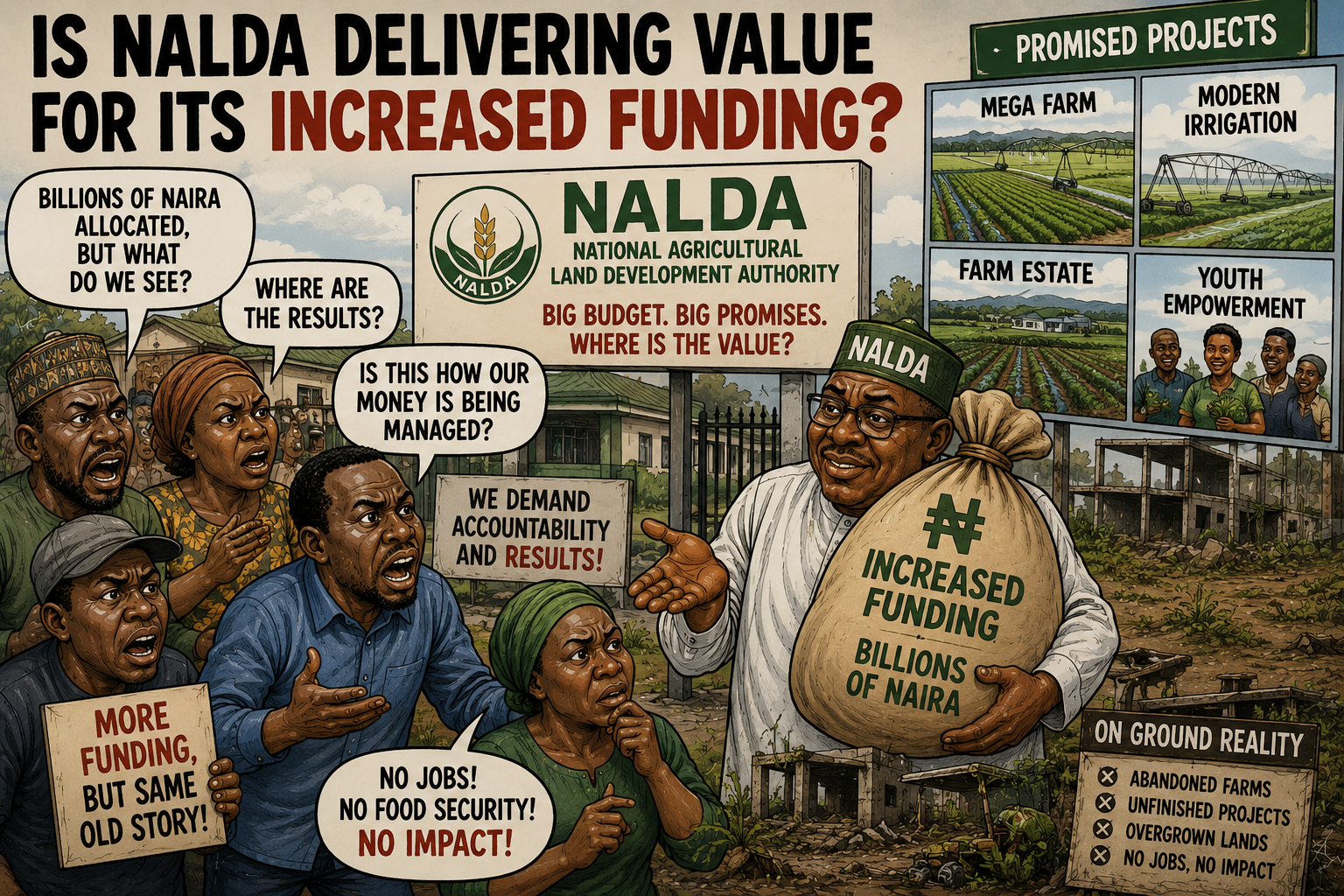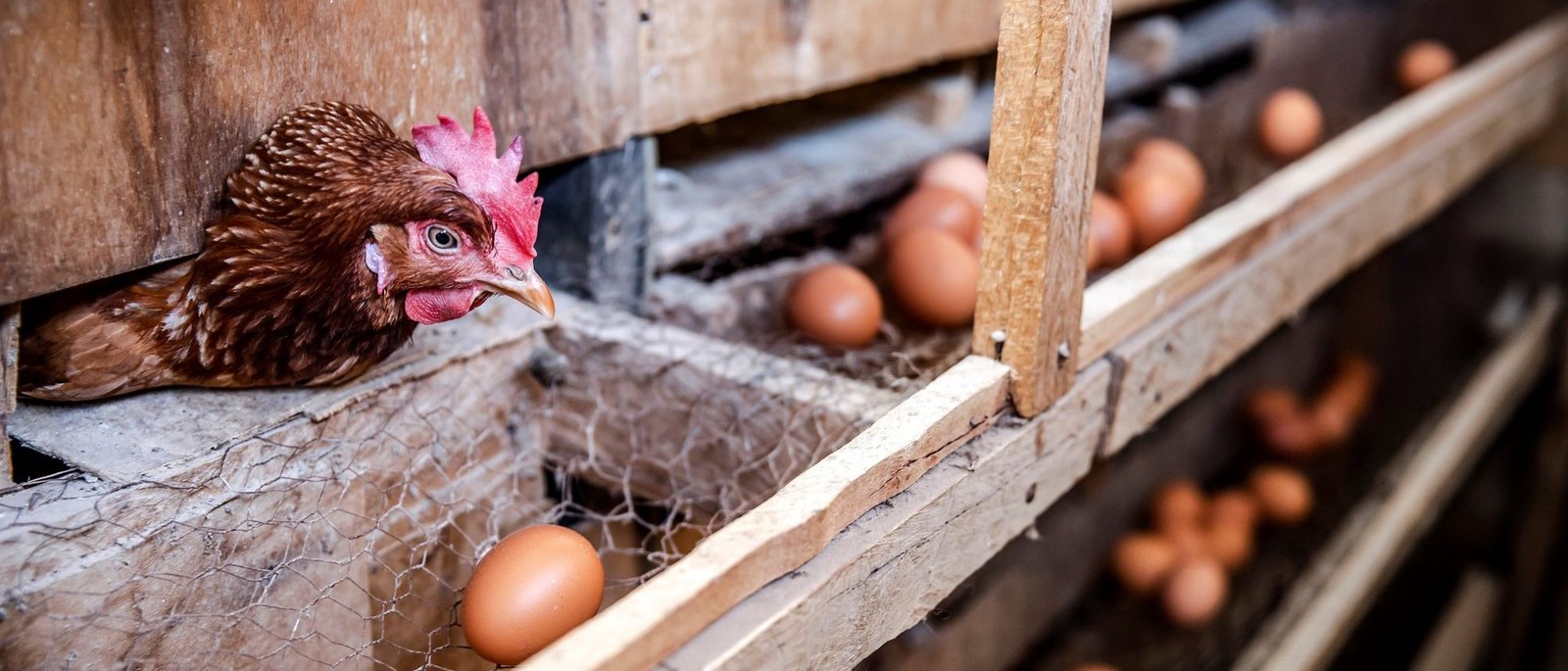
The National Agricultural Land Development Authority (NALDA) has pursued an integrated farm estate approach aimed at improving agricultural production while creating opportunities for young people and rural communities. Its poultry and animal husbandry initiatives seek to bring different stages of livestock production into organised facilities, with the potential to improve productivity and strengthen local supply chains.
One notable example is the integrated poultry farm estate established at Gasamu in Jakusko Local Government Area of Yobe State. The project demonstrates how infrastructure, incubation facilities and community-based participation can combine to support commercial poultry production.
Inside NALDA’s 30,000-Bird Integrated Poultry Estate
The Yobe integrated farm estate provides a useful example of the production capacity associated with NALDA’s livestock modernisation efforts.
Commissioned in September 2021, the facility occupies approximately 20 hectares and houses 10 poultry pens with a stated capacity of 30,000 birds. It also includes an incubation centre designed to support the production and distribution of locally improved poultry breeds.
At the time of its commissioning, NALDA projected that the facility would produce approximately 250,000 Noiler birds annually for distribution and sale. The project was designed to support both egg and meat production while encouraging the development of local poultry stocks.
The facility also provided direct opportunities for 30 young people from the host community, with the beneficiaries assigned responsibility for managing the birds. The arrangement was intended to connect agricultural infrastructure with employment and income generation.
These figures illustrate the scale of the estate’s original design, although they should be understood as reported capacity and production projections rather than independently verified current output.
What the Egg Production Figures Reveal
One of the most notable figures associated with the Yobe estate is its reported capacity to produce 850 crates of eggs daily.
This is an important indicator of the facility’s intended commercial scale. It also demonstrates how organised poultry operations can support a consistent supply of eggs for consumers, retailers and other businesses within the agricultural value chain.
The distinction between crates and individual eggs is important when interpreting the figure. Using the conventional Nigerian market measurement of 30 eggs per crate, 850 crates would represent a projected capacity of approximately 25,500 eggs daily.
Yobe estate: reported production specifications
| Production indicator | Reported figure |
| Land area | 20 hectares |
| Poultry pens | 10 |
| Bird capacity | 30,000 |
| Egg production capacity | 850 crates daily |
| Equivalent egg quantity | About 25,500 eggs daily |
| Projected Noiler production | 250,000 annually |
| Direct youth beneficiaries | 30 |
These are figures reported around the 2021 commissioning of the Gasamu estate. They are not confirmation of current production.
The estate’s incubation centre adds another dimension to the production model. Rather than limiting its activities to the sale of eggs and mature birds, the facility was designed to support the production of day-old chicks for distribution to other poultry farmers.
This approach could help strengthen the availability of locally improved birds while creating additional commercial opportunities around hatchery operations and poultry distribution.
From Poultry Production to Local Breed Development
An important feature of NALDA’s approach is its emphasis on locally improved poultry breeds, particularly Noilers.
Noilers are valued for their suitability for both egg and meat production, making them relevant to farmers seeking more than one source of income from poultry farming. Their inclusion in the Yobe estate’s production model reflects an effort to strengthen domestic poultry breeding and support the distribution of improved birds.
The incubation centre was designed to produce parent stock whose eggs would support the production of day-old chicks. Those chicks could then be supplied to other poultry operations, extending the potential benefits beyond the original estate.
This model is significant because poultry development depends not only on the number of birds raised at a particular farm but also on the availability of quality chicks, suitable feed, veterinary services and reliable distribution networks.
A stronger local breeding and hatchery system could help reduce supply constraints for smaller poultry businesses and improve access to birds suited to domestic production conditions.
The Animal Husbandry Component
NALDA’s livestock development activities extend beyond poultry. Its broader animal husbandry programme has included initiatives involving livestock such as goats and rabbits, while its integrated agricultural approach also encompasses other production activities.
This wider focus is important because Nigeria’s livestock economy is not dependent on a single animal production system. Poultry, goats, sheep, cattle and other livestock contribute to food supply, household income, processing and commercial trade.
Developing organised animal husbandry facilities can help farmers improve breeding practices, animal management, feeding systems and access to veterinary support. It can also create opportunities for businesses involved in animal feed, equipment, transportation, processing and marketing.
However, the production capacity of each livestock estate needs to be assessed separately. The 30,000-bird capacity and 850-crate daily egg figure reported for the Yobe poultry estate should not be applied to NALDA’s other animal husbandry facilities.
Likewise, a reliable national estimate of meat production in metric tonnes would require verified figures covering the number of animals raised, average live weight, slaughter rates and actual meat yield across the relevant estates. The available Yobe project specifications do not establish such a figure.
Employment and Rural Enterprise Development
Beyond food production, integrated farm estates are intended to create economic opportunities within their host communities.
The Yobe project was designed to provide direct employment for 30 young people, who would manage the poultry operation. However, the potential economic impact of an integrated livestock estate can extend beyond those directly employed at the facility.
Poultry feed suppliers, transport operators, veterinary service providers, traders, hatchery operators and retailers can all participate in the wider value chain. As production expands, these businesses may benefit from increased demand for their goods and services.
The distribution of day-old chicks can also create opportunities for smaller poultry farmers who may not have the resources to establish their own hatcheries. By accessing improved birds from organised production centres, they can participate in commercial poultry farming without bearing the full cost of breeding infrastructure.
For rural communities, this kind of agricultural activity can support income diversification and encourage young people to consider livestock farming as a business rather than merely a subsistence activity.
Why Modern Livestock Infrastructure Matters
Modern livestock production requires more than buildings and animal pens. Sustainable operations depend on reliable feed supplies, clean water, disease prevention, veterinary supervision, waste management and appropriate production technology.
For poultry estates, hatchery performance and the management of laying birds are particularly important. Poor biosecurity, disease outbreaks or inconsistent feeding can undermine production even when a facility has substantial installed capacity.
The availability of affordable feed is another major consideration. Feed represents a significant operating cost for poultry farmers, meaning that production facilities must maintain efficient supply arrangements to remain commercially sustainable.
Processing and market access also matter. Higher production will deliver limited economic benefits if farmers cannot preserve, transport and sell their products at competitive prices.
Consequently, integrated estates need strong management arrangements and reliable partnerships with financial institutions, agricultural businesses and market operators. The reported management and financial partnership arrangements for the Yobe facility reflected an effort to address some of these sustainability requirements.
Measuring Success Through Actual Production
NALDA’s integrated livestock estate model presents an opportunity to improve agricultural productivity, but its long-term impact should be measured through verifiable operational results.
For poultry facilities, important indicators include actual eggs produced daily, birds raised and sold annually, hatchery output, mortality rates and the number of farmers supplied with chicks. For meat production, reporting should distinguish between live-animal capacity, slaughter volumes and the actual quantity of meat produced in metric tonnes.
These distinctions are necessary because a facility’s installed capacity does not automatically translate into equivalent output. Production may vary depending on feed availability, animal health, operating conditions and market demand.
Regular publication of estate-level performance data would therefore help farmers, investors and policymakers understand the contribution of the facilities to national food production.
Strengthening Nigeria’s Livestock Economy
NALDA’s integrated poultry and animal husbandry estates reflect an approach that connects agricultural infrastructure with local enterprise development and food production. The Yobe estate, with its reported 30,000-bird capacity, 850 crates of eggs daily and projected annual production of 250,000 Noiler birds, provides a concrete example of the scale envisaged under the initiative.
Nevertheless, expanding the contribution of such projects will require consistent investment, effective management, access to affordable inputs and stronger links between producers and markets.
Nigeria’s livestock modernisation agenda must ultimately move beyond commissioning facilities to ensuring that they operate efficiently and deliver measurable production outcomes. With sustained attention to these requirements, integrated estates can contribute to a more organised livestock value chain, create rural business opportunities and strengthen domestic supplies of eggs and meat.