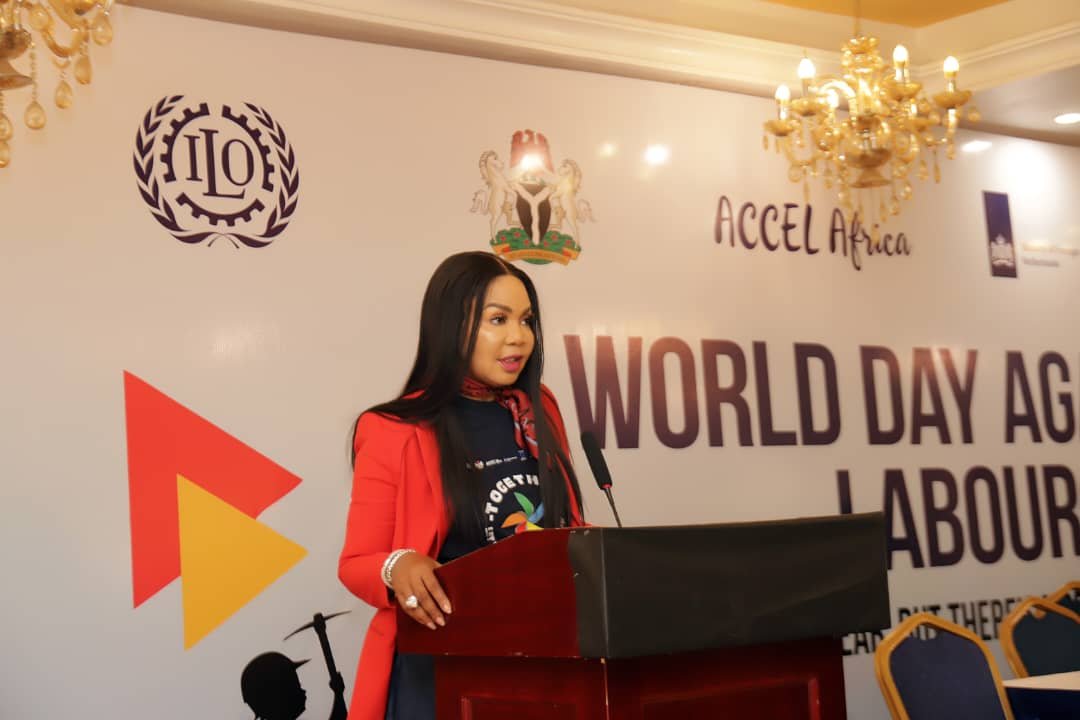
Nigeria’s First Lady, Oluremi Tinubu, on Wednesday extended her “well wishes and heartfelt love” to children across the country as Nigeria marked this year’s Children’s Day celebration.
In her message, the First Lady encouraged young Nigerians to remain hopeful, disciplined and focused on building brighter futures despite the challenges facing the country.
However, the statement did not directly reference the recent abduction of dozens of schoolchildren, including toddlers, from communities in Oyo State, an incident that has continued to generate widespread public concern and emotional reactions nationwide.
The absence of a specific mention of the abductions drew attention online as citizens, advocacy groups and community leaders continued expressing concern over the safety and welfare of children across the country.
Children’s Day Overshadowed by Security Concerns
Children’s Day celebrations traditionally focus on promoting child welfare, education, protection and opportunities for young people. Across Nigeria, schools and communities usually organize activities that celebrate the importance of children within society.
This year’s commemoration, however, occurred against the backdrop of renewed concerns over insecurity and attacks affecting schools and vulnerable communities.
The reported abduction of children in parts of Oyo State intensified public discussions around child safety, school protection and the broader security challenges confronting the country.
Many Nigerians continue to express concern about the psychological impact such incidents can have on families, communities and students across different regions.
Consequently, issues relating to school security and child protection remain central to national conversations surrounding education and public safety.
Growing Anxiety Over School Safety
Over the years, incidents involving attacks on schools and the abduction of students have raised serious concerns about the safety of educational institutions in Nigeria.
Parents, teachers and community leaders increasingly worry about the risks faced by children in vulnerable areas, particularly in rural communities where security infrastructure may be limited.
Education advocates argue that fear and insecurity can discourage school attendance, disrupt learning and negatively affect children’s emotional well-being.
Furthermore, repeated attacks on schools can undermine confidence in educational systems and create long-term social consequences for affected communities.
As a result, many stakeholders continue calling for stronger protection measures, improved intelligence gathering and enhanced security coordination around schools and residential communities.
The Role of Leadership During National Crises
Public figures and national leaders often face heightened scrutiny during periods of crisis, especially when incidents involve children and vulnerable populations.
Messages delivered during national celebrations can sometimes attract public debate depending on whether citizens feel key concerns were adequately acknowledged.
While the First Lady’s statement focused on encouragement, hope and affection for Nigerian children, some observers expected stronger references to the security concerns affecting young people in parts of the country.
Others, however, noted that broader government efforts regarding security and rescue operations continue through official channels beyond ceremonial messages.
The situation reflects the complex expectations often placed on public leaders during emotionally sensitive national moments.
Protecting Children Remains a National Priority
Despite differing public reactions, child protection continues to remain an important national issue.
Children represent the future workforce, leadership and social foundation of the country. Therefore, ensuring their safety, education and welfare remains essential for long-term national development.
Government institutions, civil society groups, religious organizations and community leaders continue advocating stronger policies aimed at protecting children from violence, exploitation and insecurity.
In addition, experts emphasize the importance of investing in safe learning environments, psychological support systems and rapid emergency response mechanisms capable of protecting students and communities.
The growing conversation around child safety highlights the urgent need for sustained collaboration between security agencies, local communities and educational authorities.
Public Reactions and National Reflection
The reactions following the First Lady’s message also demonstrate how social media and public discourse increasingly shape national conversations around governance, leadership and public communication.
Citizens today closely examine public statements for signs of empathy, responsiveness and awareness of ongoing national challenges.
Consequently, public officials often navigate delicate balances between ceremonial messaging, political communication and crisis sensitivity.
The Children’s Day celebration therefore became not only a moment of celebration but also a reflection point on the broader challenges affecting Nigerian children today.
Looking Ahead
As Nigeria continues confronting security challenges affecting schools and communities, many citizens remain hopeful for stronger interventions capable of protecting children and restoring public confidence.
The message from Oluremi Tinubu highlighted themes of hope, encouragement and love for Nigerian children. At the same time, the wider national conversation continues to focus heavily on child safety, educational security and the welfare of vulnerable communities.
Ultimately, Children’s Day serves as both a celebration and a reminder that protecting children requires continuous commitment, effective policies and collective responsibility from government institutions, families and society as a whole.
For many Nigerians, ensuring that every child can grow, learn and dream safely remains one of the country’s most important responsibilities.