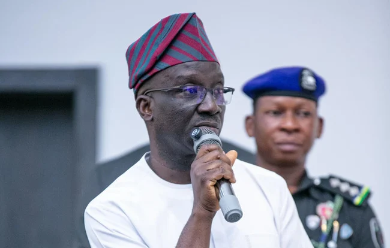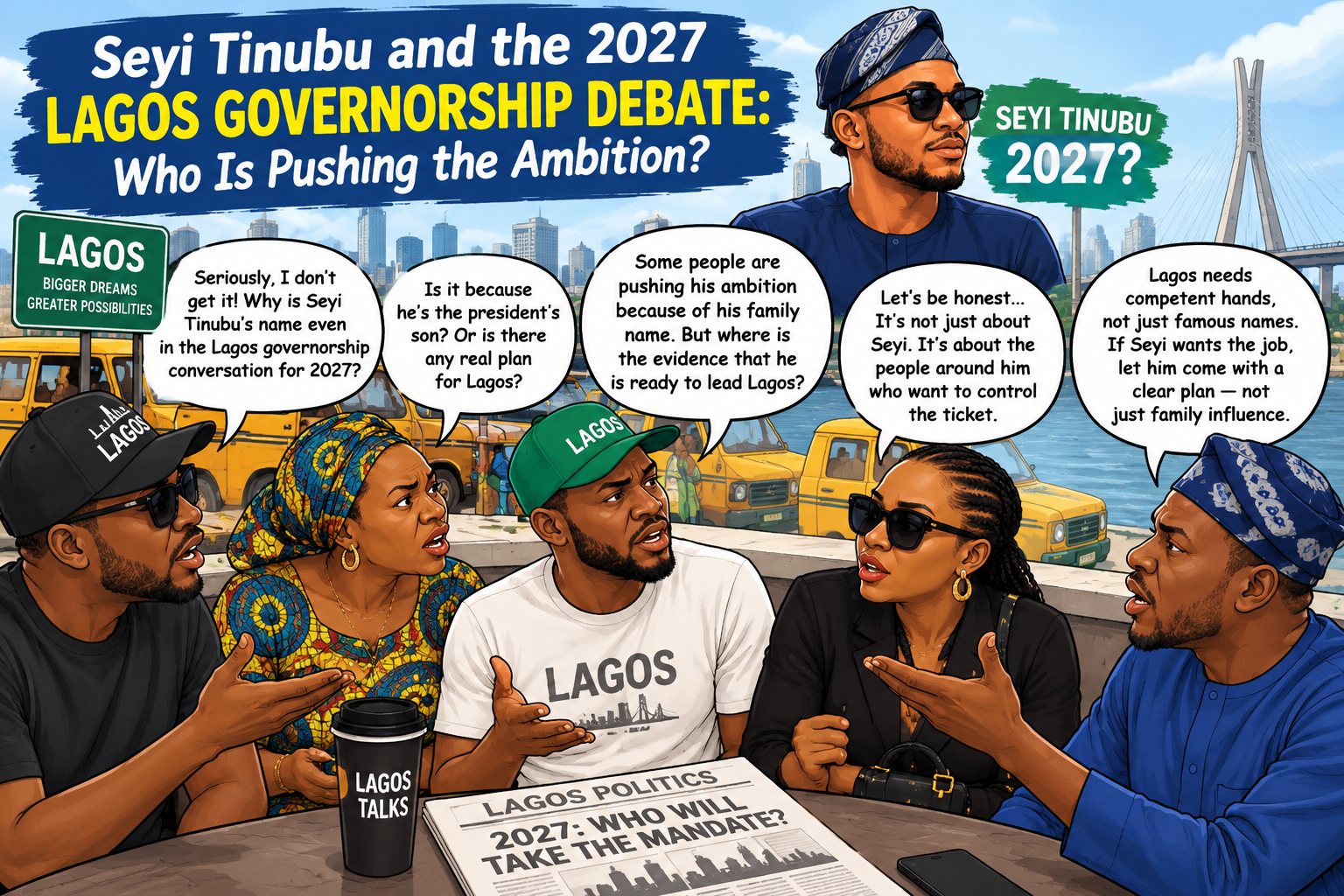
The mention of Seyi Tinubu in discussions about the 2027 Lagos governorship election has opened another chapter in Nigeria’s debate about political influence, family connections and the future of leadership in Lagos State. While some observers are concerned about the possibility of a new political dynasty, others believe the conversation raises a fundamental question about fairness: should an individual be judged by his family background before his qualifications, ideas and political ambitions are properly examined?
Seyi Tinubu is the son of President Bola Ahmed Tinubu, a politician whose influence has shaped Lagos politics for decades. That relationship inevitably attracts attention, but it also creates a challenge for public discussion. Every appearance, political association and expression of support can become a subject of controversy, even when the circumstances require further examination.
The central question is whether Nigerians are discussing the merits of a possible governorship ambition or reacting primarily to the identity of the person associated with it.
Why Is Seyi Tinubu’s Name Already Generating Debate?
Lagos is one of Nigeria’s most politically significant states, with a large population, a major commercial economy and complicated demands involving transport, housing, infrastructure, security and public services. Consequently, any conversation about its next governor deserves serious attention.
However, the appearance of a name in political discussions does not necessarily establish that the individual has formally declared an intention to contest. It is important to distinguish public speculation, supporters’ preferences and an official candidacy.
For Seyi Tinubu, the debate reflects the broader influence of his family name in Nigerian politics. Some people see that connection as a reason for concern, while others argue that it should not automatically disqualify him from consideration.
The more useful question is what he would bring to the office if he ever chose to seek it. What is his vision for Lagos? What policies would he propose? How would he address the challenges confronting residents? Those questions offer a more meaningful starting point than speculation alone.
Must a President’s Son Be Excluded From Political Ambition?
One of the strongest arguments in Seyi Tinubu’s favour is that democratic participation should not be determined by family background alone.
In a democracy, eligibility for public office is governed by constitutional and legal requirements. Political parties also have procedures for selecting candidates, while voters ultimately participate in determining electoral outcomes.
Being the son of a president does not, by itself, establish that someone is unqualified to contest an election. Equally, family connections cannot substitute for the necessary qualifications, public confidence or a credible political programme.
This distinction is important because the debate should focus on the standards expected of anyone seeking leadership.
If Seyi Tinubu were to pursue the Lagos governorship, he should be expected to explain his plans, engage with residents and submit to the same public scrutiny as other aspirants. His background would remain relevant to discussions about influence and potential conflicts of interest, but it should not be treated as a complete assessment of his suitability.
Who Is Actually Pushing the Ambition?
Perhaps the most controversial question is whether discussions about Seyi Tinubu’s possible governorship ambition reflect his own intentions, the enthusiasm of supporters or calculations by political actors.
These possibilities should not be confused. Political supporters can promote an individual without that person having formally declared an intention to contest. Likewise, public speculation about a candidate does not prove that a coordinated plan exists.
Anyone claiming that influential figures are pushing Seyi Tinubu towards the Lagos governorship should provide evidence identifying the individuals involved and establishing what they have actually done.
Until a formal position is communicated, it is more responsible to describe the matter as a political debate rather than an established candidacy.
From a supportive perspective, the important principle is simple: Seyi Tinubu should be able to make his own political decisions, just as Nigerians should be free to debate those decisions. Neither support nor opposition should depend on unverified assumptions about who is supposedly directing his future.
The Political Dynasty Argument: Is It Enough to End the Conversation?
The phrase “political dynasty” often appears whenever relatives of influential politicians become involved in public affairs. It reflects a legitimate concern about whether power is becoming concentrated within a small circle of families.
Nevertheless, the term should not replace a careful examination of the circumstances.
There is a difference between a person participating in politics and a political system that systematically prevents others from competing fairly. Establishing the latter requires evidence about candidate selection, access to resources, institutional decisions and the treatment of political opponents.
If Seyi Tinubu were to seek office, Nigerians would be justified in asking whether the process was competitive, whether public resources were used appropriately and whether other aspirants enjoyed a fair opportunity.
Those questions should be answered through evidence rather than assumptions based solely on his surname.
It is possible to take concerns about political dynasties seriously while also defending an individual’s right to participate in democratic competition. These positions are not contradictory.
What Would Seyi Tinubu Need to Demonstrate to Lagosians?
Lagos residents face practical problems that extend beyond political affiliations. Traffic congestion affects productivity, housing costs place pressure on households, and access to reliable infrastructure remains central to economic activity. Residents also expect accountable government, effective public services and opportunities for young people.
Anyone aspiring to govern Lagos would need to address these realities with specific proposals.
For Seyi Tinubu, a credible case for leadership would require more than public visibility or support from influential political figures. He would need to articulate a clear policy agenda, demonstrate an understanding of the state’s challenges and explain how his proposals could be implemented.
He would also need to address concerns about family influence transparently. A willingness to explain his position on conflicts of interest, public accountability and independent institutions would help residents assess his approach to governance.
These expectations should not be interpreted as special punishment for being the president’s son. They are responsibilities associated with seeking a powerful public office.
Why Nigerians Should Debate His Ideas Before Reaching a Verdict
Political conversations can become unproductive when they focus entirely on personalities. A debate about Seyi Tinubu’s possible future in Lagos politics should also examine the policies, priorities and governing principles that any aspirant would bring to the table.
What would be his approach to transportation? How would he encourage investment and employment? What measures would he propose to improve public services? How would his administration maintain transparency and accountability?
These questions are relevant regardless of whether he eventually contests.
Supporters should have the opportunity to explain why they believe he deserves consideration. Critics should have the opportunity to challenge those arguments with evidence and alternative proposals. Lagosians, in turn, should be able to assess competing positions without being pressured to accept a predetermined conclusion.
That is the purpose of political debate: not to guarantee any individual a position, but to allow the public to examine competing claims and make informed decisions.
Conclusion: Let the Political Process Answer the Question
The controversy surrounding Seyi Tinubu and the 2027 Lagos governorship debate reveals how deeply questions of family influence and political succession remain embedded in Nigerian public life.
His relationship with President Bola Ahmed Tinubu makes scrutiny inevitable, but scrutiny should not automatically become a verdict. Similarly, support from influential people cannot establish that he is the right candidate for Lagos without a credible programme and a fair political process.
Seyi Tinubu should not be disqualified from political consideration simply because of his surname, nor should he receive automatic entitlement because of it.
If he formally enters the race, Lagosians will have legitimate reasons to examine his qualifications, policies, political support and approach to accountability. Until then, claims about his ambition and the people supposedly pushing it should be treated carefully.
Ultimately, the question is not merely whether Seyi Tinubu could become a governorship aspirant. It is whether Lagos can sustain a political culture in which every aspirant is examined fairly, every claim is tested against evidence and the public interest remains more important than family connections.
That is a debate worth having, regardless of who eventually seeks the office.