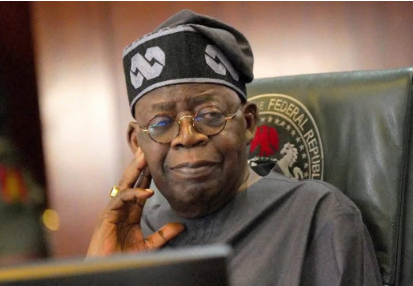
President Bola Ahmed Tinubu has declared that he has no regrets over the removal of Nigeria’s fuel subsidy, insisting that the country will never return to the policy as he likened such a reversal to asking the biblical Moses to go back to Egypt.
The President’s remarks reaffirm his administration’s determination to sustain one of its most consequential economic decisions since taking office in May 2023, despite the financial pressures that higher petrol prices and rising living costs have placed on households and businesses.
The subsidy removal has remained at the centre of national debate, with supporters pointing to the need to reduce government expenditure and redirect public resources, while critics continue to highlight its effects on transportation, food prices and the purchasing power of Nigerians.
Tinubu’s comparison with Moses reflects his position that reversing the policy would amount to abandoning a reform direction his administration considers necessary for the country’s economic future.
Tinubu Stands by His Decision
The removal of the petrol subsidy was among the major policy changes announced by Tinubu at his inauguration on May 29, 2023. The decision marked a departure from a system under which the government supported petrol prices to keep them below the level that would otherwise have prevailed.
Following the announcement, petrol prices increased significantly, triggering a chain reaction across several sectors of the economy.
Transportation costs rose, businesses faced higher expenses for moving goods and providing services, and households experienced additional pressure on their budgets. The effects extended to food distribution, manufacturing and small-scale enterprises that depend heavily on road transport and fuel-powered generators.
Despite these challenges, Tinubu has maintained that the country cannot return to the previous subsidy arrangement.
His latest declaration reinforces the administration’s argument that the policy change was necessary to address the financial burden associated with subsidising petrol and to create room for alternative public spending priorities.
However, the broader success of the decision will depend on whether the government can translate the intended fiscal benefits into improvements in infrastructure, public services, employment and living standards.
Why the President Invoked the Biblical Story of Moses
Tinubu’s reference to Moses and Egypt draws on the biblical account of the Israelites’ departure from slavery in Egypt.
In the biblical narrative, Moses led the Israelites out of Egypt towards freedom and a new future. The President’s comparison presents a return to petrol subsidies as a reversal of a major decision rather than a step towards the economic direction his administration seeks to establish.
The analogy communicates his determination to move forward with the reform rather than reconsider the previous arrangement.
It also underscores the political significance of the subsidy debate, which has become closely associated with the administration’s wider economic programme.
Nevertheless, the practical debate over subsidy removal extends beyond political resolve. It involves questions about government revenue, public spending, energy costs, inflation and the measures needed to protect vulnerable citizens from economic hardship.
Nigerians Continue to Feel the Impact
While the government has defended the policy on fiscal grounds, the consequences for ordinary Nigerians remain a central concern.
Higher petrol prices affect more than motorists. They influence the cost of transporting agricultural produce, delivering goods, operating businesses and providing essential services.
For households with limited incomes, increases in transportation and food expenses can leave less money available for healthcare, education, housing and other necessities.
Small and medium-sized enterprises also face difficulties as higher energy and logistics costs affect their operating expenses. Some businesses must increase prices to remain viable, while others may struggle to maintain sales and employment.
These pressures have intensified calls for policies that can ease the cost of living and ensure that the burden of economic adjustment does not fall disproportionately on low-income households.
Consequently, the debate over subsidy removal increasingly centres on both the government’s fiscal objectives and the immediate welfare of citizens.
The Economic Argument Behind Subsidy Removal
Successive Nigerian administrations have faced questions about the cost, sustainability and effectiveness of the petrol subsidy system.
Supporters of its removal argue that reducing government expenditure on fuel subsidies can free up resources for infrastructure, education, healthcare and other public priorities. They also contend that the previous arrangement created distortions in public spending and the petroleum market.
However, removing a subsidy does not automatically guarantee that the savings will produce better economic outcomes.
The benefits depend on how the government manages public finances, allocates available resources and implements measures to support productivity. Transparency in public expenditure and effective delivery of essential services are therefore important to establishing public confidence in the reform.
Similarly, improvements in domestic refining, transportation infrastructure and energy supply could help address some of the structural costs that affect businesses and consumers.
The challenge for the administration is to demonstrate that the policy can contribute to sustainable economic improvement while responding to the hardships associated with its implementation.
Pressure for Relief and Better Living Conditions
Tinubu’s refusal to reverse the subsidy decision places greater emphasis on the government’s ability to provide relief through other economic and social measures.
Targeted assistance, improved public transportation, support for small businesses and stronger social protection programmes could help vulnerable Nigerians cope with higher costs.
At the same time, policies that encourage domestic production, improve electricity supply and strengthen agricultural value chains could help reduce some of the pressures that feed into consumer prices.
Such interventions require effective implementation, clear accountability and regular assessment to determine whether they are reaching the people who need them.
For many Nigerians, the ultimate measure of the reform will be whether it leads to better employment prospects, more stable prices, improved public services and greater purchasing power.
A Defining Test for the Administration
Tinubu’s declaration that he has no regrets over fuel subsidy removal sends a clear message that his administration intends to maintain its existing policy direction.
His biblical comparison reinforces that position, framing a return to the former arrangement as a step backwards rather than an option under consideration.
However, the debate is unlikely to end with the President’s declaration. The economic effects of the policy, the use of public resources and the government’s response to the cost-of-living crisis will continue to shape public discussion.
Ultimately, sustaining the reform will require more than a commitment not to reverse it. The administration will need to demonstrate that its economic programme can deliver tangible benefits, protect vulnerable households and create opportunities for businesses to grow.
As Nigerians continue to navigate the consequences of the policy change, attention will remain focused on whether the government’s promised long-term gains can translate into meaningful improvements in everyday life.