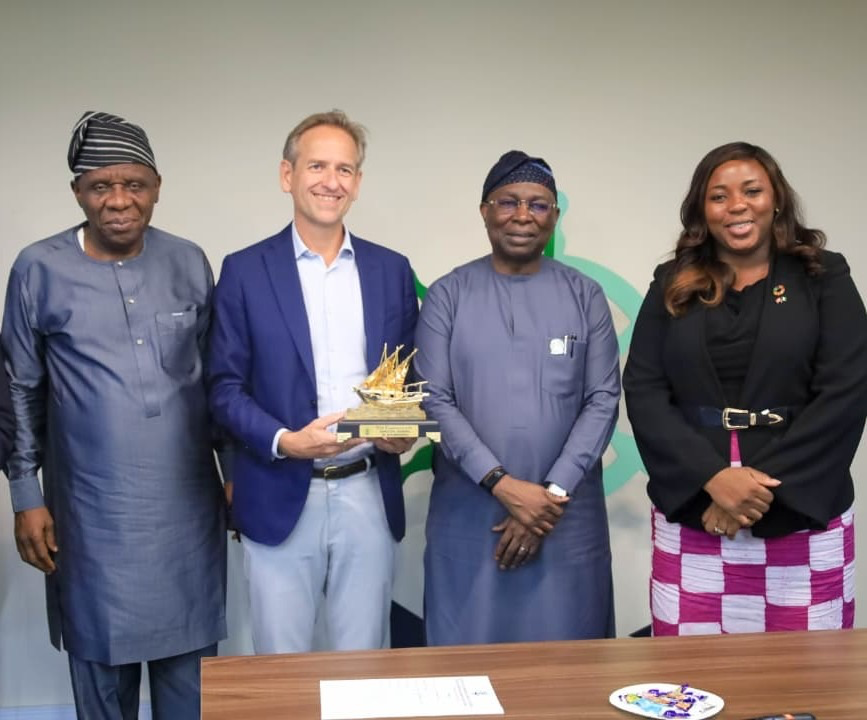
Nigeria’s efforts to strengthen its maritime workforce and develop its blue economy have received fresh international attention following Denmark’s expression of interest in expanding cooperation with the country. The Danish Ambassador to Nigeria, Jens Ole Bach Hansen, disclosed the proposed areas of collaboration during a visit to NIMASA’s headquarters in Lagos, where he led a delegation to discuss opportunities for deeper maritime cooperation between both countries.
At the centre of the discussions was the possibility of engaging Nigerian cadets as ratings aboard Danish vessels through arrangements involving Maersk Shipping. If realised, the initiative could provide aspiring seafarers with valuable onboard experience, helping them develop practical skills and progress in their maritime careers.
The Danish delegation also expressed interest in collaborating with NIMASA on its Blue Economy Acceleration Programme (N-BEAP) Hackathon, an initiative designed to encourage maritime innovation, develop technology-driven solutions and connect promising businesses with investment opportunities.
The proposed partnership reflects growing interest in strengthening Nigeria’s maritime capacity through international cooperation, professional training, technology and private-sector participation.
Maersk Discussions Could Open Sea-Time Opportunities for Cadets
One of the major challenges facing maritime cadets in Nigeria is securing opportunities to acquire practical experience aboard vessels.
Academic and shore-based training provide essential theoretical knowledge, but professional progression in the seafaring industry also requires practical onboard experience. Cadets must complete the relevant sea-time requirements before they can advance through the certification process and qualify for certain professional responsibilities.
The Danish Ambassador said discussions were ongoing with Maersk Shipping on the possibility of engaging Nigerian cadets as ratings aboard Danish vessels.
Such an arrangement could expose Nigerian trainees to international shipping operations, vessel management procedures, safety standards and the working environment of a major global shipping company.
However, the proposal remains under discussion. The Ambassador did not announce a confirmed number of cadets, commencement date or final recruitment arrangement. The eventual scope of the opportunity will depend on the outcome of engagements with Maersk and the relevant maritime institutions.
Nevertheless, the possibility is significant for Nigeria’s seafarer development efforts, particularly as the country seeks to build a workforce capable of competing for opportunities in the international shipping industry.
For NIMASA, partnerships that provide access to practical training can help address one of the critical stages between completing maritime education and becoming professionally qualified.
Denmark Expresses Interest in NIMASA’s Blue Economy Programme
Beyond cadet development, Denmark indicated interest in collaborating with NIMASA on the Blue Economy Acceleration Programme Hackathon.
The initiative seeks to encourage innovation within Nigeria’s maritime and ocean-based economy by supporting technology-driven ideas and connecting promising ventures with potential investors, mentors and wider markets.
The Danish delegation recognised the programme as a potential platform for developing practical solutions to challenges affecting the maritime sector.
Areas that could benefit from innovation include port operations, maritime logistics, safety, security, digital services and the sustainable use of ocean resources.
Denmark’s interest could create opportunities for knowledge exchange, institutional partnerships and engagement between Nigerian maritime innovators and international organisations.
For Nigeria, the development of a competitive blue economy will require more than the expansion of traditional shipping activities. Technology, research, investment and the ability to develop commercially viable maritime solutions will also play important roles.
Collaboration with international partners could help local innovators access technical knowledge, business networks and investment opportunities needed to develop their ideas.
Maritime Security, Digitalisation and Financing Among Proposed Areas
The discussions between the Nigerian and Danish delegations also covered several other areas of potential cooperation.
These include maritime security, intelligence sharing, digitalisation, seafarer education, cadet training, institutional development and maritime financing.
Maritime security remains important to the protection of shipping activities, commercial vessels and offshore economic assets. Cooperation in intelligence sharing and institutional capacity development could strengthen the ability of relevant agencies to address threats affecting maritime operations.
Digitalisation also presents opportunities to improve the efficiency of port processes, maritime administration and information management. Technology-driven systems can support better coordination, improve access to operational information and reduce delays associated with manual procedures.
Financing is another important consideration, particularly for businesses seeking to develop maritime services, acquire equipment or introduce new technologies.
Although the discussions identified these areas as potential opportunities, both countries will need to establish practical arrangements before the proposals can produce measurable outcomes.
NIMASA Seeks Practical Outcomes From Bilateral Engagement
Receiving the Danish delegation, NIMASA Director-General, Dr Dayo Mobereola, welcomed the renewed interest in strengthening maritime relations between Nigeria and Denmark.
Mobereola described the engagement as an opportunity to convert the longstanding relationship between both countries into practical partnerships capable of delivering benefits to their respective maritime industries.
He expressed appreciation for Denmark’s hospitality during NIMASA’s visit to the country in September and acknowledged its support for Nigeria’s successful election into the Council of the International Maritime Organization (IMO).
The NIMASA chief emphasised that future cooperation should focus on tangible results in seafarer development, maritime innovation and technical capacity building.
He also called for a structured follow-up mechanism involving relevant Danish government institutions, maritime organisations, training establishments and private-sector operators.
According to him, direct engagement among these institutions would help both countries identify shared priorities, develop implementation arrangements and ensure that proposals from previous meetings progress beyond diplomatic discussions.
NIMASA reaffirmed its readiness to work with the Royal Danish Embassy and relevant Danish institutions to advance the identified areas of cooperation.
Building Nigeria’s Maritime Workforce
The proposed cadet engagement comes at a time when Nigeria continues to pursue stronger participation in the global maritime industry.
Developing qualified seafarers can create employment opportunities for young Nigerians while strengthening the country’s capacity to supply skilled professionals to domestic and international shipping companies.
However, the availability of training institutions and academic qualifications alone cannot guarantee professional progression. Access to vessels for practical training, certification opportunities and pathways into employment remain essential.
A possible arrangement with Maersk could therefore complement existing seafarer development efforts by creating another avenue for Nigerian cadets to gain exposure to international maritime operations.
The benefits would extend beyond individual trainees if the experience helps strengthen professional standards, improve technical capacity and increase the visibility of Nigerian maritime personnel in the global industry.
From Diplomatic Discussions to Measurable Partnerships
Denmark’s latest engagement with NIMASA brings together several priorities for Nigeria’s maritime development, including cadet training, maritime innovation, security, digitalisation and investment.
The discussions offer opportunities for cooperation, but their eventual impact will depend on how quickly both sides establish clear responsibilities and implementation plans.
For Nigerian cadets, the immediate interest will be whether discussions with Maersk lead to confirmed placements and practical sea-time opportunities. For maritime innovators, attention will focus on the nature of Denmark’s proposed involvement in the N-BEAP Hackathon.
More broadly, successful collaboration could strengthen Nigeria’s maritime institutions, expand professional opportunities and support the development of its blue economy.
As NIMASA and the Royal Danish Embassy pursue further engagement, the priority will be to turn the proposals into practical initiatives that deliver measurable benefits for Nigerian seafarers, businesses and the wider maritime industry.