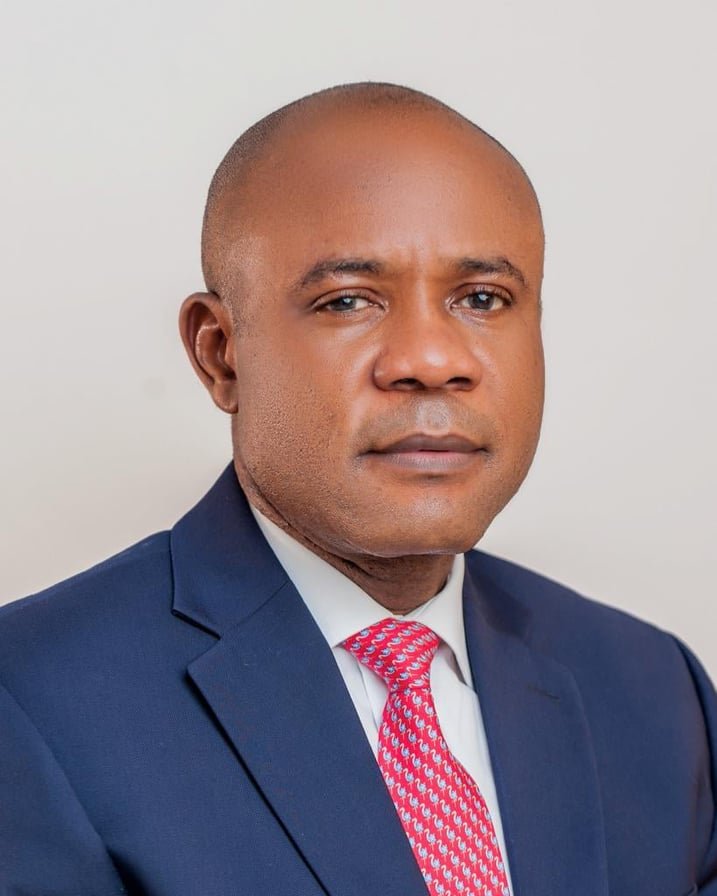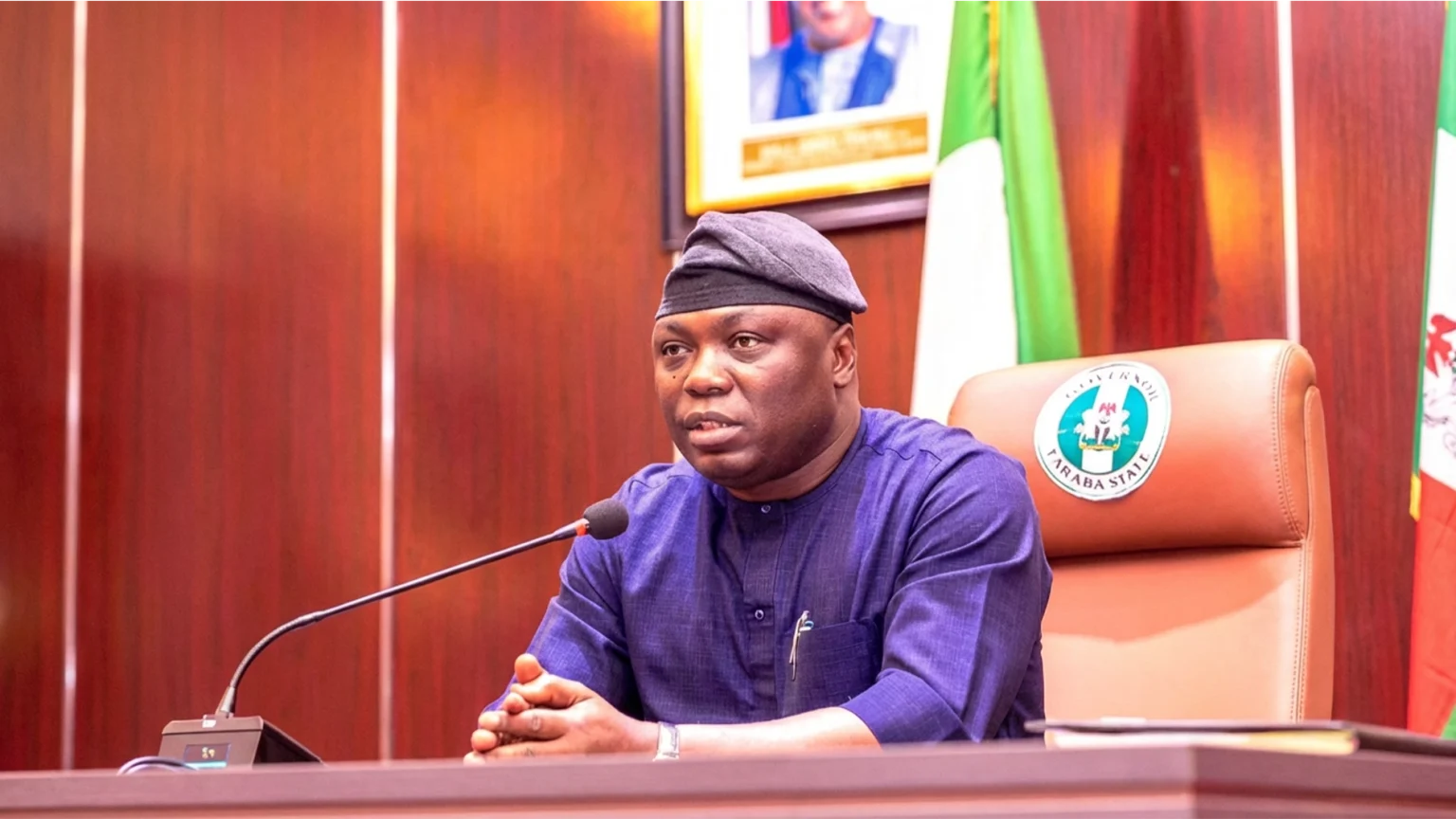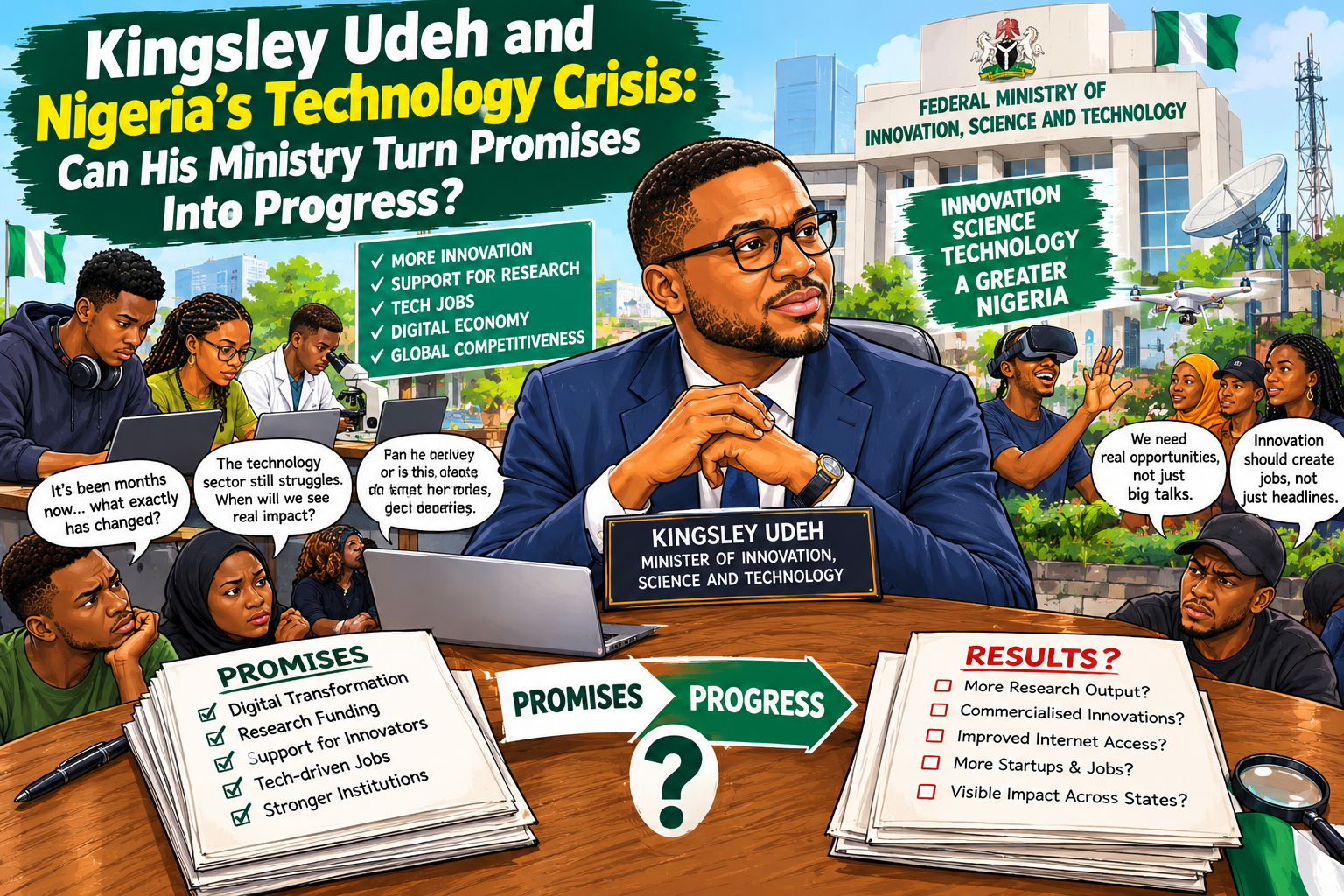
In Nigerian politics, defending a public official can be almost as controversial as criticising one. The moment a minister comes under pressure, the debate often becomes a contest between those demanding immediate results and those insisting that the officeholder deserves time to deliver. Dr. Kingsley Tochukwu Udeh, Nigeria’s Minister of Innovation, Science and Technology, now finds himself at the centre of a debate that goes beyond his personal leadership.
The central question is simple: Can Nigerians fairly judge Kingsley Udeh’s performance without examining the deeper problems confronting the country’s science and technology sector?
For critics, promises are not enough. They want to see tangible achievements, stronger research institutions, better support for innovators and technology-driven jobs. Those expectations are legitimate. However, the argument becomes less convincing when every challenge in Nigeria’s technology ecosystem is treated as the personal failure of one minister.
Udeh should be held accountable for his decisions, priorities and results. But accountability must also recognise the difference between problems a minister can directly address and structural weaknesses that require sustained action across government, universities, research institutions and the private sector.
The Controversial Question: Why Blame the Minister for a Crisis That Predates His Appointment?
Nigeria’s technology challenges did not begin with Kingsley Udeh. The country has struggled for years to translate research into commercially successful products, adequately support local innovators and build stronger links between universities and industry.
These problems cannot be solved by changing a minister’s nameplate or announcing another policy initiative. They require funding, institutional reform, coordination and consistent implementation.
That is why the debate surrounding Udeh should go beyond political headlines.
If research institutions lack essential equipment, researchers struggle to secure funding, or promising inventions fail to reach the marketplace, Nigerians should ask what the ministry is doing to address those problems. They should also examine the roles of other public institutions, funding bodies, universities and private-sector partners.
It would be unfair to blame Udeh for every weakness inherited by the ministry. Equally, it would be unacceptable to use inherited problems as a permanent excuse for poor performance.
The minister’s real test is whether he can demonstrate progress against the challenges he inherited.
Nigeria Cannot Become a Technology Powerhouse Through Criticism Alone
There is a difference between demanding results and assuming that meaningful transformation happens overnight.
Countries that have developed competitive technology industries have generally required long-term investment in education, research, infrastructure, entrepreneurship and industrial capacity. Nigeria needs a similar commitment if it hopes to compete in an increasingly technology-driven global economy.
Udeh has an opportunity to make his ministry more relevant to that national ambition.
Rather than concentrating exclusively on policy announcements, the ministry should demonstrate how government-backed research can support manufacturing, agriculture, healthcare, energy and other productive sectors. It should also help create conditions in which Nigerian inventors can develop their ideas, protect their intellectual property and find markets for their products.
These are demanding responsibilities. They require clear priorities and effective partnerships, not merely political goodwill.
Supporters of Udeh can reasonably argue that his performance should be assessed through the quality and measurable outcomes of the work undertaken by his ministry. But that defence becomes stronger only when supported by verifiable evidence.
Are Nigerians Measuring Results or Merely Counting Headlines?
One of the weaknesses of public debate is the tendency to confuse visibility with performance.
A minister who appears frequently in the media may still struggle to deliver meaningful results. Conversely, an initiative that receives limited publicity may produce genuine benefits. Neither visibility nor silence, by itself, proves competence.
For Udeh, the solution is straightforward: make the ministry’s performance easier for Nigerians to evaluate.
The public should be able to find clear information about research programmes, funding allocations, partnerships with technology companies, support for local innovators and the commercialisation of scientific discoveries.
Where targets have been met, the ministry should present evidence. Where programmes have stalled, it should explain the reasons and outline corrective measures.
Such transparency would make it harder for critics to rely on sweeping accusations and equally harder for supporters to defend the minister without evidence.
The strongest defence of Kingsley Udeh is not that he should escape criticism. It is that his performance should be judged against facts rather than assumptions.
The Youth Employment Question
Nigeria’s young population makes the technology debate particularly important.
Across the country, young people are looking for opportunities to build businesses, acquire technical skills and participate in industries that can generate sustainable employment. Technology and scientific innovation can contribute to those opportunities, but only when ideas are connected to investment, infrastructure and viable markets.
The Ministry of Innovation, Science and Technology has a role to play in strengthening that connection.
Under Udeh’s leadership, Nigerians should look for evidence of stronger support for research-based entrepreneurship, collaboration between universities and businesses, and pathways for local inventions to become commercially useful products.
These outcomes would matter far more than political arguments about whether the minister has received enough praise or too much criticism.
If his ministry can demonstrate measurable progress in these areas, Udeh would have a credible basis for defending his leadership. If the results fall short, the public should expect explanations and improvements.
Why Udeh Deserves a Fair Chance, Not a Blank Cheque
Defending fairness toward a minister does not mean asking Nigerians to suspend their judgement. Public office comes with responsibility, and citizens have every right to question how public resources are used.
However, fairness requires critics to identify specific shortcomings and distinguish documented failures from expectations that have not yet been tested.
Udeh deserves the opportunity to demonstrate what his leadership can achieve. That opportunity should be accompanied by transparent targets, public reporting and an honest assessment of progress.
His supporters, meanwhile, should resist the temptation to dismiss every critic as an opponent of the government. Constructive criticism can help identify weaknesses before they become more expensive to correct.
The minister would benefit more from a culture that rewards measurable progress than from one in which political loyalty determines who receives praise and who attracts condemnation.
The Verdict Nigerians Should Demand
Kingsley Udeh’s tenure should not be judged by sympathy, political affiliation or the intensity of public controversy. It should be judged by what the Ministry of Innovation, Science and Technology delivers under his leadership.
Can Nigerian researchers receive better support? Can locally developed technologies reach commercial markets? partnerships between universities and industry become more effective? public programmes produce verifiable benefits for innovators and businesses?
These are the questions that matter.
Udeh cannot reasonably be expected to reverse every weakness in Nigeria’s technology sector single-handedly. Nevertheless, he must show that his ministry is making a meaningful contribution to solving them.
That is why the current debate should be more demanding, not less demanding. Nigerians should insist on evidence while resisting the temptation to turn every national challenge into a convenient political accusation against one individual.
Kingsley Udeh deserves a fair assessment, but the real victory will come when Nigerians can point to concrete achievements rather than arguments in his defence.
Nigeria does not need ministers who merely survive controversy. It needs leaders who can turn public expectations into measurable progress.
For Udeh, that is both the challenge and the opportunity: prove his critics wrong through results, strengthen the institutions he leads and help ensure that Nigeria’s technological potential becomes a practical advantage for its people.