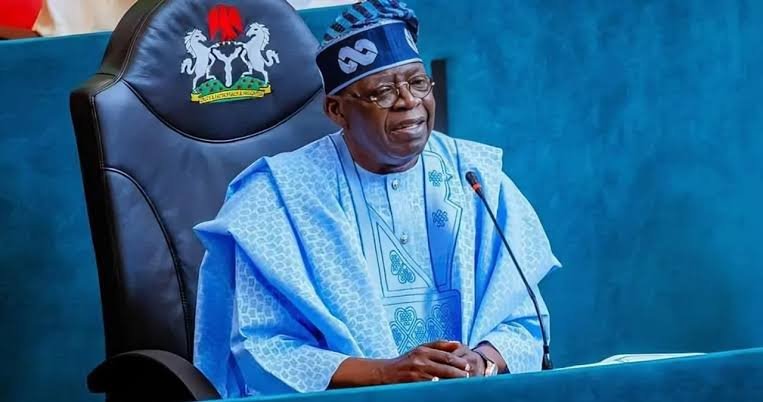
President Bola Ahmed Tinubu has said his administration’s economic reforms are restoring confidence among Nigeria’s business community and foreign investors, expressing optimism that the policies will strengthen the country’s economic outlook.
The President’s position highlights the Federal Government’s argument that major policy changes introduced under his administration are intended to create a more predictable economic environment, encourage investment and support long-term growth.
Since taking office in May 2023, Tinubu has pursued significant economic reforms, including the removal of the petrol subsidy and changes to the foreign-exchange system. The administration has defended these measures as necessary steps towards addressing structural weaknesses and improving the management of public resources.
However, the reforms have also generated significant economic adjustments, with businesses and households facing pressure from higher operating costs and changes in consumer purchasing power.
The debate over the impact of the policies is therefore likely to remain central to discussions about Nigeria’s economic recovery, investment prospects and future development.
Tinubu Defends Economic Reform Programme
Tinubu’s remarks reflect the administration’s continued defence of its economic agenda, which seeks to improve the environment for private-sector activity and encourage both domestic and international investment.
The government has argued that removing longstanding distortions in the economy can help create a stronger foundation for sustainable growth.
For investors, policy consistency, access to foreign exchange, infrastructure, security and the ability to repatriate legitimate returns are important considerations when deciding whether to commit capital to a country.
By pursuing changes to the fuel subsidy regime and foreign-exchange system, the administration has sought to address issues that have shaped public finances and business operations for years.
Nevertheless, the effects of these measures are not uniform. While some investors may welcome policy changes that address longstanding economic imbalances, businesses must also manage the immediate costs associated with inflation, energy, transportation and financing.
The administration’s challenge is to ensure that the expected long-term benefits translate into stronger business activity, improved employment opportunities and better living conditions.
Investor Confidence Depends on Policy Stability
Investor confidence is influenced by several factors beyond government announcements. Businesses typically assess economic stability, regulatory certainty, infrastructure, market demand and the overall cost of operating in a country.
Foreign investors also consider exchange-rate conditions, access to foreign currency, the transparency of regulations and the ability to move capital in accordance with applicable laws.
For Nigeria, sustained improvements in these areas could help businesses plan more effectively and make longer-term investment decisions.
Clear policies and consistent implementation can also reduce uncertainty for companies considering investments in manufacturing, agriculture, technology, energy and other sectors.
However, confidence must be supported by evidence. Announced investments, actual capital inflows, the completion of projects and the expansion of productive businesses provide different measures of investor engagement.
A lasting improvement in confidence would therefore be reflected not only in positive statements but also in investment decisions, business expansion and increased economic activity.
Businesses Continue to Navigate Economic Pressures
Although the government has expressed optimism about its reform programme, Nigerian businesses continue to operate in an environment shaped by changing costs and consumer demand.
Higher fuel and transportation expenses can affect the production and distribution of goods, while inflation can reduce consumers’ ability to spend on non-essential products and services.
Small and medium-sized enterprises may face additional challenges when borrowing costs are high or when they have limited access to affordable financing.
These pressures can influence whether businesses expand, recruit more workers, invest in new equipment or postpone planned projects.
For the private sector, restoring confidence therefore involves more than creating opportunities for investment. It also requires an environment in which businesses can operate sustainably, access infrastructure and predict their costs with greater certainty.
Government policies that improve access to finance, reduce unnecessary regulatory burdens and support reliable electricity and transportation could help businesses convert investment opportunities into productive activity.
Foreign Investment Could Support Economic Growth
Foreign investment can contribute to economic development by bringing capital, technology, expertise and access to international markets.
When investments support productive sectors, they can help expand manufacturing capacity, improve infrastructure, strengthen supply chains and create employment opportunities.
Foreign companies may also introduce technical knowledge and business practices that benefit local suppliers and workers.
For Nigeria, attracting investment into productive activities could support efforts to diversify the economy and reduce excessive dependence on crude oil revenues.
However, the benefits depend on the nature of the investment, the quality of the projects and the extent to which local businesses and workers participate in the resulting economic activity.
Investors must also be able to assess risks and opportunities accurately. Policy transparency, effective institutions and predictable regulation can help strengthen the conditions required for long-term commitments.
The government will therefore need to demonstrate that its reforms can provide a stable foundation for investment across multiple sectors.
Economic Recovery Must Translate Into Better Living Standards
One of the major tests of Nigeria’s economic reform programme is whether improvements in economic indicators eventually translate into tangible benefits for ordinary citizens.
Even where investor confidence improves, households may continue to experience hardship if food prices remain high, wages fail to keep pace with living costs or employment opportunities remain limited.
Economic growth can be more broadly beneficial when it supports productive jobs, improves incomes and expands access to essential services.
For this reason, the government faces the dual challenge of creating conditions that attract investment while addressing the immediate pressures affecting households and small businesses.
Measures that support agricultural productivity, improve transport infrastructure, strengthen social protection and encourage competitive markets could help ensure that economic gains reach a wider section of the population.
The pace and distribution of these benefits will remain important in determining how Nigerians assess the administration’s economic policies.
What to Watch in Nigeria’s Investment Climate
The administration’s claim that confidence is returning will be assessed against developments in the broader economy.
Relevant indicators include actual foreign investment inflows, domestic private-sector investment, business expansion, employment trends, inflation and access to foreign exchange.
It will also be important to monitor whether announced projects proceed to implementation and whether investment reaches sectors capable of creating jobs and strengthening local production.
Clear reporting on these indicators would help businesses, investors and the public evaluate the results of the reform programme.
For policymakers, the challenge will be to maintain credible economic policies while responding to concerns about the cost of living and the operating environment for businesses.
Conclusion
President Tinubu’s assertion that his economic reforms are restoring confidence among Nigerian businesses and foreign investors reflects the Federal Government’s expectation that policy changes will strengthen the economy over time.
The removal of the petrol subsidy and reforms to the foreign-exchange system form part of an agenda intended to address longstanding structural challenges and improve the environment for investment.
However, the success of the programme will ultimately depend on measurable results, including sustained investment, business expansion, job creation and improvements in living standards.
As Nigeria continues to navigate economic adjustments, the central question will be whether increased confidence translates into productive investment and broader economic opportunities for businesses and citizens alike.