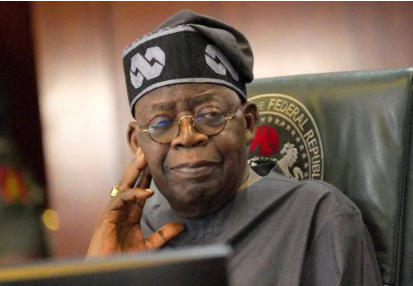
Enugu State Governor, Dr. Peter Mbah, has called for vibrant and far-reaching reforms to tackle Nigeria’s education crisis, warning that incremental improvements can no longer meet the demands of a rapidly changing, technology-driven world. He argued that Nigeria must fundamentally rethink how it educates its young people if the country wants to compete effectively in an economy increasingly shaped by artificial intelligence, digital technology and innovation.
Education Can No Longer Stand Still
For Mbah, the central challenge is no longer simply about putting more children into classrooms. Instead, it is about determining what those children learn, how they learn and whether their education equips them to solve real-world problems.
Nigeria has made significant investments in school infrastructure and access over the years. However, the governor’s argument is that infrastructure alone cannot deliver the kind of human capital required in an economy increasingly shaped by technology.
Consequently, he has advocated a shift away from education systems that rely heavily on memorisation towards models that encourage experimentation, creativity, critical thinking and practical problem-solving.
That philosophy has become a central part of Enugu’s education strategy, particularly through the state’s Smart Green Schools and its emphasis on experiential learning.
From Memorising Answers to Solving Problems
One of the biggest questions facing Nigeria’s education system is whether students are being prepared to reproduce existing knowledge or to create new solutions.
Mbah has consistently argued for the latter.
Under an experiential learning model, students do not simply listen to lessons and reproduce information during examinations. Instead, they apply what they learn to practical situations.
This approach can change how young Nigerians view education itself.
A student studying science, for example, can be encouraged to experiment, design solutions and understand how scientific principles operate outside the classroom. Similarly, technology education can move beyond basic computer literacy towards coding, robotics, artificial intelligence, engineering and digital problem-solving.
Therefore, the objective is not simply to produce graduates who possess certificates, but young people who can turn knowledge into productive activity.
Technology Should Strengthen Teachers, Not Replace Them
Meanwhile, the rapid development of artificial intelligence has introduced another major question into the education debate: what happens to the traditional role of teachers?
Mbah has argued that AI should not be treated as a threat to teachers. Instead, technology can make teachers more effective by helping with lesson preparation, personalised learning, identification of learning gaps and access to knowledge.
This distinction is important because technology cannot perform every responsibility associated with teaching.
A teacher does more than deliver information. Teachers mentor students, understand individual circumstances, develop character, encourage ambition and provide human guidance.
As a result, the emerging education model is less about replacing teachers with machines and more about giving teachers better tools.
However, responsible adoption will require safeguards. Ethical standards, data protection, responsible regulation and continuous teacher capacity-building must accompany the adoption of artificial intelligence in schools.
Teachers Must Be Part of the Transformation
Beyond technology, education reform ultimately depends on the people standing in front of classrooms.
Even the most advanced school equipped with digital laboratories, smart classrooms and internet connectivity cannot deliver quality education without capable teachers.
That is why teacher recruitment and training have featured prominently in Enugu’s education strategy. The state government has said it recruited 6,850 teachers and other education personnel to address manpower shortages and improve the student-teacher ratio.
Moreover, teachers must receive continuous training as the curriculum changes.
If students are expected to learn artificial intelligence, robotics, mechatronics and other emerging skills, teachers must also understand those areas well enough to guide learners.
Consequently, teacher development cannot be treated as a one-time exercise. It must become a continuous process that evolves alongside technology.
Enugu’s Smart Green School Experiment
Enugu’s response to the education challenge has centred on the Smart Green School programme, which seeks to introduce technology-driven and experiential learning environments across the state’s 260 wards.
The schools are designed around more than conventional classrooms. The model incorporates technology, laboratories, digital learning and innovation-focused facilities intended to expose students to the skills required in a changing economy.
The initiative also seeks to move pupils away from learning primarily through memorisation and towards practical experiences that connect classroom knowledge with everyday life.
The approach covers areas such as science, technology, agriculture, digital learning and problem-solving.
Mbah has also made education a major component of his administration’s spending priorities, arguing that investment in human capital is essential to the state’s long-term development.
The Crisis Is Bigger Than the Classroom
Nevertheless, Nigeria’s education crisis cannot be solved through school construction alone.
Children need access to quality healthcare, nutrition, electricity, internet connectivity, safe communities and supportive families. Likewise, teachers need decent working conditions, professional development and appropriate teaching resources.
In addition, the economy must create opportunities for graduates to use the skills they acquire.
Otherwise, education reform could produce a better-trained generation without creating enough productive pathways for them to apply their knowledge.
That is why Mbah’s broader human-development argument connects education with economic growth, infrastructure, technology and investment.
Why Incremental Reform May No Longer Be Enough
The governor’s warning about incremental improvement reflects the speed at which the global economy is changing.
Artificial intelligence is transforming workplaces. Automation is changing manufacturing. Digital platforms are reshaping commerce. Biotechnology is opening new possibilities in healthcare and agriculture. Meanwhile, businesses increasingly require workers who can adapt rather than simply perform repetitive tasks.
Therefore, an education system designed primarily around memorisation and examination performance risks preparing students for an economy that is disappearing.
Nigeria’s challenge is consequently not merely to increase enrolment or construct additional classrooms. It must build an education system capable of producing innovators, entrepreneurs, engineers, researchers, technicians, teachers and professionals who can continuously learn and adapt.
Reform Must Translate Into Opportunity
Ultimately, the success of education reform will not be measured only by the number of schools built or the amount allocated to the sector.
It will be measured by what students can do after receiving their education.
Can they create businesses? Can they develop technologies? Can they solve community problems? Can they compete for opportunities beyond Nigeria? Can they adapt when an existing job disappears because technology changes the nature of work?
Those questions place greater responsibility on policymakers, educators, parents and the private sector.
For Enugu, the Smart Green School initiative represents one attempt to answer those questions. For Nigeria as a whole, however, the challenge is considerably larger.
Nigeria Needs an Education System Built for Tomorrow
Mbah’s call for vibrant reforms therefore comes at a time when Nigeria faces a crucial choice.
The country can continue making incremental adjustments to an education system designed for an earlier era, or it can redesign the system around the realities of a technology-driven economy.
The second path will require investment, teacher training, curriculum reform, digital infrastructure, responsible AI adoption and stronger partnerships between schools and industry.
More importantly, it will require a change in mindset.
Education can no longer be treated simply as a route to certificates. It must become a system for developing capabilities, encouraging innovation and giving young Nigerians the tools to create value.
For Mbah, the message is clear: Nigeria’s education crisis requires more than repairing what already exists. It requires building an education system capable of preparing the next generation for a world that is changing faster than ever.