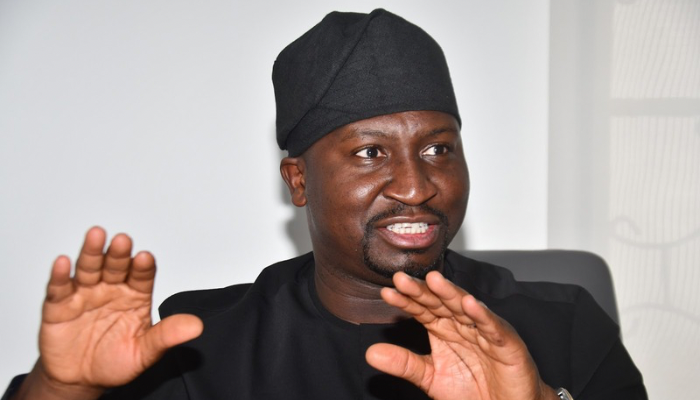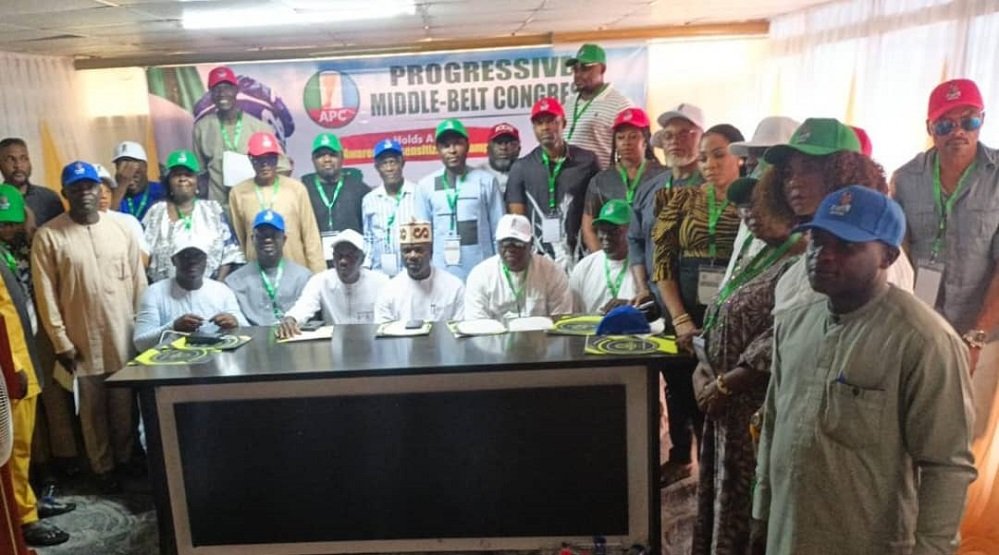
House of Representatives member James Faleke has joined growing mobilisation efforts ahead of the 2027 presidential election, with political stakeholders in the Middle Belt stepping up efforts to build grassroots support for President Bola Tinubu. At the centre of the latest effort is a support group that has announced a target of 11 million votes for Tinubu, presenting the figure as part of its mobilisation strategy rather than an independent prediction of the election result.
Middle Belt Becomes a Focus of Mobilisation
The latest mobilisation effort highlights the growing attention political groups are paying to the Middle Belt as the 2027 election approaches.
Faleke has been involved in efforts to coordinate political support for Tinubu, while grassroots organisers across the region are working to establish structures capable of reaching voters in different communities.
Meanwhile, the group behind the 11 million vote target says it intends to build its campaign around sustained grassroots engagement.
Rather than relying only on large rallies, such mobilisation involves community meetings, local coordinators, stakeholder engagement and communication of political messages at ward and local government levels.
Consequently, the effectiveness of the campaign will depend not simply on the size of its announced target, but on how effectively the group develops functioning structures across the region.
Group Sets 11 Million Vote Target
The group has set a target of mobilising 11 million votes for Tinubu in the 2027 presidential election.
The figure represents an ambitious organisational goal and reflects the group’s intention to build substantial support across the Middle Belt.
However, a target announced by a political organisation does not automatically translate into actual votes.
Ultimately, voter registration, turnout, individual voter preferences, campaign performance and the wider electoral process will determine the votes recorded in 2027.
Therefore, the 11 million figure should be viewed as a mobilisation objective rather than an established electoral projection.
Why Grassroots Structures Matter
For political organisations, grassroots mobilisation provides a way to connect national campaigns with local communities.
A presidential campaign may communicate broad national policies, but voters experience government programmes through their local economies, schools, healthcare facilities, roads, businesses and communities.
Therefore, support groups often attempt to translate national political messages into issues that resonate at the local level.
In the Middle Belt, such engagement involves communities with different economic, social, cultural and political interests.
As a result, organisers face the challenge of developing a message that can accommodate those differences while maintaining a coherent political campaign.
Faleke’s Role in the Mobilisation Effort
Faleke has previously participated in political mobilisation efforts connected to Tinubu.
His involvement in the latest initiative places him within a broader network of political organisers preparing for the 2027 contest.
Moreover, his participation highlights the role that political figures can play in connecting national campaign structures with regional and grassroots organisations.
The strategy also reflects the increasingly decentralised nature of political mobilisation, with different groups establishing networks around particular regions, communities and constituencies.
The Middle Belt’s Political Importance
The Middle Belt occupies an important position in Nigeria’s political landscape.
The region includes states with different voting patterns and political interests. Consequently, political support cannot simply be treated as uniform across the area.
Previous elections have demonstrated that voters in the region can make different choices across states and constituencies.
Those voting patterns provide context for why political organisations are investing in grassroots structures across the Middle Belt.
However, past results do not determine future outcomes.
Political alliances can change, new issues can emerge and voters can make different choices from one election cycle to another.
Support Groups Expand Ahead of 2027
The latest Middle Belt mobilisation also reflects a wider increase in political support groups ahead of the 2027 election.
Across the country, organisations have been developing campaigns around particular regions, constituencies and political interests.
Some groups have announced ambitious numerical targets, while others have focused on building community structures and promoting the achievements or policies of political candidates.
This trend shows how political mobilisation is increasingly extending beyond formal party structures.
Support groups can provide additional networks for political communication, particularly when they operate through local coordinators, community leaders, youth groups, women’s organisations and professional networks.
Nevertheless, their influence will depend on their ability to maintain those structures over time.
From Vote Targets to Voter Engagement
Announcing a numerical target represents only the beginning of a mobilisation campaign.
To pursue a target of 11 million votes, a group would need extensive coordination across states, local government areas, wards and communities.
It would also require volunteers, communication networks and sustained engagement with eligible voters.
Moreover, political organisations must operate within electoral laws while keeping their campaigns peaceful and issue-focused.
That means explaining policies, discussing community concerns and encouraging democratic participation without intimidation, misinformation or inflammatory rhetoric.
Economic Issues Will Shape the Debate
Beyond political organisation, the campaign environment will also depend heavily on how voters assess Nigeria’s economic direction.
Tinubu’s administration has introduced major reforms affecting fuel subsidies, foreign exchange management, taxation and other areas of economic policy.
Supporters have presented the reforms as necessary steps towards restructuring the economy and creating a stronger foundation for future growth.
At the same time, critics have focused on the immediate pressures that households and businesses have experienced during the adjustment period.
Therefore, political campaigns will likely continue to debate both the intended long-term effects of the reforms and their short-term consequences.
For the Middle Belt group, the challenge will be to communicate its preferred interpretation of these policies while engaging voters on the issues that matter most to them.
The 11 Million Target Faces a Larger Test
The 11 million vote target is ultimately a test of organisational ambition.
The group must translate its stated objective into sustained grassroots activity if it wants the figure to have practical significance.
That process involves much more than rallies.
It requires community engagement, internal coordination, voter education, communication and the ability to respond to issues raised by citizens.
Furthermore, political support groups must maintain their structures throughout the political cycle rather than appearing only during major campaign events.
The Road to 2027
As preparations for the 2027 presidential election gather pace, the Middle Belt is becoming an important arena for political organisation.
Faleke’s involvement and the group’s 11 million vote target demonstrate the efforts of Tinubu’s supporters to establish regional networks well ahead of the election.
Nevertheless, the eventual electoral outcome will depend on the choices of eligible voters and the conduct of the electoral process.
For now, the mobilisation reflects a broader political trend: support groups are moving early to establish grassroots structures, define their messages and set ambitious targets.
The next phase will therefore be less about announcing numbers and more about demonstrating sustained community engagement.
If the group can maintain active structures, communicate effectively with communities and organise peacefully across the region, its 11 million target will become a measurable test of its mobilisation capacity rather than simply a campaign slogan.
Ultimately, the 2027 contest will be decided through the votes cast by Nigerians, while the months ahead will determine how effectively competing political organisations connect their messages with voters across the country.