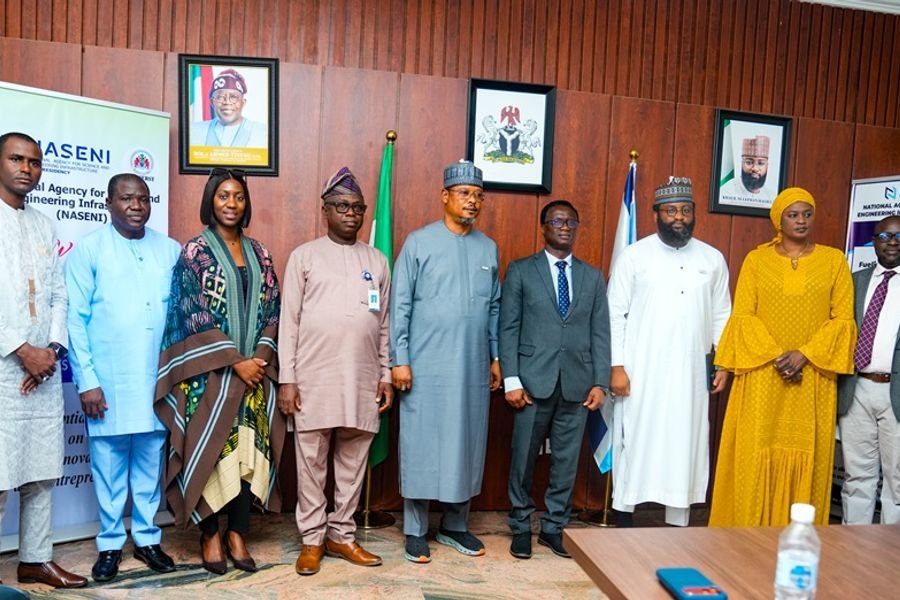
The National Agency for Science and Engineering Infrastructure (NASENI) has commenced moves to deepen cooperation with the Republic of The Gambia in technology development, technical education, research, innovation, skills development, and technology commercialisation.
The two sides have agreed to develop a comprehensive Memorandum of Understanding (MoU) that will provide a structured framework for future collaboration.
The development represents a significant opportunity for Nigeria to expand its technology partnerships across Africa while sharing expertise, innovation, and technical capabilities with other countries.
Expanding Nigeria’s Technology Footprint
NASENI’s engagement with The Gambia highlights the growing importance of international cooperation in technological development.
Furthermore, Nigeria possesses a large pool of engineers, researchers, technicians, entrepreneurs, and technology institutions capable of contributing to regional development.
Technology cooperation strengthens regional ties.
Innovation creates new opportunities.
Knowledge exchange accelerates development.
TVET Takes Centre Stage
Technical and Vocational Education and Training is expected to form an important part of the proposed partnership.
Furthermore, stronger TVET cooperation could support practical skills development while preparing young people for careers in manufacturing, engineering, construction, technology, agriculture, energy, and other productive sectors.
Practical training builds employability.
Technical skills support industries.
Vocational education creates opportunities.
Strengthening Research Collaboration
Research cooperation could provide another important pillar of the proposed MoU.
Furthermore, collaboration between Nigerian and Gambian institutions could encourage joint research, knowledge exchange, technical expertise, and the development of solutions addressing shared African challenges.
Research creates knowledge.
Collaboration expands expertise.
Innovation transforms knowledge into solutions.
Commercialising African Innovations
The proposed partnership also places emphasis on technology commercialisation.
Furthermore, moving innovations from research institutions into commercial production remains essential for creating jobs, strengthening businesses, and generating economic value.
Research produces ideas.
Commercialisation creates products.
Industry turns products into economic value.
Developing Technical Skills
Skills development will remain crucial to the success of technology-driven economic transformation.
Furthermore, cooperation between NASENI and Gambian institutions could create opportunities for training programmes, technical exchanges, mentorship, and capacity building.
Skills strengthen productivity.
Training builds confidence.
Technical expertise supports industrialisation.
Supporting Manufacturing
The partnership could also contribute to stronger manufacturing capabilities.
Furthermore, access to engineering knowledge, technical training, research, and appropriate technologies could help both countries develop local production capacity.
Local manufacturing creates jobs.
Technology improves production.
Industrial capacity strengthens economic resilience.
A Broader African Opportunity
The Nigeria-Gambia partnership could demonstrate how African countries can cooperate to build technological capacity instead of relying entirely on external expertise.
Furthermore, regional cooperation can encourage the sharing of solutions that are specifically suited to African economic and social conditions.
African expertise can solve African problems.
Regional partnerships expand opportunities.
Shared innovation strengthens self-reliance.
Building a Comprehensive Framework
The decision to develop a comprehensive MoU provides an opportunity to establish clear areas of cooperation.
Furthermore, a structured agreement can define responsibilities, training opportunities, research priorities, technology transfer mechanisms, commercialisation pathways, and institutional partnerships.
Clear frameworks improve coordination.
Defined responsibilities strengthen implementation.
Long-term agreements support continuity.
Looking Ahead
NASENI’s moves to deepen cooperation with The Gambia represent an important development in Nigeria’s efforts to strengthen technology partnerships across Africa.
The proposed MoU could create a foundation for cooperation in TVET, research, innovation, skills development, technology commercialisation, and engineering development.
If effectively implemented, the partnership could benefit institutions, researchers, businesses, technicians, entrepreneurs, and young people in both countries.
More importantly, it could demonstrate the value of African countries working together to develop local expertise and commercialise homegrown technologies.
The emerging partnership sends a clear message: Africa’s technological future can be strengthened when countries share knowledge, develop skills, commercialise innovation, and build industries together.