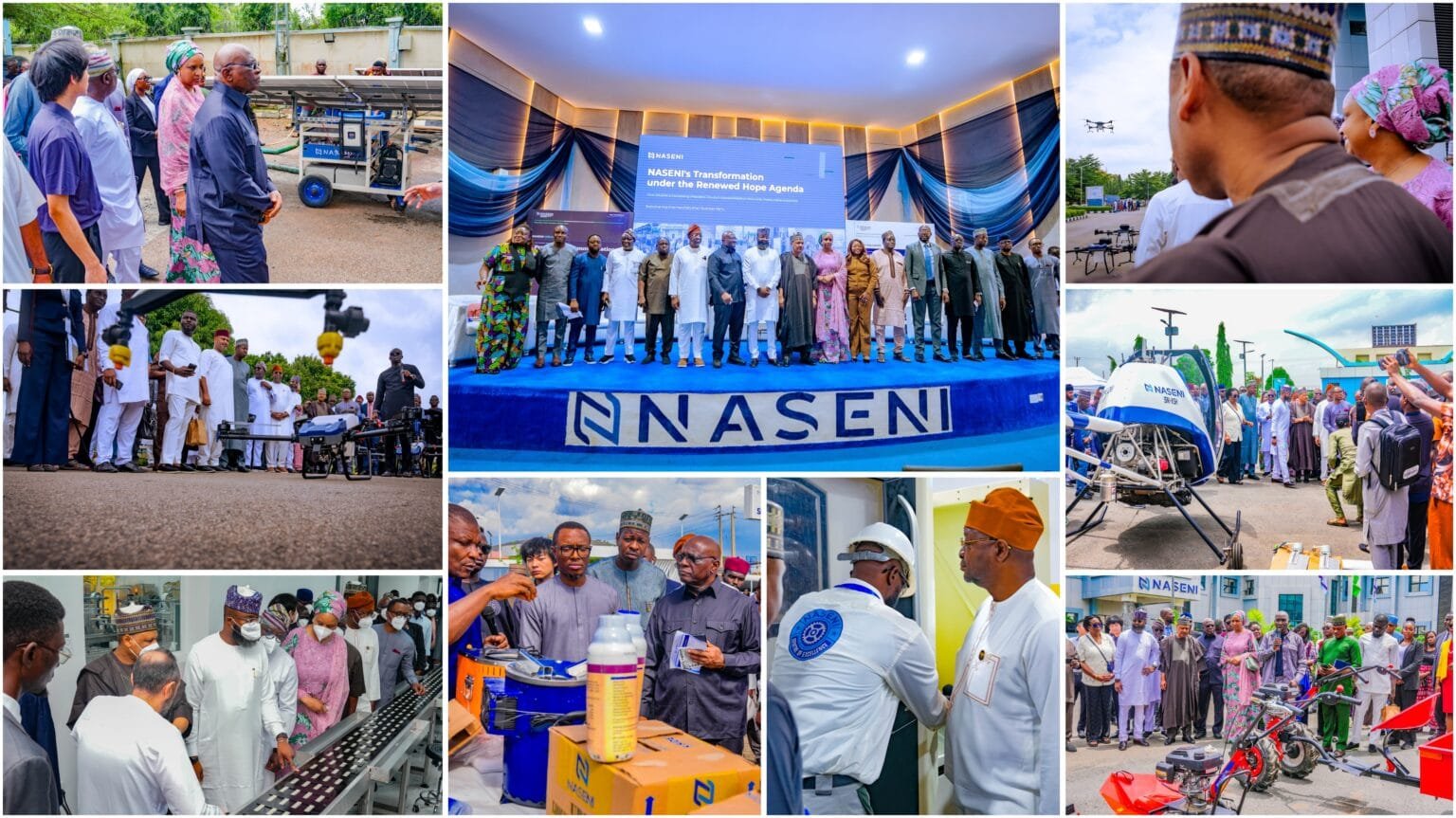
Nigeria’s push to transform scientific ideas into commercially successful products is gaining renewed attention under President Bola Ahmed Tinubu’s administration, with the National Agency for Science and Engineering Infrastructure (NASENI) playing a central role.
The strategy focuses on moving Nigerian innovations beyond research laboratories and into factories, businesses, markets, and communities.
Furthermore, the approach reflects a broader ambition to make innovation a practical driver of industrialisation, employment, productivity, and economic growth.
From Ideas to Marketable Products
Nigeria has no shortage of talented researchers, engineers, inventors, and technology entrepreneurs.
However, many promising ideas struggle to move from prototypes to mass production.
NASENI’s role is therefore important in helping bridge the gap between innovation and industry.
Research creates ideas.
Engineering develops solutions.
Industry turns solutions into products.
Markets create sustainable value.
Tinubu’s Industrialisation Agenda
The administration’s economic strategy places strong emphasis on expanding productive capacity and reducing excessive dependence on imported goods.
Furthermore, commercialising Nigerian innovations could support this objective by encouraging domestic production and strengthening local industrial capabilities.
Local production creates jobs.
Manufacturing strengthens supply chains.
Innovation improves competitiveness.
Why NASENI Matters
NASENI was established to promote the development of science and engineering infrastructure while supporting technological advancement.
Furthermore, the agency provides an important link between research, engineering, manufacturing, and industrial application.
Technology requires infrastructure.
Innovation requires investment.
Industry requires practical solutions.
Turning Research Into Industry
Commercialisation requires more than inventing a product.
Furthermore, successful innovations need testing, certification, financing, manufacturing capacity, market research, intellectual property protection, and reliable distribution channels.
Prototypes demonstrate possibilities.
Factories create scale.
Markets determine sustainability.
Supporting Nigerian Manufacturing
One of the biggest opportunities lies in using Nigerian innovations to strengthen local manufacturing.
Furthermore, locally developed technologies can support industries ranging from agriculture and healthcare to energy, transportation, telecommunications, construction, and consumer products.
Local technology supports local industries.
Manufacturing creates technical jobs.
Industrial capacity strengthens economic resilience.
Creating Jobs Through Innovation
Innovation-driven industrialisation can create opportunities for young Nigerians.
Furthermore, commercial technology companies require engineers, technicians, software developers, designers, marketers, production workers, researchers, and business professionals.
Innovation creates employment.
Technology develops specialised skills.
Industry provides career pathways.
Strengthening Agricultural Technology
Agriculture provides another major area for innovation commercialisation.
Furthermore, Nigerian engineers can develop and manufacture equipment for mechanisation, irrigation, processing, storage, and other agricultural activities.
Technology can improve farm productivity.
Processing reduces losses.
Local equipment supports farmers.
Building Nigeria’s Energy Technology Capacity
Energy is another area where local innovation can make a significant difference.
Furthermore, developing domestic technologies for power generation, energy efficiency, storage, and other applications could strengthen Nigeria’s energy ecosystem.
Energy technology supports industry.
Local solutions can reduce costs.
Innovation strengthens energy resilience.
Moving Beyond Import Dependence
Nigeria spends substantial resources importing products that could potentially be produced locally with the right technology and investment.
Furthermore, successful commercialisation could help replace some imported products with competitive Nigerian alternatives.
Local production retains economic value.
Domestic manufacturing strengthens supply chains.
Innovation can reduce external dependence.
The Financing Challenge
Turning inventions into industries requires significant capital.
Furthermore, innovators often need funding for prototypes, testing, equipment, factories, certification, marketing, and expansion.
Good ideas need financing.
Investment enables commercialisation.
Capital supports industrial scale.
The Importance of Private-Sector Partnerships
Government agencies cannot commercialise every innovation alone.
Furthermore, partnerships with manufacturers, investors, universities, research institutions, and technology companies can help move promising solutions into the marketplace.
Government creates platforms.
Researchers develop solutions.
Businesses create scale.
Investors provide capital.
Building a Culture of Commercial Innovation
Nigeria’s innovation ecosystem must increasingly reward solutions that solve real problems.
Furthermore, commercial success can encourage more researchers and entrepreneurs to develop products with clear market applications.
Problem-solving drives innovation.
Market demand encourages investment.
Successful products inspire new ideas.
Looking Ahead
President Tinubu’s push to strengthen industrialisation provides an important opportunity for NASENI to help transform Nigerian innovations into commercially viable industries.
The real measure of success will not simply be the number of inventions, research projects, or prototypes produced.
It will be the number of innovations that reach factories, markets, homes, farms, hospitals, businesses, and public institutions.
Nigeria already possesses significant intellectual and technical talent. The challenge is building the systems that allow that talent to create lasting economic value.
If government policy, research institutions, investors, manufacturers, and innovators work together effectively, Nigeria can move from importing technology to developing, manufacturing, commercialising, and exporting more of its own solutions.
That transition could become one of the most important foundations for a stronger Nigerian industrial economy.