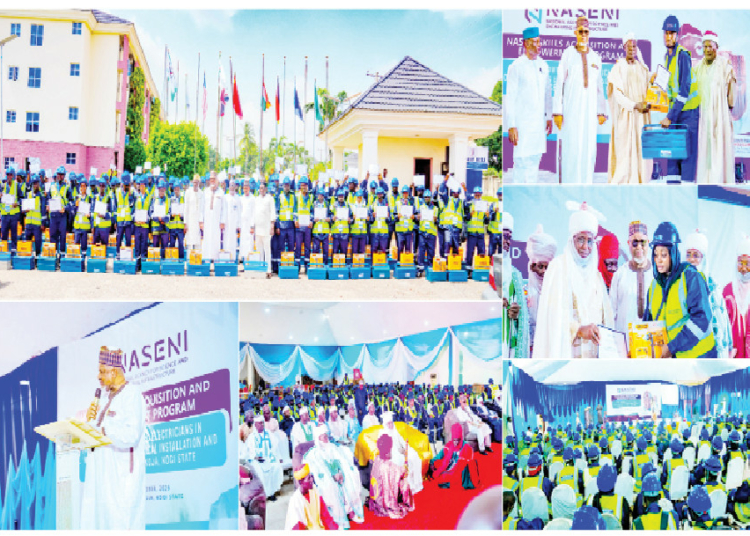
The National Agency for Science and Engineering Infrastructure (NASENI) has intensified its Skill Acquisition Training and Youth Empowerment (SATYE) programme as part of efforts to strengthen the Federal Government’s Renewed Hope Agenda under President Bola Tinubu.
The initiative reflects the growing emphasis on technical education, vocational training and youth empowerment as tools for addressing unemployment and expanding Nigeria’s productive capacity. By equipping young people with practical skills, the agency aims to improve their ability to secure employment, establish businesses and contribute to the country’s science, technology and engineering development.
The programme also aligns with NASENI’s broader mandate to promote indigenous technology, develop engineering capabilities and strengthen Nigeria’s capacity to manufacture products locally. Through targeted skills development, the agency can help connect young Nigerians with opportunities in technical trades, production and emerging industries.
However, the programme’s long-term impact will depend on the quality of training, access to equipment, opportunities for practical experience and the ability of participants to turn their newly acquired skills into sustainable livelihoods.
SATYE Targets Practical Skills and Youth Empowerment
The Skill Acquisition Training and Youth Empowerment programme is designed to equip participants with competencies that can be applied in the workplace or used to establish small businesses.
Practical training is particularly important in an economy where many young people need more than academic qualifications to compete for available jobs. Employers often require workers who can operate equipment, troubleshoot technical problems, maintain machinery and perform specialised tasks safely and efficiently.
By supporting vocational and technical learning, SATYE can help bridge the gap between education and workplace requirements. Participants who acquire relevant skills may be better positioned to pursue employment, provide services within their communities or develop businesses around their areas of competence.
Furthermore, skills training can encourage entrepreneurship among young Nigerians who prefer to establish their own ventures rather than depend entirely on formal employment.
For example, individuals with appropriate technical training may explore opportunities in equipment maintenance, fabrication, electrical services, production and other skilled occupations. The commercial viability of these activities will depend on local demand, access to tools and the availability of startup capital.
Consequently, training must be designed around practical market needs to ensure that participants leave the programme with skills they can use productively.
NASENI Connects Skills Development With Local Production
NASENI occupies an important position in Nigeria’s efforts to strengthen science, engineering and technology infrastructure. Its work centres on developing indigenous capabilities that can support local manufacturing, technological innovation and reduced dependence on imported products.
The SATYE programme can contribute to these objectives by developing a workforce capable of supporting technical operations and production activities.
Local industries need skilled technicians, equipment operators, maintenance personnel and other workers who understand production processes. When these capabilities are available domestically, businesses may find it easier to maintain equipment, improve productivity and expand operations.
Moreover, stronger technical skills can help young Nigerians participate in the development and maintenance of locally produced technologies.
This connection between skills acquisition and industrial development is important because training programmes can deliver wider economic benefits when they support sectors with real demand for skilled labour.
However, achieving this outcome requires coordination between training providers, manufacturers, employers and other industry stakeholders. Their participation can help ensure that training content reflects actual workplace requirements and evolving technological needs.
Youth Empowerment as a Response to Unemployment
Youth unemployment and underemployment remain important economic concerns in Nigeria. Many young people face difficulties securing stable work, while others earn limited incomes through informal activities that offer few opportunities for advancement.
Technical and vocational training can provide another route into employment by equipping participants with practical capabilities that businesses need.
For some trainees, the immediate objective may be to obtain employment with an established company. Others may use their skills to provide services independently, establish small workshops or develop businesses serving local communities.
In addition, self-employment can create opportunities for further job creation when successful entrepreneurs begin employing apprentices and additional workers.
Nevertheless, skills acquisition alone cannot resolve unemployment. Participants may still need access to tools, affordable finance, business development support, customers and reliable infrastructure.
The effectiveness of SATYE will therefore depend on whether it connects training with the wider support systems required for people to use their skills commercially.
Supporting the Renewed Hope Agenda
The Federal Government’s Renewed Hope Agenda includes objectives relating to economic growth, job creation, skills development and improved opportunities for Nigerians.
NASENI’s intensified SATYE programme is positioned to contribute to these objectives by developing practical capabilities among young people and strengthening the technical workforce needed for productive economic activity.
Skills development can support these priorities in several ways. First, it can help participants become more employable by improving their technical knowledge and practical experience. Second, it can provide a foundation for entrepreneurship and small-business development. Third, it can strengthen the supply of skilled labour available to industries seeking to expand local production.
Furthermore, technical training can help connect young people to emerging opportunities in engineering, manufacturing and technology-related services.
However, the contribution of the programme should be measured through tangible results rather than the number of training sessions conducted alone. Important indicators include completion rates, employment outcomes, businesses established, income improvements and the number of participants who remain economically active after training.
These measures would help establish whether the programme is delivering lasting benefits to its intended beneficiaries.
Partnerships and Equipment Will Determine Success
Effective vocational training requires more than classroom instruction. Participants need access to suitable equipment, practical demonstrations, qualified instructors and opportunities to apply their knowledge.
Partnerships with manufacturers, technical institutions and private-sector employers can help improve the quality and relevance of training. Such partnerships may also provide opportunities for internships, apprenticeships and workplace exposure.
For participants interested in entrepreneurship, additional support in business planning, record-keeping, customer relations and financial management could improve their chances of success.
Access to tools and startup financing is equally important. A trainee who completes a technical course but cannot afford the necessary equipment may struggle to turn the acquired skill into an income-generating activity.
NASENI can therefore strengthen the programme’s impact by ensuring that training is linked to realistic employment and business opportunities.
Regular monitoring would also help identify the skills most in demand, assess participant progress and improve future training cycles.
Measuring the Impact of SATYE
As NASENI intensifies the programme, transparency and measurable outcomes will be important in demonstrating its value.
The agency can assess progress by tracking how many participants complete their training, secure employment, establish businesses or improve their earnings. It can also examine whether employers consider graduates adequately prepared for technical roles.
Such information would help determine which training areas produce the strongest outcomes and where adjustments are necessary.
In addition, monitoring the experiences of former participants could reveal practical barriers that emerge after training, including limited access to tools, finance, customers or further professional development.
Addressing these obstacles would help ensure that SATYE provides more than short-term training opportunities.
Conclusion: Building Skills for Sustainable Economic Growth
NASENI’s intensified Skill Acquisition Training and Youth Empowerment programme places technical skills and youth development at the centre of efforts to support Nigeria’s productive economy.
By developing practical competencies, the initiative has the potential to improve employment prospects, encourage entrepreneurship and strengthen the technical workforce required for local manufacturing and engineering development.
Its alignment with the Renewed Hope Agenda also highlights the importance of connecting national economic priorities with opportunities for young Nigerians.
Ultimately, the programme’s success will depend on the extent to which participants can apply their training in real workplaces, establish viable businesses and earn sustainable incomes. With relevant training, practical resources, industry partnerships and effective monitoring, SATYE could contribute to a stronger technical workforce and broader economic opportunities for Nigerian youths.