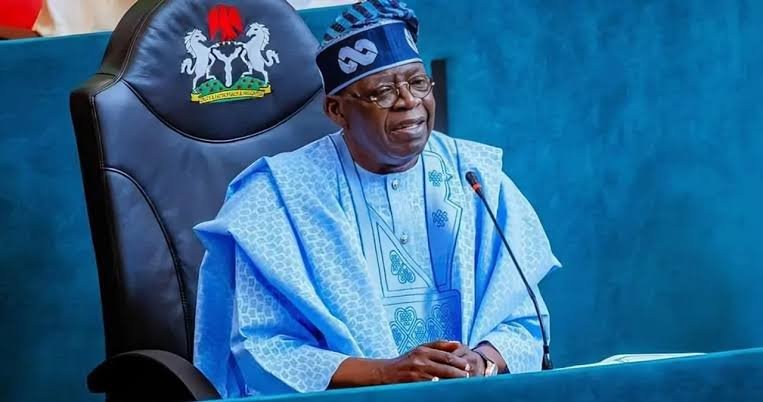
President Bola Tinubu has asked the National Assembly to approve the processing of external loans worth $20,517,755,901 and €1,045,083,643 under the 2026–2027 Supplementary External Borrowing Plan.
The request places a substantial external financing proposal before lawmakers as the Federal Government considers additional resources to support its spending and development priorities. The proposed facilities are denominated in two foreign currencies, meaning their combined naira value would depend on the applicable exchange rates.
The National Assembly’s consideration will be important in determining whether the proposed borrowing can proceed through the required approval process. Lawmakers will also need to examine the intended uses of the funds, the terms attached to the facilities and the implications for Nigeria’s public finances.
While external loans can provide governments with resources for major investments, they also create repayment obligations that can affect future budgets. Consequently, the proposed borrowing raises important questions about the balance between financing national development and maintaining sustainable debt levels.
National Assembly to Consider Tinubu’s Request
The President’s request seeks approval for the processing of external loans under the supplementary borrowing plan covering 2026 and 2027.
The proposed amounts are $20.52 billion and approximately €1.05 billion. However, the request to approve loan processing should not automatically be interpreted as confirmation that all the facilities have been finalised, disbursed or converted into additional public debt.
The distinction matters because external borrowing typically involves several stages, including legislative approval where required, negotiations with lenders, agreement on financing terms and satisfaction of relevant conditions.
As lawmakers examine the proposal, they will have an opportunity to seek clarification on the purpose of the loans, their repayment schedules and the projects or programmes expected to benefit.
The outcome of that consideration will help determine the next steps for the borrowing plan.
Why the Federal Government May Seek External Loans
External borrowing is one of the financing options available to governments seeking funds for infrastructure, public services and other development priorities.
Large projects often require substantial upfront investment, while government revenue may be insufficient to cover all planned expenditure within a single budget cycle. Loans can therefore provide additional financing, particularly when the projects involved require long-term investment.
For Nigeria, the potential benefits depend on how borrowed funds are allocated and managed. Investments in transport, electricity, agriculture, healthcare and productive infrastructure can support economic activity when they address genuine needs and deliver measurable results.
For example, improved electricity infrastructure could help businesses reduce operating constraints, while better transport networks could lower logistics costs and strengthen connections between producers and markets.
However, borrowing alone does not guarantee these outcomes. Projects must be properly selected, transparently procured and efficiently implemented. Otherwise, delays, cost overruns and weak oversight could reduce the economic benefits while leaving the government responsible for repayment.
The government’s ability to demonstrate clear links between borrowing and productive outcomes will therefore be central to evaluating the proposal.
Debt Sustainability and Exchange-Rate Risks
One of the major considerations surrounding the proposed borrowing is Nigeria’s capacity to meet future repayment obligations.
External loans denominated in dollars and euros expose borrowers to exchange-rate movements. If the naira weakens against either currency, the government may need more naira to meet the same foreign-currency repayment obligation.
This can place additional pressure on public finances, particularly when government revenue does not grow at a comparable pace.
The cost of borrowing also depends on interest rates, repayment periods, grace periods and other contractual conditions. Concessional financing with favourable terms can have different implications from commercial loans carrying higher interest rates.
For that reason, the headline amounts alone are not enough to determine the proposal’s full fiscal impact. A proper assessment would require details of the individual facilities, their costs, maturity dates and intended uses.
The government must also consider how debt servicing will interact with expenditure on essential public services and other national priorities.
Transparency Will Be Critical
As the borrowing request moves through the legislative process, transparency will be essential to building public confidence.
Lawmakers and citizens need sufficient information to understand what the loans will finance, why the financing is necessary and how the government intends to measure the results.
Clear disclosure of loan terms, project allocations and implementation timelines would help strengthen scrutiny. It would also allow the public to assess whether the proposed financing is producing benefits that justify the associated costs.
Furthermore, oversight should continue after approval. Regular reporting on disbursements, project progress and expenditure can help identify delays and ensure that funds are used for their designated purposes.
Strong procurement procedures and independent monitoring can also reduce the risk of waste and improve accountability.
Borrowing Must Translate Into Measurable Development
The proposed 2026–2027 Supplementary External Borrowing Plan places an important question before the National Assembly: how can Nigeria secure additional development financing while protecting its long-term fiscal position?
The answer will depend on the purpose of the loans, the conditions under which they are obtained and the effectiveness of the projects they support.
If the funds finance productive investments that improve infrastructure, expand economic opportunities and strengthen revenue generation, they could contribute to development. However, if projects fail to deliver their intended outcomes, repayment obligations could become a greater burden on future budgets.
The National Assembly’s review therefore represents an important opportunity to examine the proposal’s financial and developmental implications before the borrowing process advances.
Ultimately, the success of the plan will not be measured by the amount of money secured alone. It will depend on whether the financing produces verifiable public benefits, whether the government can meet its obligations and whether the resulting debt remains manageable over time.