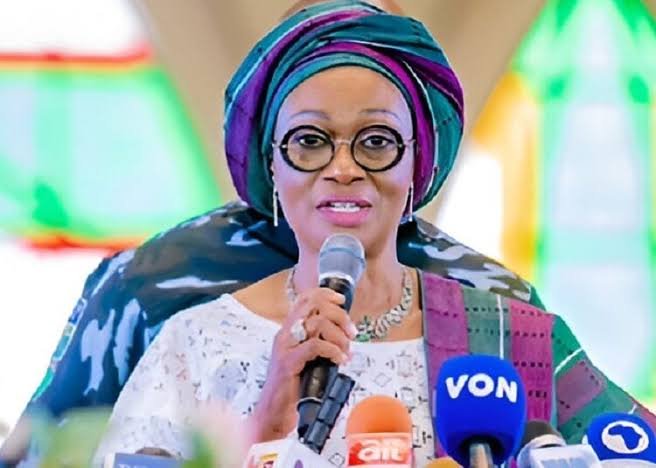
Nigeria’s First Lady, Oluremi Tinubu, has described women as central to the development and future of Nigeria, emphasizing that their active participation in governance and nation-building can significantly shape the country’s progress and prosperity.
The First Lady stressed that women continue to contribute meaningfully across different sectors, including politics, education, healthcare, business, agriculture, entrepreneurship and community development.
According to her, societies often achieve stronger and more sustainable progress when women receive opportunities to participate fully in leadership, decision-making and economic activities.
She therefore encouraged greater inclusion of women in governance structures while calling for continued support for policies and initiatives that promote gender participation and empowerment.
Women as Drivers of National Development
Women remain important contributors to economic growth and social development across Nigeria.
From rural communities to urban centres, women play significant roles in supporting families, managing businesses, advancing education and strengthening local economies.
The First Lady noted that women often serve as pillars within communities through their contributions to healthcare, social welfare, peacebuilding and enterprise development.
Consequently, empowering women can generate broader benefits for families, institutions and the national economy.
Research consistently shows that increased female participation in education, leadership and economic activities contributes positively to productivity, innovation and social stability.
Therefore, expanding opportunities for women remains an important component of sustainable national development.
The Importance of Women in Governance
Oluremi Tinubu also emphasized the importance of women’s representation within governance and public leadership.
Inclusive governance systems, she explained, often produce more balanced perspectives and stronger decision-making processes.
Women leaders across the world continue to contribute significantly to public policy, institutional reforms and community development initiatives.
The First Lady argued that increasing female participation in governance can help strengthen democratic institutions while ensuring broader representation of societal interests.
Furthermore, she encouraged women to remain confident, proactive and committed to contributing positively within political and leadership spaces.
According to her, leadership should reflect competence, service and dedication rather than gender limitations.
Education and Empowerment as Foundations for Progress
Education remains one of the most powerful tools for empowering women and expanding opportunities.
The First Lady stressed that investing in girls’ education and professional development remains essential for building a stronger and more prosperous society.
Educated and empowered women often contribute more effectively to economic productivity, innovation and social advancement.
Moreover, access to education can help reduce poverty, improve healthcare outcomes and strengthen community resilience.
Oluremi Tinubu therefore encouraged continued efforts to remove barriers limiting the advancement of women and girls across different sectors of society.
She also highlighted the importance of mentorship, skills development and entrepreneurship support for young women seeking to achieve their goals.
Strengthening Families and Communities
Beyond politics and economics, women continue to play critical roles in nurturing families and promoting social stability.
Communities often rely heavily on the leadership, resilience and compassion of women in addressing social challenges and supporting development initiatives.
The First Lady noted that women contribute significantly to peacebuilding, conflict resolution and community support systems across the country.
Therefore, creating environments where women can thrive benefits not only individuals but also society as a whole.
According to her, stronger support for women ultimately contributes to stronger families, healthier communities and more stable institutions.
Promoting Inclusion and Equal Opportunity
The call for greater female participation also reflects broader conversations about inclusion and equal opportunity within Nigerian society.
Advocates for gender inclusion continue to emphasize the importance of creating systems that allow women to compete fairly and contribute fully to national development.
While progress has occurred in several sectors, challenges related to representation, access and social barriers still remain in many areas.
The First Lady therefore encouraged continued collaboration among government institutions, civil society groups, educational organisations and private sector stakeholders to support women’s advancement.
She stressed that national progress becomes more sustainable when every citizen receives equal opportunities to contribute and succeed.
Looking Ahead
The remarks by Oluremi Tinubu reinforce the growing recognition of women’s importance in governance, economic growth and national development within Nigeria.
As conversations around inclusion and empowerment continue, many stakeholders believe that expanding opportunities for women will remain essential for strengthening institutions, promoting innovation and building a more prosperous future.
For the First Lady, empowering women is not simply a social objective but also a strategic pathway toward sustainable national progress and stronger democratic participation.
Ultimately, the future development of Nigeria will depend greatly on how effectively the country harnesses the talents, leadership and contributions of both women and men alike.