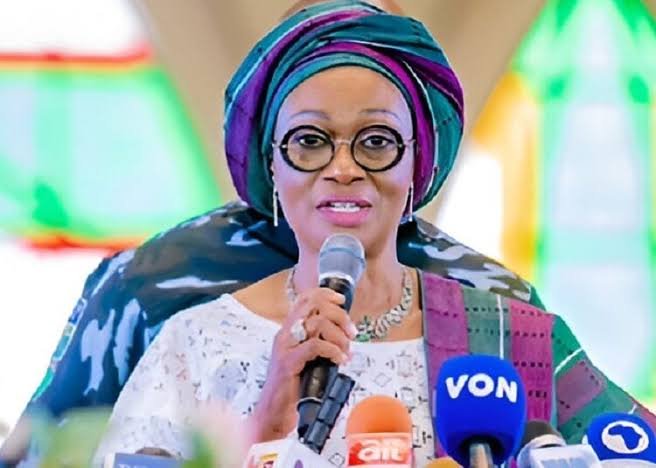
Nigeria’s First Lady, Oluremi Tinubu, has described women as central to the development, stability and future progress of the nation, emphasizing that their active participation in governance and leadership can significantly shape the country’s advancement.
The First Lady stressed that women continue to contribute immensely to national growth through their roles in families, communities, businesses, education, healthcare, politics and public service.
According to her, empowering women and creating opportunities for greater inclusion in decision-making processes will strengthen governance and support sustainable national development.
She therefore encouraged women across the country to remain actively involved in leadership, civic engagement and community development initiatives capable of improving society and advancing the nation’s collective interests.
Women as Drivers of National Progress
Across the world, women continue to play critical roles in economic growth, social development and political transformation.
In Nigeria, women contribute significantly to agriculture, entrepreneurship, education, healthcare, innovation and public administration. Their resilience, creativity and leadership often drive progress within households, communities and institutions.
The First Lady noted that nations achieve stronger and more inclusive growth when women participate fully in governance and development processes.
Furthermore, she emphasized that inclusive leadership creates broader perspectives, encourages balanced policymaking and strengthens democratic institutions.
As a result, increasing women’s representation in governance remains important for achieving long-term national progress.
The Importance of Inclusive Governance
Good governance depends on participation, representation and inclusiveness.
When women actively contribute to leadership and policymaking, societies often benefit from more diverse ideas and broader approaches to problem-solving.
Oluremi Tinubu explained that women possess valuable experiences and perspectives capable of enriching governance structures and improving policy outcomes.
Therefore, encouraging female participation in politics, administration and leadership positions should remain a national priority.
She also stressed that creating supportive environments for women in leadership can inspire younger generations to pursue opportunities in public service, business and national development.
Empowering Women Through Education and Opportunity
Education and economic empowerment remain essential tools for advancing women’s participation in national development.
Access to quality education equips women with the knowledge, confidence and skills needed to contribute effectively across different sectors of society.
Similarly, economic opportunities help women achieve financial independence while strengthening families and communities.
The First Lady emphasized the importance of policies and programmes that support women’s education, entrepreneurship, healthcare and professional growth.
By investing in women, nations invest directly in stronger communities, healthier families and more sustainable economic progress.
Strengthening Families and Communities
Women continue to serve as pillars of stability within families and communities across Nigeria.
Beyond their professional and public responsibilities, many women provide essential support systems that contribute to social cohesion and community development.
The First Lady acknowledged the sacrifices, resilience and dedication demonstrated by Nigerian women in various aspects of national life.
She noted that stronger support for women ultimately strengthens society as a whole because empowered women often create positive ripple effects across education, health, economic productivity and civic participation.
Consequently, promoting gender inclusion remains closely connected to broader national development objectives.
Encouraging Future Female Leaders
The conversation around women’s participation increasingly extends beyond representation to leadership development and mentorship.
Young girls and aspiring female leaders often benefit from visible examples of women succeeding in governance, business, academia and public service.
Oluremi Tinubu encouraged women to continue supporting one another while mentoring younger generations to pursue excellence and leadership opportunities.
She stressed that confidence, determination and education can help women overcome barriers and contribute meaningfully to national progress.
Furthermore, creating pathways for emerging female leaders will help ensure stronger continuity in governance and public service.
A Vision for Inclusive National Development
The First Lady’s remarks reflect a broader national conversation about inclusion, empowerment and sustainable development.
Countries that maximize the contributions of both men and women often achieve stronger economic performance, greater social stability and more balanced governance systems.
Nigeria’s development aspirations therefore depend significantly on ensuring that women continue to participate actively across all sectors of society.
By encouraging inclusion, supporting empowerment and expanding opportunities, stakeholders can help create a more equitable and prosperous future for all citizens.
Looking Ahead
The message delivered by Oluremi Tinubu reinforces the growing recognition that women remain central to Nigeria’s development journey and future success.
As conversations around governance, economic growth and national progress continue, greater female participation will remain essential for building stronger institutions and more inclusive communities across Nigeria.
Ultimately, empowering women is not only a matter of representation. It also represents an investment in national stability, innovation, prosperity and sustainable development for future generations.