The Renewed Hope Initiative (RHI), in partnership with the Niger Delta Development Commission (NDDC), has distributed learning iPads and cash support to secondary school students in Rivers State as part of efforts to strengthen digital learning and improve academic development.
The intervention combines technology, financial assistance and student welfare support, reflecting a broader effort to provide young Nigerians with resources that can improve their educational experience and prepare them for an increasingly digital economy.
iPads Designed to Support Digital Education
The learning devices were provided to support secondary school students and expand their access to digital educational materials.
The iPads were equipped with educational applications designed to make learning more interactive and engaging. Consequently, students can use the devices to access learning resources beyond the traditional classroom environment.
The initiative also places emphasis on responsible use of the devices. Schools are expected to ensure that the iPads remain dedicated to educational purposes and reach the students for whom they were provided.
That responsibility is important because providing technology is only the beginning of digital education. Schools must also ensure that students receive appropriate guidance on how to use the devices effectively.
Schools Welcome the Intervention
Meanwhile, representatives of beneficiary schools welcomed the intervention and described the digital devices as useful additions to their learning resources.
Teachers and school representatives said the educational applications installed on the devices could assist both students and teachers.
The reactions underline the potential value of digital tools in classrooms where access to modern learning materials may be limited.
Beyond providing electronic devices, the programme could encourage students to become more familiar with digital resources that are increasingly important in education and the wider economy.
Digital Learning Can Extend Beyond the Classroom
The intervention comes at a time when technology continues to reshape education.
Traditional classroom teaching remains central to secondary education, but digital resources can give students additional opportunities to study, revise lessons and explore educational materials.
Furthermore, educational applications can provide students with structured resources that complement what they learn from teachers.
This approach can be particularly valuable when students have limited access to computers or other digital learning tools at home.
However, successful digital education requires more than distributing devices. Students need relevant content, teachers need adequate support and schools need systems for maintenance, monitoring and responsible use.
Therefore, the long-term value of the iPads will depend on how effectively schools integrate them into everyday learning.
Financial Support Adds Another Layer
Alongside the learning devices, the programme also provided financial support to beneficiaries.
The cash intervention gives the initiative another dimension by addressing some of the practical needs associated with education.
For families facing financial pressures, additional support can help students remain focused on their studies and reduce some of the challenges that can affect participation in school.
At the same time, the effectiveness of such assistance depends on transparent distribution and ensuring that the intended beneficiaries receive the support.
RHI Adds Menstrual Health Support
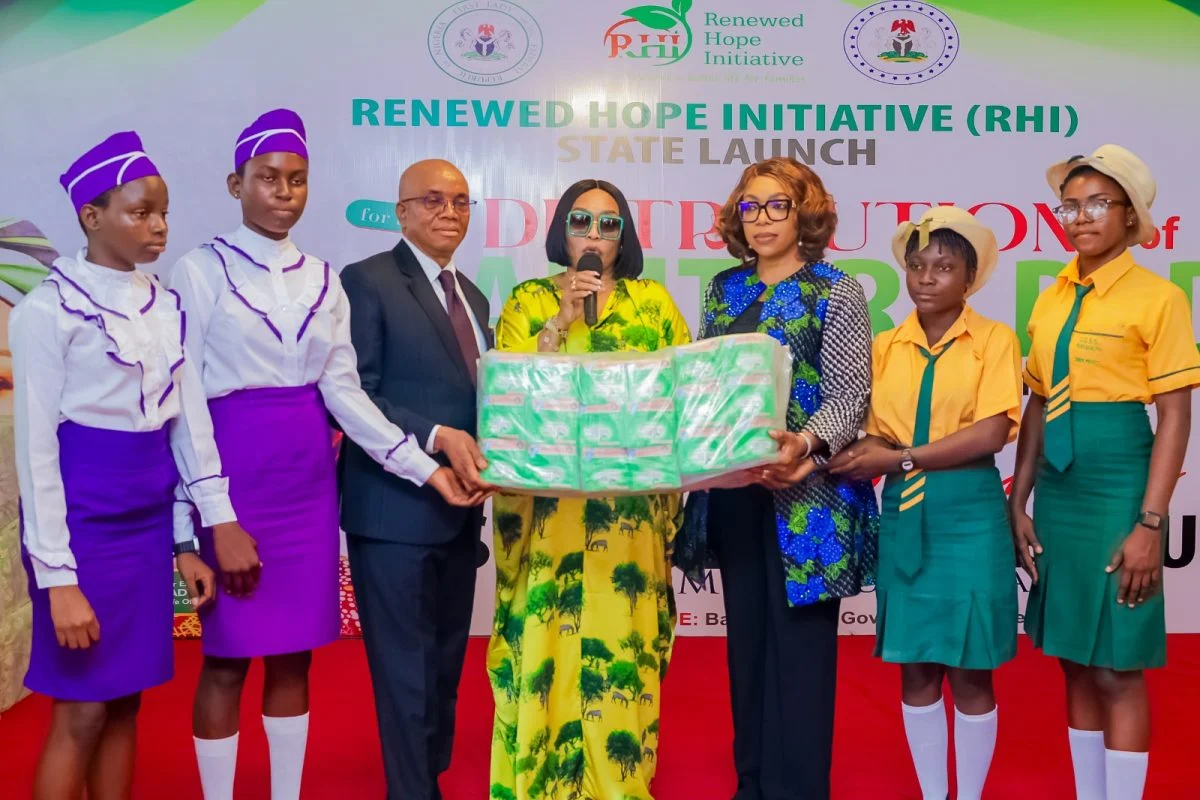
In addition to the learning intervention, the Renewed Hope Initiative also provided sanitary pads for female students in Rivers State.
The support was designed to address menstrual health and help ensure that girls can continue participating in school during their menstrual periods.
The intervention recognises that educational development involves more than academic materials. Students also require basic welfare support that allows them to attend classes regularly and participate fully in school activities.
The sanitary-pad component therefore complements the digital learning initiative by addressing a practical challenge that can affect the educational experience of female students.
Education and Health Support Combined
The combination of digital learning devices, financial assistance and menstrual-health support reflects a broader approach to student development.
While the iPads focus on educational resources and digital skills, the financial support addresses some of the economic pressures affecting students, while the menstrual-health intervention focuses on the welfare of female students.
Moreover, bringing these areas together creates a more comprehensive support package for beneficiaries.
Rather than treating education as a single issue, the intervention recognises the connection between learning resources, financial circumstances and student welfare.
Students Encouraged to Make Use of the Support
Students who benefited from the intervention expressed appreciation for the support and welcomed the opportunity to access additional learning resources.
The beneficiaries are expected to use the devices responsibly and take advantage of the educational applications available to them.
For the programme to achieve its broader objectives, however, continued attention to monitoring, maintenance and proper distribution will remain important.
Schools will need to ensure that the learning devices remain functional and are used consistently for educational purposes. Similarly, welfare materials must reach the students for whom they were intended.
Partnership Strengthens Education Support
The collaboration between the RHI and NDDC also highlights the role partnerships can play in expanding educational opportunities.
Government institutions and social intervention programmes can combine resources to address specific challenges facing students, particularly in areas where access to modern learning facilities remains uneven.
Consequently, partnerships of this nature can help extend the reach of educational support beyond individual schools and create broader opportunities for young people.
The Rivers intervention also demonstrates how digital education can be combined with welfare initiatives rather than treated as an isolated technology project.
A Wider Push for Better Learning Opportunities
The RHI and NDDC intervention highlights the growing importance of technology and targeted support in education.
For students, access to digital learning tools can create additional opportunities to engage with educational materials, while financial and welfare interventions can help address some of the practical challenges that affect school participation.
Ultimately, the distribution of learning iPads, cash support and sanitary pads represents an effort to support students both inside and outside the classroom.
The lasting impact of the programme will depend on sustained use of the learning devices, effective monitoring, responsible distribution and continued investment in the educational and welfare needs of young Nigerians.