President Bola Ahmed Tinubu is scheduled to inaugurate the completed section of the Kaduna-Kano Standard Gauge Railway on December 3, 2026, as the Federal Government intensifies efforts to expand rail transportation and improve connectivity across Northern Nigeria.
The All Progressives Congress (APC) Presidential Campaign Council disclosed the planned inauguration in a statement issued on Sunday, November 8, through its spokesperson, Dele Alake. According to the council, the 203-kilometre Kaduna-Zaria-Kano railway project has reached approximately 90 per cent completion, while the completed 190-kilometre Jaji-Kano section is ready for inauguration.
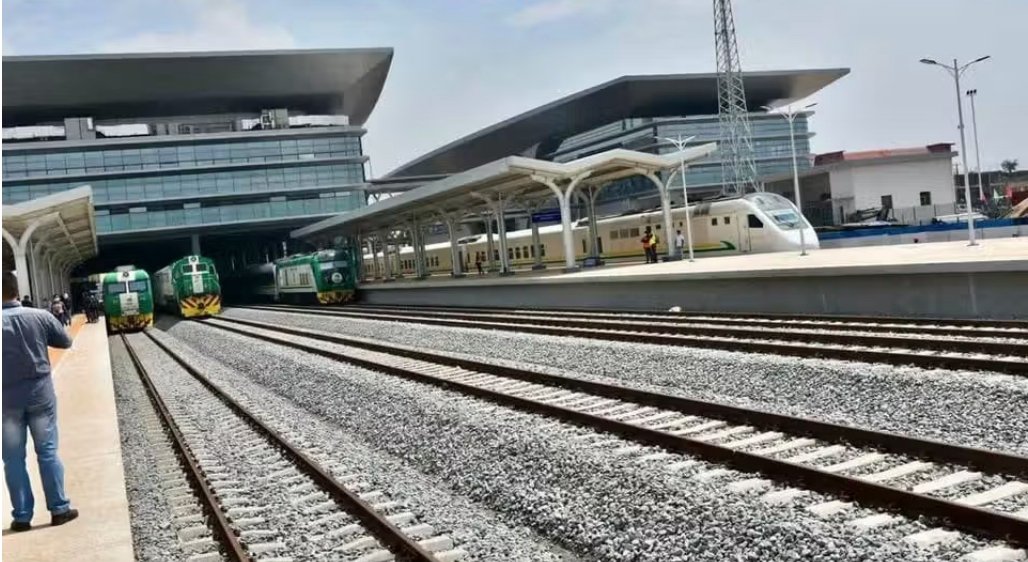
The railway, which extends the existing Abuja-Kaduna standard gauge line, is expected to establish a continuous rail connection between Abuja, Kaduna, Zaria and Kano. Once fully completed and operational, it will provide an alternative to road transportation along one of Northern Nigeria’s busiest commercial corridors.
Jaji-Kano Section Set for Inauguration
The planned December 3 inauguration represents an important milestone for the Kaduna-Kano railway project, which has experienced delays associated with financing and other implementation challenges.
The APC Presidential Campaign Council stated that the project was less than 30 per cent complete when Tinubu assumed office in May 2023. It added that the current completion level of approximately 90 per cent reflected progress under the administration.
However, the planned inauguration concerns the completed 190-kilometre Jaji-Kano section rather than the entire railway corridor. The remaining works include resolving outstanding land acquisition and compensation issues within Kaduna metropolis, which have affected the completion of the connection between the existing Abuja-Kaduna line and the new railway section.
Tinubu has consequently directed that the outstanding compensation matters be resolved immediately to facilitate the completion of the entire corridor.
The Federal Government’s objective is to enable passengers to travel by train from Abuja through Kaduna and Zaria to Kano without interruption. Achieving this will require the completion of the outstanding sections, necessary technical checks and arrangements for regular passenger services.
Federal Government Inspects Railway Infrastructure
Before announcing the inauguration date, the Federal Government conducted an inspection of the Kaduna-Kano railway and the Kano-Katsina-Maradi project.
The inspection team was led by the Permanent Secretary of the Federal Ministry of Transportation, Engr. Funso Adebiyi, following a directive from President Tinubu.
During the exercise, officials examined the railway alignment, drainage infrastructure, embankment protection, stone pitching and soil stabilisation. These components are important to the safety, stability and long-term performance of railway infrastructure, particularly across sections involving significant changes in ground elevation.
The inspection also included a test-run train journey from Jaji in Kaduna State to Kano. The exercise allowed officials to assess the completed track infrastructure and passenger comfort while observing the condition of the railway corridor.
Adebiyi reportedly expressed satisfaction with the quality of construction, describing the inspected infrastructure as encouraging as the project approached its next stage.
The assessment is part of the Federal Government’s efforts to evaluate construction quality before commissioning the completed section.
Kano-Katsina-Maradi Railway Also Advances
Alongside the Kaduna-Kano railway, the Federal Government is advancing the 400-kilometre Kano-Katsina-Maradi railway project, which is expected to strengthen transportation and commercial connections between Nigeria and neighbouring Niger Republic.
The APC Presidential Campaign Council reported that the project had reached approximately 70 per cent completion, compared with barely five per cent when Tinubu assumed office in 2023.
The council also announced plans to inaugurate the completed 250-kilometre Dawanu-Kano-Kazaure-Daura-Katsina section on December 3.
The railway is expected to improve movement across several commercial and population centres in Northern Nigeria, while strengthening cross-border trade links towards Niger Republic.
For communities along the corridor, improved rail connectivity could create opportunities for agricultural transportation, passenger movement and the distribution of locally produced goods.
Nevertheless, the full economic benefits will depend on the completion of the remaining construction work, operational arrangements and the availability of reliable passenger and freight services.
Rail Connectivity to Support Northern Commerce
The Kaduna-Kano railway is strategically important because it connects major urban and commercial centres in the North-West with the existing Abuja-Kaduna railway corridor.
Kaduna and Kano are important centres for manufacturing, agriculture, trade and services. Zaria also serves as a significant educational and commercial centre. Connecting these locations through standard gauge rail infrastructure could improve the movement of people and goods while reducing dependence on road transportation.
For businesses, a functioning railway system could offer an additional option for moving agricultural produce, manufactured products and other commercial goods. It could also improve access to markets, support supply chains and create opportunities for businesses operating along the corridor.
Passenger transportation is another important consideration. A reliable railway service could provide commuters and long-distance travellers with an alternative to road journeys, particularly along routes where road conditions, congestion and security concerns can affect travel.
However, the benefits will depend on affordable fares, dependable schedules, passenger safety and effective maintenance of the railway infrastructure.
Project Financing and Construction Challenges
The Kaduna-Kano railway is a major component of Nigeria’s wider standard gauge rail expansion programme. The approximately 203-kilometre project has an estimated cost of $973 million and is being constructed by China Civil Engineering Construction Corporation (CCECC).
Financing challenges previously slowed construction after China’s Export-Import Bank, which had initially been expected to provide funding, withdrew its support. In January 2025, the China Development Bank released a $254.76 million loan to support the project’s construction.
The financing arrangement helped address an important funding gap, although the project has continued to face implementation challenges, including the outstanding land acquisition and compensation issues in Kaduna metropolis.
Resolving these matters remains necessary to establish the complete connection between Abuja and Kano and achieve uninterrupted railway operations across the corridor.
December 3 Commissioning and Expectations
The planned December 3 inauguration of the Jaji-Kano railway section and the selected Kano-Maradi corridor section represents a significant development in the Federal Government’s northern infrastructure programme.
However, commissioning completed sections should be distinguished from the commencement of full commercial passenger and freight services. The availability of regular services will depend on operational readiness, safety certification, staffing, maintenance arrangements and other requirements.
The Federal Government’s broader objective is to expand railway infrastructure beyond existing routes, strengthen regional connectivity and provide additional transportation options for Nigerians.
For communities and businesses across Kaduna, Zaria and Kano, the expected railway connection offers the prospect of improved mobility and stronger commercial links.
Ultimately, the success of the Kaduna-Kano railway will depend not only on completing its construction but also on delivering safe, affordable and reliable services that meet the transportation needs of passengers and businesses.