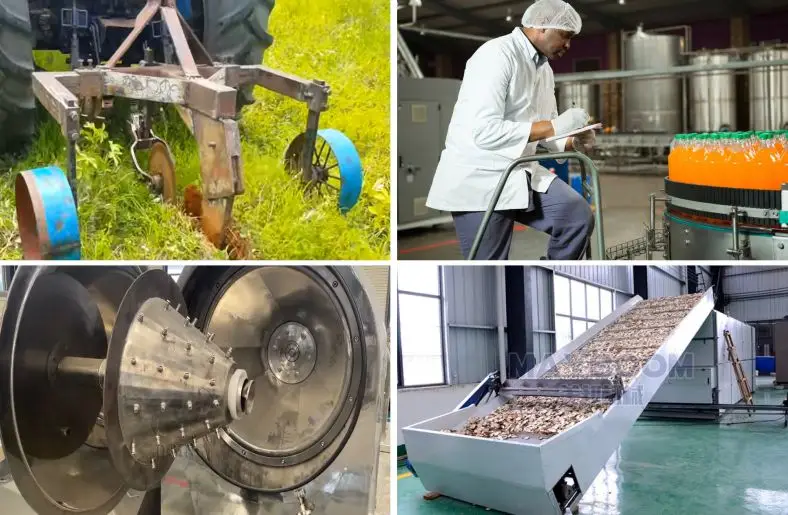
Nigeria’s cassava value chain holds enormous potential for food security, rural employment and export earnings, but the country cannot fully benefit from its production strength while much of its harvest leaves farms with limited processing and value addition. Through its cassava development initiatives, the National Agricultural Land Development Authority (NALDA) is seeking to connect cultivation with processing, packaging and marketing, creating opportunities for farmers and agribusiness operators to earn more from the crop.
The strategy is particularly important for garri and industrial starch, two products with different but complementary markets. Garri remains a major Nigerian food staple, while cassava starch supplies raw materials to food manufacturers, pharmaceutical companies, paper producers, textile businesses and other industries. Developing reliable processing facilities can therefore help Nigeria serve household demand while expanding its participation in the international market for cassava-based products.
From Cassava Farms to Processing Facilities
NALDA’s plans to strengthen cassava processing were evident in its 2021 agricultural development programme for Ogun State. The authority announced plans to establish a garri processing and packaging plant to complement integrated farm estates proposed across the state’s three senatorial districts.
The initiative formed part of a broader agricultural model that was expected to combine cultivation, processing, packaging and marketing. NALDA also proposed reactivating approximately 700 hectares of land and positioning itself as an off-taker for farmers, creating a more dependable route from farm production to commercial markets.
In August 2021, the Federal Government announced that construction had commenced on an integrated farm estate in Ogun State, with a target of engaging 1,500 beneficiaries. The proposed estate included a cassava processing zone, warehouses and other agricultural facilities. However, the announced target and construction plans should not be confused with independently verified evidence that every proposed processing component became operational or achieved its intended production level.
This distinction matters because the success of an agricultural processing programme depends not only on establishing infrastructure but also on keeping machinery operational, securing sufficient raw materials and maintaining consistent access to buyers. and provide the background to the initiative.
Garri Production and the Opportunity for Local Consumption
Garri offers one of the most direct opportunities for cassava value addition because it is widely consumed across Nigeria. Instead of selling fresh cassava tubers immediately after harvesting, farmers can supply processing facilities that convert the roots into a product with a longer shelf life and broader distribution potential.
A modern garri processing operation typically involves peeling, washing, grating, fermentation, pressing, sieving, frying, cooling and packaging. Mechanisation can improve consistency, reduce labour requirements and support better hygiene, although the quality of the final product also depends on raw-material handling and proper control of each processing stage.
NALDA’s proposed Ogun plant was intended to support this process by buying cassava from farmers, processing it and packaging the finished product for the market. Such an arrangement could strengthen the relationship between producers and processors, particularly where farmers have struggled to secure dependable buyers.
However, the available public information does not establish the plant’s current daily garri production capacity. It would therefore be misleading to assign it a figure in tonnes per day without an official technical specification or an independently verified operational report.
Industrial Starch: Moving Beyond the Food Market
While garri serves a large domestic food market, cassava starch offers opportunities across several manufacturing industries. Industrial starch is used in food processing, confectionery, pharmaceuticals, paper and cardboard production, adhesives, textiles and other applications.
Producing starch at commercial scale requires specialised equipment and a more demanding processing chain than traditional garri production. The roots must be washed, grated or rasped, screened, separated and refined before the starch is dried and packaged to meet buyers’ specifications. Consistent moisture levels, purity and product quality are particularly important when supplying industrial customers.
NALDA’s more recent cassava industrialisation strategy reflects this wider opportunity. In November 2025, the authority signed a memorandum of understanding with Agbeyewa Farms Limited, designating the company as the anchor operator for its Cassava Farm Estate in Ekiti State. The partnership was presented as a route towards expanding cultivation and developing the processing of cassava derivatives, including starch, sorbitol and flour.
Agbeyewa’s chief executive disclosed that the company had cultivated more than 3,000 hectares and was pursuing an expansion to 5,000 hectares. NALDA also indicated that the partnership would support private-sector investment and cassava development in other states, including Delta and Kwara.
The agreement is significant because industrial processing requires a reliable supply of cassava throughout the year. Large-scale factories cannot operate efficiently when they depend on irregular deliveries from scattered farms. Linking commercial cultivation, aggregation and processing can help reduce that supply risk.
Nevertheless, the announced expansion target is not the same as completed cultivation, and the partnership announcement does not establish how many tonnes of starch are currently produced each day. provides details of the agreement and the company’s disclosed cultivation figures.
What the Available Production Figures Reveal
The central question for assessing NALDA’s cassava processing ambitions is how much finished garri and starch its facilities can produce daily. As of November 2026, the publicly available information reviewed for this article does not provide a verified, consolidated figure for the daily garri output of NALDA-supported facilities or the daily industrial starch production capacity of its cassava programme.
There are, however, examples elsewhere in Nigeria that demonstrate the range of capacity achievable through different processing models.
In April 2026, the Raw Materials Research and Development Council reported that a community-based cassava processing centre in Awo-Omamma, Imo State, had an estimated garri production capacity of approximately 2,000 kilograms daily under optimal conditions. The facility, which began operations in February 2026, was established through a Nigerian Breweries corporate social responsibility initiative. The report also identified operational gaps, including the absence of mechanised peeling and washing equipment.
Similarly, the Federal Government’s agricultural performance survey and other sector assessments document processing facilities with different capacities, depending on their machinery, scale and operating conditions. These examples demonstrate why production figures must be attached to specific facilities rather than transferred across projects or presented as NALDA’s output.
For NALDA, publishing the installed capacity of each operational hub, actual daily production, equipment utilisation and annual output would provide a clearer picture of the programme’s progress. offers a useful comparison.
Building a Competitive Export Market
The export opportunity extends beyond producing more cassava. International buyers require dependable volumes, consistent product specifications, suitable packaging and compliance with food safety and quality standards. Processing facilities must therefore operate as part of a wider supply chain that includes farmers, storage, transportation, testing and commercial distribution.
Nigeria’s position as a major cassava producer provides a strong agricultural foundation, but production alone does not guarantee a significant share of the global market for processed cassava derivatives. NALDA’s partnership with private-sector operators could help bridge this gap by encouraging investment in commercial cultivation and industrial processing.
For garri, improved packaging and quality control could strengthen access to supermarkets, institutional buyers and diaspora markets. For starch, the opportunity includes supplying domestic manufacturers that require reliable industrial inputs, as well as developing export relationships with buyers that demand consistent quality and volume.
The Next Measure of Success
NALDA’s cassava development strategy highlights an important shift from simply encouraging farmers to cultivate more land towards building a stronger agricultural value chain. Its proposed garri processing initiative in Ogun State and its later partnership with Agbeyewa Farms in Ekiti State demonstrate the different approaches being pursued to connect cultivation with commercial processing.
However, the programme’s impact will ultimately depend on measurable operational results. Nigerians need clear information on the number of functioning processing hubs, their installed daily capacities, actual tonnes of garri and starch produced, farmers supplying the facilities, jobs sustained and quantities sold locally or exported.
Until those figures are published, specific daily production claims for NALDA’s garri and starch hubs cannot be independently established. What remains clear is that Nigeria’s cassava opportunity will depend not simply on how much the country grows, but on how effectively it converts that harvest into quality products, competitive industrial inputs and higher-value agricultural exports.