President Bola Ahmed Tinubu’s plan to reduce transportation costs through the deployment of Compressed Natural Gas powered buses has yet to translate into widespread fare reductions across Nigeria, with commuters in several states reporting that they are still paying the same fares or, in some cases, even higher prices.
The development comes after the President directed state governments and transport stakeholders to ensure that Nigerians begin to experience measurable reductions in transportation costs from October 1, 2026, through the expansion of the National Affordable CNG Transit Programme.
However, as the October 1 target took effect, reports from different parts of the country showed that the expected reduction had not reached many commuters.
Why Many Commuters Are Still Waiting
The Federal Government’s plan is based on a straightforward principle: CNG is generally cheaper than petrol, and lower fuel costs should reduce the operating expenses of commercial transport operators.
Consequently, the government expects part of those savings to be transferred to passengers through cheaper fares.
Nevertheless, implementation has been uneven.
Checks across states including Enugu, Anambra, Delta, Imo, Sokoto, Kebbi, Jigawa, Gombe, Edo, Plateau, Ondo, Osun, Oyo and Ogun showed that fares remained largely unchanged as the October 1 target took effect.
In several locations, transport unions said they had not received CNG buses. Meanwhile, commercial operators cited expensive fuel, spare parts, maintenance and inadequate refuelling infrastructure as reasons why fares had not fallen.
Anambra, Delta and Other States Feel the Pressure
In Anambra, commuters continued to pay existing fares on several routes. Reports indicated that passengers travelling from Upper Iweka to Oba were paying about ₦700, while the Awka to Onitsha route was around ₦2,000.
Transport operators attributed the situation partly to road conditions and increasing operating costs.
Similarly, transport operators in Delta State said CNG buses had not yet reached some major motor parks, making it difficult for commercial operators to lower their fares.
The situation was also reported in Imo, Ogun, Oyo and other states, where passengers continued to face relatively high transportation costs.
For commuters who depend on public transportation every day, the delay is significant because transportation represents a major part of household expenses.
Federal Government Says Reduction Has Already Started
Despite the reports of unchanged fares, the Presidential Initiative on Compressed Natural Gas and Electric Vehicles has maintained that transportation fare reductions have already started in some parts of the country.
The Executive Chairman of the initiative, Ismaeel Ahmed, said some states had begun reducing fares through the deployment of CNG and electric vehicles.
He also explained that October 1 should not necessarily be interpreted as a universal deadline requiring every state and every transport route to reduce fares simultaneously.
Rather, he said the date marked the beginning of a period in which the Federal Government would monitor and deepen fare reductions.
According to the initiative, some routes have already recorded substantial reductions.
Some States Have Recorded Lower Fares
The Federal Government has pointed to several examples of cheaper transportation resulting from alternative energy vehicles.
In Borno, CNG powered and electric public transport services have reportedly carried passengers for between ₦50 and ₦100 on routes where commercial operators charge between ₦300 and ₦600.
In Kaduna, government supported buses have provided free transportation on major routes.
The Federal Government has also cited reductions on some Abuja commuter routes where CNG converted commercial vehicles are operating.
These examples demonstrate that lower transportation costs are possible when cheaper energy, suitable vehicles and supporting infrastructure are available.
However, the challenge remains how to extend those benefits to more routes and more commuters across the country.
Infrastructure Remains a Major Challenge
One of the biggest obstacles to the CNG programme is infrastructure.
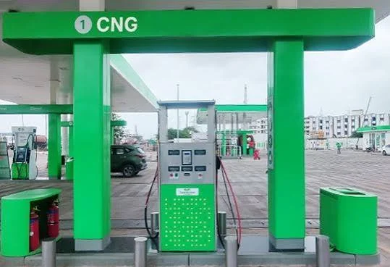
Although Nigeria has expanded its network of CNG refuelling stations and vehicle conversion centres, availability remains uneven across the country.
For commercial operators, simply owning or converting a vehicle is not enough.
They also need reliable access to CNG along their routes.
If a driver has to travel a significant distance or wait for long periods to refuel, the potential savings can be reduced by additional operating time and costs.
Furthermore, the cost of converting vehicles, maintaining CNG systems and obtaining suitable equipment can create additional financial pressure for operators.
Why Cheaper Fuel Does Not Automatically Mean Cheaper Fares
Another major issue is the relationship between fuel costs and transport fares.
A reduction in fuel expenses does not automatically translate into an equivalent reduction in passenger fares.
Commercial operators still have to pay for vehicle maintenance, tyres, spare parts, insurance, road-related expenses and other daily costs.
Therefore, the government needs to ensure that the CNG programme addresses the broader operating environment rather than focusing exclusively on fuel.
Reliable refuelling stations, affordable conversion, financing and effective monitoring could all influence whether savings eventually reach commuters.
Tinubu’s October 1 Target Puts States Under Pressure
Tinubu’s directive has also placed greater responsibility on state governments because intra-state transportation largely falls within their jurisdiction.
The President previously urged states to work with transport unions and commercial operators, support vehicle conversion and fleet deployment, and facilitate the infrastructure needed to expand cheaper transportation.
The objective is to ensure that the savings generated by alternative fuels are reflected in the fares paid by ordinary Nigerians.
However, the differing experiences across states show that implementation remains at different stages.
What Happens Next?
The immediate challenge for the Federal Government is to move from isolated examples of cheaper transportation to a broader national system.
While some Nigerians are already benefiting from CNG and electric transport services, many others continue to face high fares.
Therefore, the coming months will be important for determining how quickly more CNG buses can be deployed, how many commercial vehicles can be converted and whether additional refuelling infrastructure can be established.
Ultimately, the success of the programme will be measured not simply by the number of CNG buses on Nigerian roads, but by whether ordinary commuters can consistently spend less on transportation.
For millions of Nigerians facing high living costs, the expectation remains clear: if cheaper energy reduces the cost of running public transport, they want to see that saving reflected directly in the fares they pay every day.