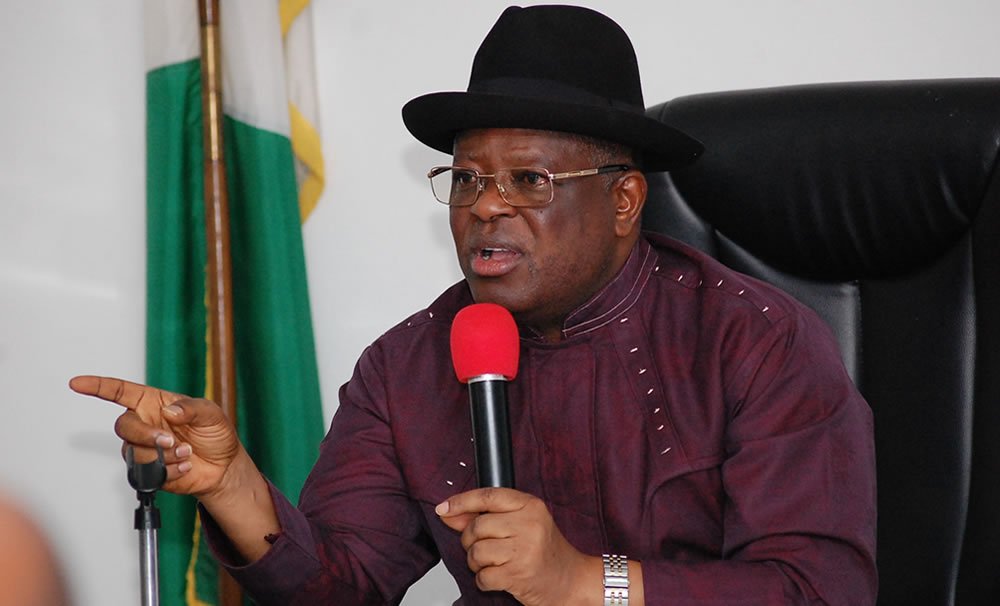
David Umahi has stated that buildings located within 15 metres of the Lagos-Calabar Coastal Highway corridor will be demolished to create space for service lanes, stressing that the exercise forms an integral part of the project’s approved engineering design.
The Minister explained that the Federal Government remains committed to implementing the highway project according to internationally accepted standards, noting that the additional space is necessary to accommodate service roads, improve traffic management, enhance safety, and support the long-term functionality of the coastal highway.
Furthermore, he emphasised that the project is designed to serve Nigeria’s transportation needs for decades while supporting economic growth and regional connectivity.
Service Lanes Are Part of the Original Design
Umahi clarified that the construction of service lanes was incorporated into the original design of the Lagos-Calabar Coastal Highway.
Furthermore, these lanes are intended to separate local traffic from high-speed through traffic, thereby improving road safety and reducing congestion along the corridor.
According to the Minister, maintaining the required setback is essential for achieving the highway’s operational objectives.
Proper planning ensures long-term infrastructure efficiency.
Improving Road Safety
The Minister noted that adequate road setbacks remain a critical element of modern highway construction.
Furthermore, service lanes provide safer access for nearby communities, businesses, emergency responders, and local commuters without disrupting traffic on the main carriageway.
He explained that such infrastructure significantly reduces accident risks while improving overall traffic management.
Safety remains a primary consideration in the project’s execution.
Supporting Efficient Traffic Movement
Umahi explained that the Lagos-Calabar Coastal Highway is expected to accommodate significant traffic volumes upon completion.
Furthermore, dedicated service lanes will enable smoother movement of vehicles entering or exiting adjoining properties while minimising interference with long-distance traffic.
The improved design will enhance travel efficiency and reduce delays for motorists using the corridor.
Efficient transportation supports economic productivity.
Compliance With Engineering Standards
The Minister reaffirmed that the Federal Government will strictly adhere to approved engineering specifications throughout the construction process.
Furthermore, internationally recognised construction standards require adequate right-of-way and safety buffers for major transportation infrastructure.
He stressed that compliance with these standards guarantees the durability, safety, and future expansion capacity of the highway.
Infrastructure quality depends on proper implementation.
Addressing Affected Properties
Umahi acknowledged that some structures located within the designated corridor would be affected by the project.
Furthermore, he assured that all necessary legal and administrative procedures would guide the implementation process in accordance with existing regulations.
The government, he noted, remains committed to ensuring that the project proceeds responsibly while protecting the public interest.
Transparent implementation strengthens public confidence.
Economic Importance of the Coastal Highway
The Minister described the Lagos-Calabar Coastal Highway as one of Nigeria’s most strategic infrastructure projects.
Furthermore, the highway is expected to improve connectivity among coastal states, facilitate trade, promote tourism, attract investment, and stimulate economic activities along its route.
He stated that the project will significantly enhance regional integration while supporting national economic development.
Modern transportation infrastructure drives sustainable growth.
Long-Term National Benefits
Umahi emphasised that major infrastructure projects often require difficult decisions to achieve long-term national benefits.
Furthermore, investing in properly designed highways today will reduce future maintenance costs, improve transportation efficiency, and strengthen Nigeria’s competitiveness.
He urged stakeholders to appreciate the broader developmental value of the project.
Strategic infrastructure creates lasting national advantages.
Building Infrastructure for Future Generations
The Federal Government’s decision to maintain the approved 15-metre corridor for service lanes along the Lagos-Calabar Coastal Highway reflects its commitment to delivering world-class transportation infrastructure.
Furthermore, by adhering to established engineering standards and prioritising road safety, traffic efficiency, and long-term sustainability, the project is expected to transform transportation across Nigeria’s coastal region.
As construction progresses, the Lagos-Calabar Coastal Highway is anticipated to strengthen regional connectivity, improve logistics, encourage investment, expand commercial opportunities, and contribute significantly to Nigeria’s long-term economic development and infrastructure modernisation.