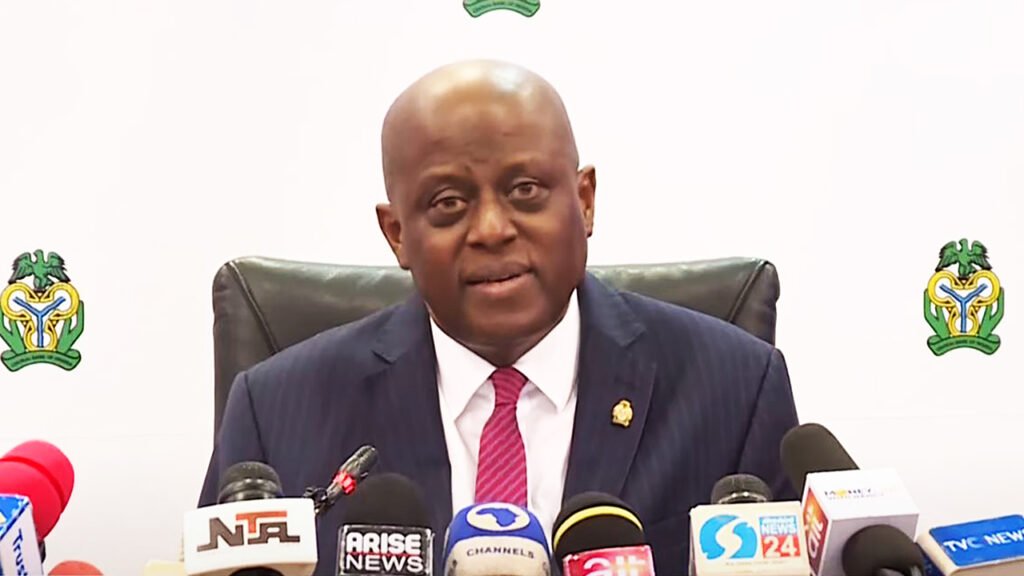
The Central Bank of Nigeria (CBN) Governor, Olayemi Cardoso, has stepped up Nigeria’s engagement with Asian financial institutions and investors, seeking stronger capital flows, deeper market connections and technology partnerships as the country works to consolidate its economic reforms.
During high-level engagements in Singapore, Cardoso met with representatives of the Monetary Authority of Singapore, participated in the Nigeria-Asia Financial Connectivity Dialogue and signed a memorandum of understanding with the Global Finance & Technology Network. The engagements formed part of the CBN’s efforts to build stronger international partnerships around financial-sector reforms.
Cardoso Seeks Sustainable Capital Inflows
Speaking at the Nigeria-Asia Financial Connectivity Dialogue, Cardoso stressed that Nigeria’s objective extends beyond attracting occasional foreign investments. Instead, he said the country needs to establish conditions that encourage investors to commit capital over the long term.
“The real test of reform is not whether you can attract capital once; it is whether you create the confidence for capital to stay, return and grow,” Cardoso said.
His remarks reflect the CBN’s emphasis on strengthening investor confidence through credible monetary policy, sound governance, transparent markets and predictable regulations.
Moreover, the governor indicated that financial-market stabilisation should serve as a foundation for broader economic participation rather than an end in itself.
For Nigeria, attracting long-term capital could support business expansion, strengthen financial institutions and improve access to financing for productive sectors. However, sustained inflows will depend on investors’ assessment of market conditions, policy consistency and the wider business environment.
Singapore Becomes a Focus for Financial Cooperation
Cardoso’s engagements included discussions with the Monetary Authority of Singapore, the country’s central financial regulator.
The discussions covered financial-sector regulation, market development, financial innovation and connectivity, with both sides exploring areas for continued institutional cooperation.
Singapore’s role as an international financial centre makes engagement with its institutions relevant to Nigeria’s efforts to deepen financial-market participation and improve connections with global investors.
Furthermore, closer institutional relationships can create opportunities for regulators to exchange knowledge and examine approaches to financial supervision, innovation and market infrastructure.
Nevertheless, the practical benefits will depend on whether the discussions lead to concrete cooperation, improved market access and stronger links between financial institutions in both countries.
CBN Signs Financial Innovation Agreement
Another significant development was the signing of a memorandum of understanding between the CBN and the Global Finance & Technology Network.
The agreement establishes a framework for collaboration in financial innovation and is intended to connect relevant institutions and innovation ecosystems in Nigeria and Singapore. It also provides a platform for identifying practical opportunities for cooperation.
The partnership could create opportunities for financial institutions and technology organisations to exchange expertise and explore solutions to challenges affecting modern financial services.
Cardoso has also highlighted the growing importance of financial technology and artificial intelligence in improving service delivery, strengthening risk management, expanding financial inclusion and enhancing regulatory capabilities.
Consequently, technology cooperation could become an important part of Nigeria’s broader financial-sector development efforts.
Strengthening Cross-Border Payments and Market Connections
Beyond attracting investment, the CBN is seeking stronger connections between Nigerian and Asian banks, financial institutions and businesses.
Cardoso identified more efficient payment and settlement channels as an important area for cooperation, alongside opportunities to deepen relationships between financial markets.
More efficient cross-border financial arrangements could help businesses manage international transactions and improve connections between Nigerian companies and Asian commercial partners.
In addition, stronger institutional links could support the exchange of financial services, expertise and technology.
However, achieving these outcomes will require practical arrangements that address regulatory requirements, transaction costs, operational risks and the compatibility of financial systems.
Nigeria-Asia Dialogue Brings Investors Together
The Nigeria-Asia Financial Connectivity Dialogue brought together investors, financial institutions, businesses and Nigerians living and working across Asia.
The CBN convened the dialogue in collaboration with J.P. Morgan, Nigerian Exchange Group and FMDQ Group, creating a platform to discuss Nigeria’s financial reforms and the infrastructure required to attract sustained investment.
Discussions focused on capital formation, foreign-exchange market confidence, deeper financial markets and the conditions needed to encourage wider international participation.
The involvement of Nigerian market institutions also provided an opportunity to connect the country’s domestic financial system with potential international partners.
Meanwhile, participation by Nigerians across Asia offers another channel for strengthening business relationships and connecting investors with opportunities in Nigeria.
Foreign-Exchange Reforms Remain Central
Nigeria’s foreign-exchange reforms formed an important part of Cardoso’s engagement with investors.
The CBN has presented these reforms as efforts to address market distortions, improve transparency and strengthen confidence in the rules governing transactions.
The governor argued that credible monetary policy, stronger governance and predictable regulations are essential to attracting long-term domestic and international capital.
Nevertheless, investors will continue to assess the practical performance of the foreign-exchange market, including liquidity, access to foreign currency and the ability to repatriate investment proceeds.
For that reason, maintaining confidence will require consistent implementation of policies and effective financial-market supervision.
Beijing Engagements to Extend the Outreach
The Singapore meetings form part of a wider programme of financial and institutional engagement across Asia, with further discussions planned in Beijing.
These engagements are intended to broaden Nigeria’s relationships with Asian financial institutions and explore additional opportunities for investment, market connectivity and innovation.
China and Singapore occupy different positions within Asia’s financial and commercial landscape, giving Nigeria multiple avenues through which to pursue economic partnerships.
However, the success of this outreach will depend on the extent to which discussions translate into actual investments, institutional agreements and stronger commercial relationships.
Turning Financial Reforms into Investment Opportunities
Cardoso’s Asian engagements highlight the CBN’s attempt to move Nigeria’s financial-sector reform programme towards deeper international integration.
The agenda combines investor engagement with regulatory cooperation, financial innovation and the development of more effective connections between markets.
Ultimately, attracting capital consistently will require more than high-level meetings. Investors will need confidence in policy direction, market transparency, financial stability and the ability to operate within clear regulatory frameworks.
For Nigeria, the challenge is to convert international engagement into measurable economic opportunities, stronger financial infrastructure and sustainable investment.
The Singapore discussions and planned Beijing engagements therefore represent another stage in the CBN’s effort to build financial partnerships that can support Nigeria’s evolving economic priorities.