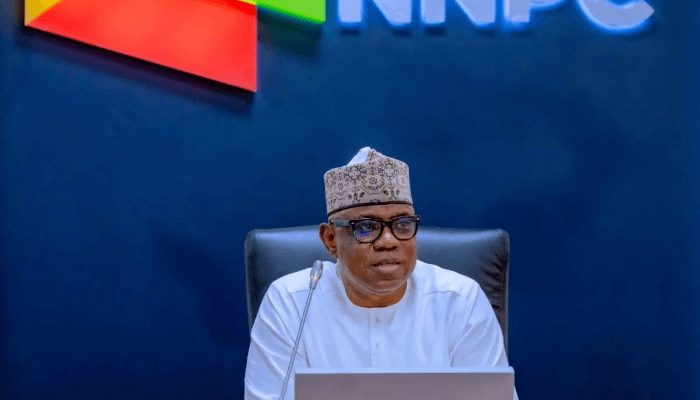
The Group Chief Executive Officer of the Nigerian National Petroleum Company Limited, Engr. Bashir Bayo Ojulari, has disclosed that the Chinese partners engaged to rehabilitate and operate the Port Harcourt and Warri refineries will bear the cost of the project under the agreed partnership framework.
Ojulari explained that the financing arrangement reflects NNPCL’s commitment to developing commercially sustainable refining assets through strategic partnerships that minimise financial pressure while improving the efficiency and profitability of Nigeria’s refining sector.
Furthermore, he noted that the partnership is designed to deliver long-term operational improvements while strengthening the country’s domestic refining capacity.
Strategic Commercial Partnership
According to the NNPCL Group Chief Executive Officer, the agreement with the Chinese partners represents a commercially structured arrangement that places financial responsibility on the project investors.
Furthermore, the model allows NNPCL to leverage international technical expertise, project financing, and operational experience without placing additional financial obligations on public resources.
He explained that such partnerships remain essential for accelerating refinery modernisation.
Commercial collaboration strengthens long-term sustainability.
Revitalising Nigeria’s Refineries
Ojulari reaffirmed the company’s determination to restore Nigeria’s major refineries to full operational capacity.
Furthermore, functional refineries will improve the availability of refined petroleum products while reducing dependence on imported fuel.
The rehabilitation of the Port Harcourt and Warri facilities forms part of NNPCL’s broader strategy to strengthen Nigeria’s downstream petroleum sector and improve energy security.
Modern infrastructure supports reliable refining operations.
Enhancing Domestic Refining Capacity
The NNPCL boss stressed that increasing local refining remains critical to Nigeria’s economic development.
Furthermore, stronger domestic refining capacity improves supply stability, enhances value addition within the petroleum industry, and creates greater opportunities for industrial growth.
He noted that successful rehabilitation of the refineries will strengthen Nigeria’s ability to meet domestic demand for refined petroleum products.
Local refining contributes to long-term energy independence.
Improving Operational Efficiency
Ojulari explained that the rehabilitation programme aims to modernise refinery infrastructure using globally accepted engineering standards and advanced technologies.
Furthermore, improved operational efficiency will reduce downtime, increase production reliability, and enhance overall plant performance.
The involvement of experienced international partners supports the achievement of these technical objectives.
Operational excellence remains a key priority.
Supporting Petroleum Sector Reforms
The refinery partnership also aligns with broader reforms taking place within Nigeria’s petroleum industry.
Furthermore, NNPCL continues implementing commercial strategies designed to improve corporate governance, operational transparency, and financial sustainability.
Ojulari stated that strategic partnerships remain an important component of building a competitive and commercially viable national energy company.
Reforms continue strengthening investor confidence.
Creating Economic Opportunities
The rehabilitation projects are expected to generate broader economic benefits.
Furthermore, improved refinery operations will stimulate employment, encourage local business participation, strengthen supply chains, and support industrial activities connected to the oil and gas sector.
Expanded refining capacity also contributes to improved energy availability for businesses and consumers across Nigeria.
These benefits support wider economic growth.
Building Long-Term Energy Security
The NNPCL Group Chief Executive Officer reiterated that strengthening Nigeria’s refining industry remains essential for enhancing national energy security.
Furthermore, reliable domestic refining reduces exposure to external market disruptions while improving the resilience of the country’s petroleum supply system.
The company remains committed to implementing sustainable solutions that strengthen the nation’s energy future.
Strategic investments ensure long-term stability.
A Sustainable Refining Future
Engr. Bashir Bayo Ojulari’s confirmation that the Chinese partners will finance the rehabilitation of the Port Harcourt and Warri refineries highlights NNPCL’s commitment to commercially driven partnerships that deliver value without placing additional financial burdens on government resources.
Furthermore, the arrangement demonstrates the company’s determination to modernise Nigeria’s refining infrastructure, expand domestic production, improve operational efficiency, and strengthen energy security.
As the rehabilitation projects progress, they are expected to enhance refining capacity, attract further investment, create employment opportunities, support petroleum sector reforms, and contribute significantly to Nigeria’s long-term economic and energy development.