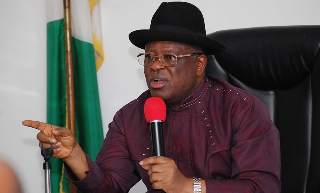
Enugu State Governor Peter Mbah has backed a proposed ₦300 billion solar investment programme expected to expand electricity generation in the state, following efforts by the Climate and Development Finance and Investment Platform (CDIP) to connect bankable green projects with potential investors. The proposed programme is expected to focus on solar power development and contribute to the state’s wider strategy of attracting private capital into its electricity market.
The proposal comes as Enugu continues to position electricity supply as a major driver of economic growth. Rather than relying solely on conventional power sources, the state government has increasingly explored renewable energy, private-sector participation and climate finance as part of its long-term development strategy.
CDIP Seeks to Turn Climate Projects Into Investments
The Climate and Development Finance and Investment Platform was established to help transform climate and sustainability projects into investment opportunities capable of attracting funding.
The platform brings together government institutions, development partners, private-sector participants and technical experts to identify projects that can attract public and private capital.
Consequently, the proposed solar investment represents more than an electricity project. It forms part of a broader attempt to create a pipeline of commercially viable green investments that can support Enugu’s economic ambitions.
Proposed 100MW Solar Programme Takes Shape
The proposed investment is expected to support a 100MW solar power programme.
If implemented as proposed, the project would add renewable generation capacity to Enugu’s electricity ecosystem and potentially strengthen power supply for businesses, households and public institutions.
Reliable electricity remains one of the major factors affecting industrial activity and business operating costs. Therefore, increasing locally available generation could have wider economic implications if the electricity reaches productive users at competitive prices.
At the same time, the success of the programme will depend on financing arrangements, project execution, grid or distribution infrastructure and the ability of investors to recover their capital sustainably.
Mbah Pushes for Competitive Electricity Market
Mbah’s support for the proposal fits into his administration’s broader electricity strategy.
The governor has emphasised the need to move beyond dependence on electricity supplied through the national grid and develop a state electricity market capable of attracting private investment.
The administration has also pursued regulatory reforms through the Enugu State Electricity Regulatory Commission, with the objective of creating a framework in which generation, distribution and other electricity businesses can operate within the state.
Moreover, Enugu has been working with development partners on renewable-energy projects targeting communities that have limited access to reliable electricity.
These efforts indicate that the state sees electricity as infrastructure capable of supporting wider economic transformation rather than simply as a public utility.
Solar Power Could Support Economic Expansion
For Enugu, additional solar generation could support several sectors of the economy.
Manufacturing companies require dependable power to operate machinery and maintain production schedules. Small businesses also rely on electricity for refrigeration, digital services, communications, processing and other daily activities.
Furthermore, better power supply can reduce dependence on diesel and petrol generators, potentially lowering operating costs for businesses and public institutions.
The environmental benefits could also be significant if renewable energy replaces part of the electricity generated from fossil fuels.
However, the actual economic and environmental impact would depend on the scale of deployment, the reliability of the systems and how effectively the generated electricity reaches users.
Rural Communities Could Also Benefit
The state’s renewable-energy strategy has also included interventions targeting communities that lack adequate access to electricity.
Such projects can provide power for healthcare facilities, schools, farms, small businesses and other productive activities in underserved communities.
Therefore, the proposed larger-scale solar investment could complement existing efforts to expand electricity access beyond major urban centres.
If properly coordinated, renewable generation could support economic activity in communities that have historically faced unreliable electricity supply.
Investment Could Reduce Pressure on Public Finances
One important feature of the CDIP approach is its emphasis on attracting private and development finance.
Rather than relying entirely on government budgets to fund infrastructure, the state can use project preparation, regulatory frameworks and investment arrangements to encourage private capital.
That model could allow Enugu to pursue larger infrastructure projects while limiting the immediate pressure on public finances.
Nevertheless, investors will require clear commercial arrangements, predictable regulations, credible demand projections and mechanisms for recovering their investments.
Consequently, the state’s ability to maintain investor confidence will be as important as the size of the proposed investment itself.
Electricity Strategy Supports Enugu’s Economic Ambition
Mbah has set ambitious economic targets for Enugu, with private investment expected to play a major role.
The state has identified energy as an important part of its development strategy because reliable electricity can strengthen industrialisation, attract businesses and support job creation.
The proposed ₦300 billion solar programme therefore fits into a wider economic strategy that links electricity availability with investment and productivity.
Moreover, stronger electricity infrastructure could make the state more attractive to companies seeking locations where energy supply is more predictable.
Competition and Affordability Remain Important
While additional solar generation could strengthen Enugu’s electricity supply, affordability will remain an important consideration.
Power projects must ultimately provide electricity at prices that consumers and businesses can sustain. If generation costs remain too high, additional capacity may not translate into broad economic benefits.
For that reason, the state government’s emphasis on competition and private investment will need to be accompanied by transparent regulation and careful attention to consumer interests.
The goal should be to increase supply while creating an electricity market that remains commercially viable and accessible.
From Climate Finance to Real Investment
The proposed solar programme also illustrates the broader purpose of CDIP.
Climate finance often involves moving from environmental ambitions to projects that investors can actually fund. That requires detailed feasibility studies, clear revenue models, appropriate risk allocation and strong institutional coordination.
By creating a platform for these processes, Enugu is seeking to make green projects easier for investors and development partners to evaluate.
The ₦300 billion proposal could therefore become an important test of whether the state can successfully convert its climate and sustainability plans into large-scale private investment.
Enugu Positions Power as a Growth Engine
Ultimately, the proposed solar investment reflects a wider shift in how Enugu approaches electricity.
The state is seeking to combine regulation, private capital, renewable energy and development partnerships to address one of the major constraints on economic activity.
Mbah’s backing of the ₦300 billion proposal signals government support for expanding renewable generation, while the involvement of CDIP provides a mechanism for connecting the project with potential financing and investment.
The next stage will depend on project development, financing, approvals and execution.
If those elements come together successfully, the proposed 100MW solar programme could strengthen Enugu’s electricity market and provide additional energy for businesses, communities and public institutions. More broadly, it could demonstrate how climate-focused investment platforms can help turn renewable-energy ambitions into commercially viable infrastructure.