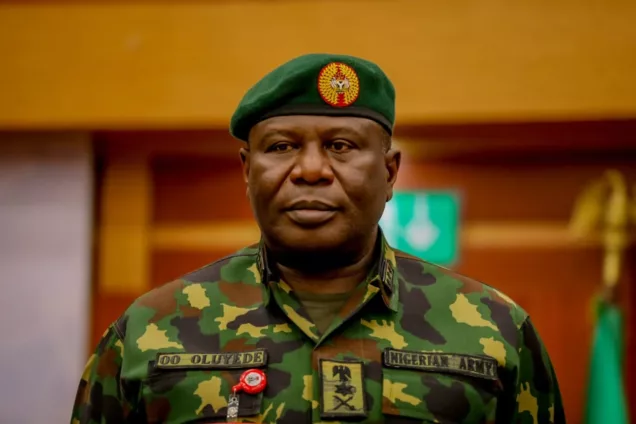
The Chief of Defence Staff, Olufemi Oluyede, has directed military commanders at all levels to sustain operational momentum, prioritise troop welfare, and uphold the highest professional standards in protecting civilians within their areas of operation across Nigeria.
The directive reflects the military leadership’s continued commitment to strengthening national security operations while ensuring that the welfare of personnel and the safety of civilians remain central to military engagements. Therefore, the instruction highlights growing emphasis on professionalism, operational effectiveness, and responsible security management within the armed forces.
Security remains a critical national priority.
Why Operational Momentum Matters
Sustained operations remain important in security management.
Military campaigns and security operations often require consistency, coordination, and rapid response capabilities to address evolving threats effectively. Therefore, maintaining operational momentum helps security agencies respond quickly to criminal activities, insurgency, and other security challenges.
Continuous pressure limits criminal activities.
Security experts often note that sustained military presence and operations can disrupt organized criminal networks and improve territorial stability.
Operational readiness strengthens national defence capacity.
The Importance of Troop Welfare
Troop welfare remains essential for military effectiveness.
Soldiers operating in difficult environments often require adequate welfare support involving healthcare, accommodation, equipment, logistics, and morale-building initiatives. Therefore, prioritising troop welfare may improve operational efficiency, discipline, and overall performance within the armed forces.
Motivated personnel perform more effectively.
Military institutions worldwide frequently emphasize welfare as a critical factor influencing morale, commitment, and operational success.
Support systems strengthen institutional stability.
Protecting Civilians During Military Operations
Civilian protection remains a key aspect of modern military operations.
Security forces are often expected to balance operational objectives with the responsibility of protecting innocent lives and respecting human rights. Therefore, the directive from Olufemi Oluyede reinforces the importance of professionalism and accountability during military engagements.
Civilian trust supports security efforts.
Communities often cooperate more effectively with security agencies when civilians feel protected and respected during operations.
Professional conduct improves public confidence.
Professional Standards Within the Armed Forces
Military professionalism strengthens institutional credibility.
Discipline, ethical conduct, operational competence, and respect for legal standards remain central to effective military service. Therefore, maintaining high professional standards often improves both operational outcomes and public trust in security institutions.
Professionalism supports national stability.
Security agencies frequently depend on discipline and structured command systems to maintain operational effectiveness across different regions.
Institutional integrity remains important for national security.
Nigeria’s Security Challenges
Nigeria continues addressing multiple security concerns.
Insurgency, banditry, kidnapping, communal conflicts, and other criminal activities have remained significant challenges affecting several parts of the country. Therefore, military operations continue playing critical roles in restoring stability and protecting communities.
Security operations require coordination.
Armed forces, intelligence agencies, police units, and other security institutions often collaborate to address complex threats effectively.
National security affects economic growth and social stability.
The Role of Military Leadership
Military leadership shapes operational direction.
Senior defence officials often provide strategic guidance, policy direction, and operational priorities aimed at improving national security management. Therefore, directives from the Chief of Defence Staff influence how commanders and troops approach operational responsibilities.
Leadership also influences morale and discipline.
Strong command structures often improve coordination, accountability, and effectiveness within security institutions.
Strategic leadership remains central to defence operations.
Why Civil-Military Relations Matter
Strong civil-military relations support national unity.
Citizens often expect security agencies to protect lives, maintain professionalism, and operate responsibly during security interventions. Therefore, emphasizing civilian protection helps strengthen public trust and cooperation.
Community support improves intelligence gathering.
Security agencies frequently depend on local cooperation to identify threats and improve operational effectiveness.
Trust remains important for long-term peacebuilding.
Modern Security Operations and Human Rights
Global security standards increasingly emphasize accountability.
Military institutions worldwide continue strengthening frameworks involving civilian protection, human rights compliance, and operational transparency. Therefore, professional conduct remains important for maintaining international credibility and domestic legitimacy.
Responsible operations improve institutional reputation.
Security agencies that uphold ethical standards often strengthen both operational success and public confidence.
Challenges Facing Security Operations
Security operations often involve difficult environments.
Personnel may face logistical challenges, dangerous terrains, intelligence limitations, and evolving criminal tactics during operations. Therefore, maintaining morale, welfare support, and operational readiness remains essential.
Modern threats require adaptive strategies.
Technology, intelligence coordination, and community engagement increasingly influence security effectiveness.
Operational resilience remains critical.
Looking Ahead
Nigeria’s security institutions are expected to sustain operational efforts nationwide.
As military operations continue across different regions, attention will likely remain focused on professionalism, troop welfare, civilian safety, and improved coordination among security agencies.
National security will remain a major governance priority.
Conclusion: Strengthening Security Through Professionalism and Welfare
The directive by Defence Chief Olufemi Oluyede urging commanders to sustain operational momentum, prioritise troop welfare, and protect civilians reflects the military’s continued focus on professionalism and responsible security management within Nigeria.
By strengthening operational discipline, supporting personnel, and safeguarding civilian populations, the armed forces aim to improve national stability and public confidence in ongoing security efforts.
Ultimately, effective leadership, professional conduct, and strong welfare systems remain essential for sustaining successful security operations and protecting national interests.