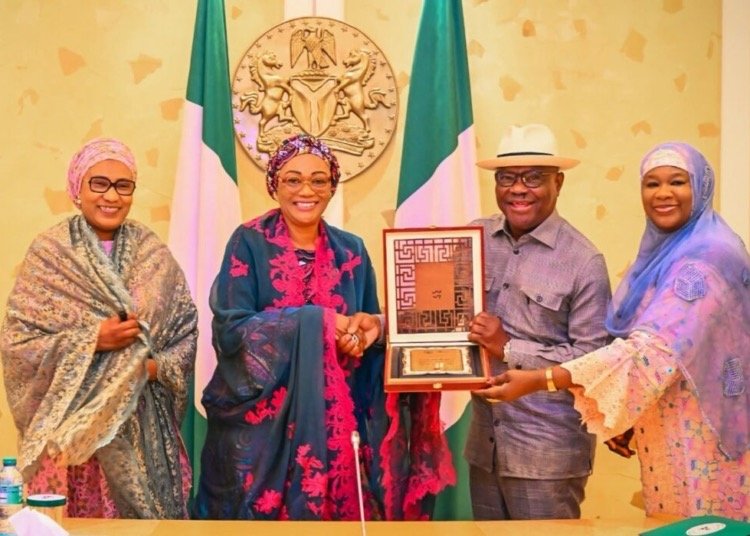
Nigeria’s First Lady, Senator Oluremi Tinubu, has expressed disappointment that no state government participated in the Federal Government’s ₦50 million Green Challenge, an environmental initiative designed to encourage the reclamation of abandoned public spaces, the clearance of illegal dumpsites, and the promotion of cleaner, healthier communities across the country.
Speaking during the programme, the First Lady stressed that environmental sustainability requires the active involvement of all levels of government, communities, institutions, and private organisations, noting that environmental protection should remain a shared national responsibility rather than the responsibility of the Federal Government alone.
Furthermore, she commended organisations and participants that embraced the initiative, praising their commitment to improving environmental sanitation, restoring neglected public spaces, and encouraging sustainable waste management practices.
According to Senator Oluremi Tinubu, initiatives such as the Green Challenge provide opportunities to beautify communities, promote healthier living conditions, improve public awareness, and encourage collective action toward environmental conservation.
She also emphasised that protecting the environment remains essential for improving public health, supporting economic development, preserving natural resources, and creating cleaner communities for future generations.
Concern Over State Participation
The First Lady expressed disappointment over the absence of state governments from the competition.
Furthermore, she noted that stronger collaboration among federal, state, and local authorities would significantly enhance environmental improvement efforts nationwide.
Collaboration strengthens results.
Shared responsibility remains essential for sustainable environmental management.
Partnership delivers progress.
Purpose of the Green Challenge
The Green Challenge was established to encourage environmental restoration.
Furthermore, the initiative focuses on reclaiming abandoned spaces, clearing illegal dumpsites, improving sanitation, and promoting cleaner surroundings.
Cleaner communities benefit everyone.
Environmental programmes encourage greater public participation in protecting shared spaces.
Sustainability requires action.
Environmental Protection Benefits Communities
Healthy environments contribute directly to improved quality of life.
Furthermore, cleaner surroundings reduce health risks while creating more attractive communities for residents and visitors.
Clean environments support wellbeing.
Environmental responsibility promotes sustainable development.
Healthy communities prosper.
Commending Positive Contributors
Senator Oluremi Tinubu praised organisations and participants that supported the initiative.
Furthermore, she acknowledged their commitment to environmental cleanliness, community development, and responsible waste management.
Recognition encourages participation.
Positive examples inspire broader public involvement.
Success motivates others.
Shared Responsibility for Sustainability
The First Lady emphasised that environmental protection requires collective effort.
Furthermore, governments, businesses, educational institutions, community organisations, and individual citizens all possess important roles in maintaining clean surroundings.
Everyone contributes.
Collective action produces lasting environmental improvements.
Partnership strengthens sustainability.
Creating Public Awareness
Environmental education remains an important part of sustainable development.
Furthermore, awareness campaigns encourage responsible waste disposal, recycling, conservation, and community participation.
Knowledge changes behaviour.
Public awareness strengthens environmental responsibility.
Education supports progress.
Improving Public Health
Environmental cleanliness directly influences public health.
Furthermore, reducing unmanaged waste helps minimise disease risks while improving sanitation and overall living conditions.
Healthy environments save lives.
Preventive measures strengthen communities.
Clean surroundings encourage wellbeing.
Supporting Sustainable Development
Environmental sustainability complements broader national development goals.
Furthermore, clean cities, responsible waste management, green spaces, and conservation efforts contribute positively to economic growth and social wellbeing.
Development requires sustainability.
Environmental protection supports long-term prosperity.
Responsible planning creates resilience.
Encouraging Greater Future Participation
The First Lady encouraged wider participation in future editions of the Green Challenge.
Furthermore, increased involvement from state governments and other stakeholders would strengthen the initiative’s overall impact across Nigeria.
Greater participation expands results.
National commitment strengthens environmental progress.
Together, more can be achieved.
Looking Ahead
Senator Oluremi Tinubu’s remarks highlight the importance of stronger collaboration in addressing environmental challenges across Nigeria. Furthermore, while expressing disappointment over the absence of state governments from the ₦50 million Green Challenge, she also recognised organisations that demonstrated commitment to reclaiming abandoned spaces and promoting cleaner communities.
As Nigeria continues pursuing sustainable development, greater cooperation among federal, state, and local governments, alongside active participation from communities, institutions, and private organisations, will remain essential for improving environmental sanitation, protecting public health, preserving natural resources, and building cleaner, healthier communities for present and future generations.