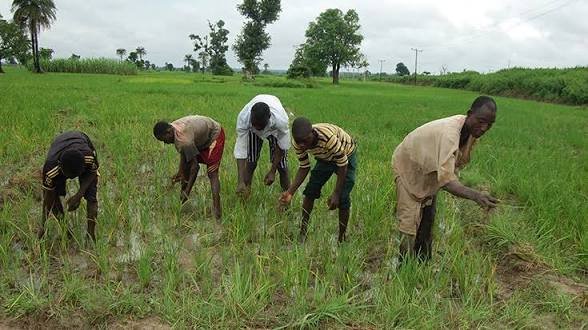
Nigeria’s agricultural sector has a significant opportunity to benefit from the African Continental Free Trade Area (AfCFTA), which seeks to create a single African market for goods and services. For smallholder farmers, the agreement could open access to buyers across the continent, create opportunities for value addition and encourage the growth of agro-processing businesses.
However, access to a continental market requires more than increased agricultural production. Farmers must meet product-quality requirements, maintain consistent supply, adopt appropriate packaging and labelling, and obtain the documentation needed to move goods across borders.
This is where the National Agricultural Land Development Authority (NALDA) is seeking to make a difference through its farmer-clustering model and agricultural development programmes. By bringing smallholders together and improving access to production infrastructure, the authority aims to create a more organised agricultural system capable of attracting private investment and supporting commercial farming.
NALDA’s Farmer-Clustering Strategy
NALDA’s farmer-clustering approach is built around the idea that smallholders can become more productive when they operate within organised agricultural communities.
Speaking in March 2025, NALDA Executive Secretary Cornelius Adebayo explained that clustering farmers would make it easier to provide agricultural inputs, extension services, mechanisation, security and monitoring.
Rather than supporting scattered farms individually, the authority is working towards organised settlements where farmers can access essential services within designated agricultural areas.
The approach could also make it easier for private-sector operators to provide tractors, processing equipment, storage facilities and other services because they can reach groups of farmers concentrated in one location.
NALDA’s strategy includes four major programmes: Renewed Hope Mega Farm Estates, Renewed Hope Restoration Project, Aqua Hope Project and Green Hope.
Together, these initiatives address different parts of agricultural production, including crop cultivation, the restoration of farming activities, aquaculture and greenhouse-based vegetable production.
The authority has also identified strategic partnerships with institutional investors as an important way to attract capital into large-scale agricultural projects while providing smallholders with a more supportive production environment.
From Farm Clusters to Exportable Agricultural Products
For Nigerian farmers to benefit from AfCFTA, production must connect with processing, packaging, certification and distribution.
NALDA’s clustering model could provide an important foundation for this transition because organised farmers are generally easier to train, monitor and connect with commercial buyers.
For example, its proposed fish clusters include earth ponds, cage farms, processing centres, packaging facilities and cold storage infrastructure. These facilities could help farmers move beyond selling fresh produce into supplying processed and properly packaged fish products.
The Green Hope initiative also focuses on greenhouse farming and vegetable production. NALDA has identified vegetable clusters along the Epe-Sagamu corridor, serving parts of Lagos, Ogun, Ondo and Oyo states, as well as an FCT cluster serving Abuja and Nasarawa. An emerging Port Harcourt-Abia axis has also been identified.
These locations could support more organised supply chains for vegetables and other agricultural products, particularly where production is linked to reliable buyers and processing businesses.
Similarly, NALDA’s interest in crops such as cocoa, cashew and oil palm reflects the potential of agricultural commodities to generate export earnings. Nevertheless, production capacity alone does not establish that a farmer or cooperative is export-ready. The next stage must involve meeting the requirements of specific importing markets.
Export-Readiness Certification: What the Available Numbers Show
One important question is how many NALDA-supported farmers or agricultural clusters have obtained export-readiness certification.
As of November 2026, publicly available information does not establish a verified consolidated number of NALDA cluster farmers, cooperatives or products that have completed AfCFTA-related export certification. Nor is there a published breakdown showing how many NALDA-supported products have obtained relevant international food-safety or quality certifications.
This distinction matters because different certificates serve different purposes.
The Nigerian Export Promotion Council (NEPC) provides export promotion support and registration services, while products may also require certification or regulatory approval from agencies such as the National Agency for Food and Drug Administration and Control (NAFDAC), the Standards Organisation of Nigeria (SON) and relevant plant or animal health authorities.
In October 2026, NEPC announced an initiative offering selected Nigerian food and agro-commodity exporters, including small and medium-sized processors, support to implement voluntary international certifications such as Hazard Analysis and Critical Control Points (HACCP) and applicable United States Food and Drug Administration requirements.
The initiative required applicants to demonstrate export readiness, product potential, appropriate packaging and labelling, and NEPC registration. Mandatory certifications such as NAFDAC and relevant Nigerian standards were also identified as additional advantages.
Importantly, the announcement described an application, assessment and selection process. It did not establish that all applicants had received certification or publish a final number of successful businesses.
For NALDA, working with NEPC and relevant standards agencies could help turn its organised farmer clusters into more commercially prepared export groups.
AfCFTA and Nigeria’s Cross-Border Trade Opportunities
The AfCFTA provides a framework for reducing trade barriers and improving market access among participating African countries. For Nigerian agricultural producers, this creates opportunities to supply markets beyond domestic consumers.
Nigeria’s AfCFTA implementation has also advanced through trade-policy measures. The Federal Ministry of Industry, Trade and Investment’s 2025 achievements report stated that Nigeria gazetted its Provisional Schedule of Tariff Concessions for Trade in Goods in April 2025, creating a basis for eligible Nigerian-origin goods to benefit from preferential tariff treatment in participating countries.
The ministry also reported the launch of a dedicated export air-cargo corridor to East and Southern Africa in partnership with Uganda Airlines and the United Nations Development Programme. According to the report, cargo rates on the corridor were 50 to 75 per cent cheaper than comparable prevailing market rates.
In addition, a market intelligence tool covering 13 East and Southern African markets was developed to provide information on trade opportunities involving cosmetics, agro-processed products and textiles.
These developments offer useful market-access infrastructure for Nigerian businesses. However, they should not be mistaken for actual export volumes generated by NALDA-supported farmers.
There is currently no verified public breakdown establishing the value or volume of AfCFTA cross-border shipments originating specifically from NALDA agricultural clusters. Consequently, national trade initiatives and corridor cost reductions cannot be presented as evidence that NALDA farmers have already achieved particular export sales.
The Certification and Logistics Challenges
Even with access to organised production facilities, smallholders face several challenges before they can compete effectively in regional markets.
First, agricultural products must meet the quality and safety requirements of their destination markets. Exporters may need phytosanitary certificates, food-safety documentation, certificates of origin and other product-specific approvals.
Second, farmers must maintain consistent quantities and quality. International buyers often require reliable supply schedules, standardised products and traceability from production to delivery. Smallholders operating independently may struggle to meet these conditions, making cooperative structures and organised clusters particularly important.
Third, processing and storage facilities must be adequate. Perishable products such as vegetables, fruits and fish can lose commercial value when cold-chain infrastructure and transportation are unreliable.
Finally, farmers need access to market information, finance and credible buyers. Without these connections, increased production may not translate into higher incomes or sustainable export relationships.
What NALDA Needs to Measure Next
To demonstrate the export impact of its agricultural development strategy, NALDA would benefit from publishing measurable export-readiness indicators.
These should include the number of farmers organised into active clusters, the number of cooperatives registered with NEPC, the number of products that have obtained mandatory and voluntary certifications, and the number of businesses that have completed export transactions.
The authority could also report the volume and value of agricultural products exported by supported clusters, their destination countries, the number of repeat buyers and the proportion of farmers participating in processing and value-addition activities.
Such information would help distinguish between farmers receiving production support, businesses preparing for export and producers already participating in cross-border trade.
It would also provide a clearer basis for assessing whether NALDA’s investments are improving smallholder incomes and strengthening Nigeria’s agricultural competitiveness.
Turning Agricultural Production into Continental Trade
NALDA’s farmer-clustering strategy offers a framework for addressing some of the structural challenges facing Nigerian smallholders, particularly fragmented production, limited access to mechanisation, inadequate infrastructure and difficulties attracting private investment.
However, the real test will be whether these clusters can consistently produce quality agricultural commodities, meet export standards and establish commercial relationships across African markets.
AfCFTA provides an opportunity, but farmers will need more than access to land and agricultural inputs to benefit from it. They will require certification support, processing capacity, reliable logistics, market intelligence and access to finance.
With stronger collaboration between NALDA, NEPC, NAFDAC, SON, agricultural research institutions and private-sector investors, Nigerian smallholders could become better positioned to participate in regional value chains.
Ultimately, the success of the Made-in-Nigeria agro-products agenda should be measured not only by the number of farms established or farmers supported, but also by the quantity of certified products reaching African markets, the value of cross-border sales and the income generated for farming communities.