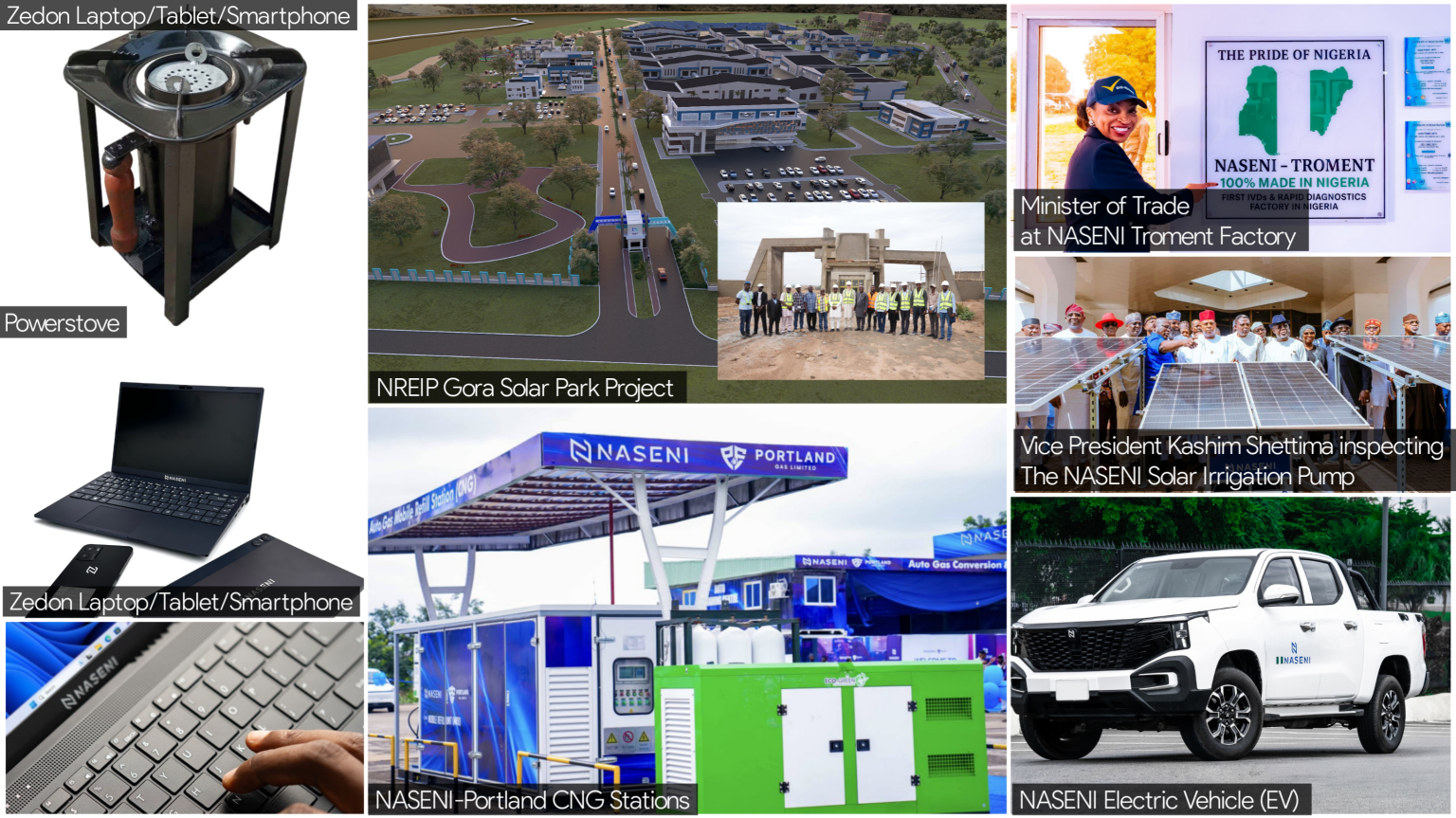
The National Agency for Science and Engineering Infrastructure (NASENI) has increasingly emerged as one of Nigeria’s most ambitious public institutions driving industrial innovation, technology transfer, and local manufacturing expansion through strategic partnerships across multiple sectors.
Under the leadership of its Executive Vice Chairman and Chief Executive Officer, Khalil Suleiman Halilu, the agency has significantly expanded collaborations with local and international firms within renewable energy, transportation, agriculture, healthcare, consumer electronics, and clean technology industries.
The growing momentum reflects a broader recognition that sustainable economic development increasingly depends on industrial capacity, technological innovation, and domestic productivity rather than dependence on imports alone.
Across developing economies worldwide, countries capable of building strong local manufacturing ecosystems frequently achieve stronger economic resilience and long-term competitiveness.
Nigeria is increasingly attempting to move in that direction.
Why Industrial Development Matters
Industrialization remains one of the most important foundations of national economic growth.
Countries with strong manufacturing and engineering sectors often experience higher productivity, broader employment opportunities, improved export capacity, and stronger technological advancement.
For decades, however, Nigeria struggled heavily with industrial limitations.
Dependence on imported goods, weak local manufacturing systems, infrastructure challenges, and limited technological transfer frequently slowed industrial growth across several sectors.
This dependence created multiple economic vulnerabilities.
Exchange rate pressures, global supply disruptions, and rising import costs frequently affected local markets and production capacity nationwide.
Consequently, strengthening domestic industrial capability has become increasingly important.
NASENI’s Expanding Strategic Role
The National Agency for Science and Engineering Infrastructure was originally established to promote science, technology, engineering, and infrastructure development within Nigeria.
In recent years, however, the agency has expanded its visibility and operational scope significantly through broader innovation-driven initiatives and partnerships.
The agency increasingly positions itself as a catalyst for industrial transformation.
Rather than operating solely as a research-focused institution, NASENI now appears more aggressively focused on commercialization, technology adaptation, local production, and strategic industrial partnerships.
This shift reflects changing realities within global economic competition.
Countries investing heavily in engineering innovation and technology infrastructure often strengthen economic independence and industrial productivity over time.
The Leadership Direction Under Khalil Halilu
Under Khalil Suleiman Halilu’s leadership, NASENI has accelerated collaborations involving both domestic and international stakeholders across critical economic sectors.
This partnership-driven approach remains particularly important.
Modern industrial development frequently depends on cooperation involving governments, private sector institutions, investors, research ecosystems, and technology companies capable of sharing expertise and production capacity.
Strategic partnerships often accelerate growth faster than isolated efforts.
Through collaboration, countries may gain access to advanced technologies, manufacturing systems, technical expertise, and innovation models capable of improving domestic production capabilities.
The agency’s broader engagement strategy reflects this understanding.
Renewable Energy and Clean Technology Expansion
One of the most significant areas receiving increased attention involves renewable energy and clean technology development.
Nigeria continues facing major electricity and energy access challenges affecting businesses, industries, and households nationwide. Consequently, renewable energy solutions remain increasingly important for economic productivity and sustainable development.
Solar technology particularly continues gaining momentum.
Renewable energy partnerships may help improve power accessibility, reduce operational costs, and strengthen energy independence across underserved communities and industries.
Clean technology also aligns with global economic trends.
Countries worldwide increasingly prioritize sustainable energy systems and environmentally responsible industrial practices as part of long-term development strategies.
Nigeria’s participation within this transition remains strategically important.
Agriculture and Local Processing Opportunities
Agriculture remains another major sector attracting increased technological attention.
Despite Nigeria’s strong agricultural potential, limited mechanization and weak processing infrastructure frequently reduce productivity and value creation within the sector.
Technology-driven agricultural partnerships may help address these challenges.
Modern equipment, irrigation systems, food processing technology, and storage infrastructure frequently improve agricultural efficiency and reduce post-harvest losses significantly.
Industrializing agriculture also creates employment opportunities.
Value-added processing frequently generates stronger economic benefits than raw commodity dependence alone.
Therefore, engineering and manufacturing support within agriculture remains increasingly important for economic diversification.
Healthcare Technology and Local Manufacturing
Healthcare infrastructure and medical technology development also continue receiving stronger focus within Nigeria’s industrial conversations.
Many healthcare systems across Africa still depend heavily on imported medical equipment and technologies. Consequently, local manufacturing capacity remains strategically important for healthcare resilience.
Technology partnerships involving healthcare may improve accessibility and affordability.
Local production of medical devices, diagnostic systems, and healthcare technologies may strengthen national preparedness and reduce import dependency over time.
The COVID-19 pandemic further exposed the importance of local industrial capacity within healthcare sectors globally.
Countries with stronger domestic production systems frequently responded more effectively during global supply chain disruptions.
Consumer Electronics and Technology Innovation
Consumer electronics remain another critical area involving growing industrial interest.
Nigeria possesses one of Africa’s largest consumer markets, yet much of the country’s electronics demand continues relying heavily on imports.
Local manufacturing partnerships may gradually change this situation.
Expanding assembly, engineering, and electronics production capabilities may create employment opportunities while strengthening domestic technological ecosystems.
Technology innovation also influences youth entrepreneurship significantly.
Nigeria’s growing digital population continues creating opportunities involving software development, hardware innovation, fintech systems, and engineering-driven startups.
Supporting these ecosystems may strengthen future competitiveness.
Why Technology Transfer Matters
Technology transfer remains one of the most important aspects of international industrial collaboration.
When partnerships involve knowledge sharing and local capacity development, countries frequently build stronger domestic industries over time.
This process extends beyond importing finished products alone.
Engineering training, technical education, production systems, and operational expertise all contribute toward long-term industrial sustainability.
Countries successfully industrializing often prioritize knowledge acquisition alongside infrastructure development.
Nigeria’s evolving industrial strategy increasingly reflects this understanding.
Challenges Still Facing Industrial Growth
Despite growing momentum, Nigeria’s industrial environment still faces major structural challenges.
Power supply instability, infrastructure limitations, logistics costs, financing gaps, and foreign exchange pressures frequently affect manufacturing competitiveness.
Policy consistency also remains important.
Investors and industrial partners often require stable regulatory environments capable of supporting long-term planning and production sustainability.
Human capital development represents another challenge.
Engineering education, technical skills training, and workforce development remain essential for sustaining industrial expansion successfully.
Why Public Institutions Matter
Public institutions frequently play foundational roles during industrial transformation processes.
Countries achieving major industrial growth historically relied heavily on strategic government institutions capable of coordinating infrastructure, policy direction, research, and industrial partnerships.
The evolving role of National Agency for Science and Engineering Infrastructure reflects this broader developmental model.
Institutions capable of bridging public policy with private sector innovation frequently influence industrial progress significantly.
Looking Ahead
The growing activities of National Agency for Science and Engineering Infrastructure under Khalil Suleiman Halilu’s leadership signal increasing ambition toward technology-driven industrial development within Nigeria.
As partnerships continue expanding across renewable energy, transportation, agriculture, healthcare, and technology sectors, many observers believe Nigeria may gradually strengthen its position within Africa’s industrial and innovation landscape.
Ultimately, the country’s long-term economic transformation may depend heavily on how effectively institutions, industries, and innovators collaborate to build sustainable local production capacity and reduce dependence on imported industrial solutions.