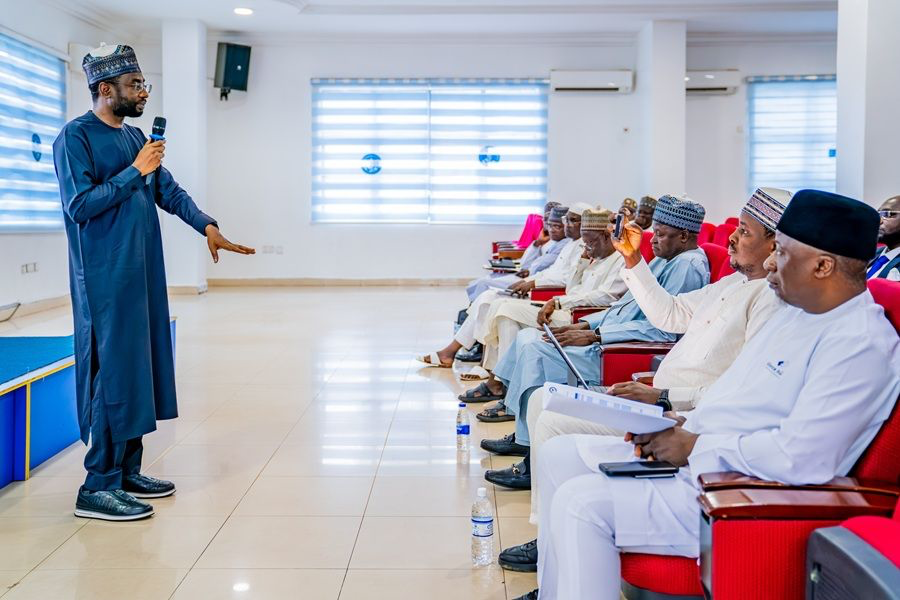
Kashifu Inuwa Abdullahi has called for stronger efforts to transform the abundant human and natural resources across Jigawa State and Northern Nigeria into sustainable economic opportunities.
Inuwa made the call at the Galaxy ITT Repositioning Retreat held in Abuja on Thursday, where he expressed concern over the continued dependence of Jigawa State and other parts of Northern Nigeria on federal allocations despite their considerable resources.
His remarks highlight the need for states to build stronger internal economies that can generate revenue, create jobs, attract investment, and improve living standards without depending excessively on federal transfers.
Moving Beyond Federal Allocations
Federal allocations remain important sources of revenue for many Nigerian states.
However, excessive dependence can limit the ability of states to build sustainable economic structures.
Furthermore, states with significant human, agricultural, mineral, and technological resources can explore alternative pathways for generating wealth.
Jigawa has a large population and substantial agricultural potential.
The wider North also possesses extensive land, natural resources, and a growing pool of young people.
Turning these resources into productive economic assets could strengthen state revenues and create opportunities for citizens.
Human Capital Can Drive Transformation
Inuwa’s concerns also place human capital at the centre of Northern Nigeria’s development strategy.
Furthermore, the region has millions of young people who can contribute to economic growth when they receive relevant education and practical skills.
Digital skills can open new employment opportunities.
Technical training can support manufacturing.
Entrepreneurship can create businesses.
Innovation can help local companies solve community challenges.
When states invest in their people, they can create a workforce capable of generating value across multiple sectors.
Technology Can Unlock New Opportunities
Technology provides Northern Nigeria with an opportunity to overcome some traditional development barriers.
Furthermore, digital platforms can connect entrepreneurs with wider markets while enabling young professionals to provide services beyond their immediate communities.
Software development can create exportable services.
Digital agriculture can improve farming practices.
E-commerce can connect producers with consumers.
Financial technology can expand access to financial services.
These opportunities can allow people in Jigawa and other northern states to participate more actively in the digital economy.
Agriculture Remains a Major Opportunity
Agriculture could play a central role in reducing dependence on federal allocations.
Furthermore, Northern Nigeria has substantial agricultural land and produces important food and cash crops.
The challenge involves moving beyond raw production towards greater processing and value addition.
Farmers can produce crops.
Local industries can process them.
Businesses can package finished products.
Distributors can move them to domestic and international markets.
This value chain can generate more income and create employment.
Value Addition Can Increase Revenue
Producing raw materials alone may limit the economic benefits available to local communities.
Furthermore, processing agricultural and natural resources locally can increase their value before they reach consumers.
Jigawa can develop stronger agro-processing activities.
Businesses can produce packaged food products.
Manufacturers can create agricultural equipment.
Small enterprises can provide supporting services.
These activities can expand the local tax base while creating additional employment opportunities.
Northern Youth Need Economic Opportunities
Youth unemployment and underemployment remain important development concerns across Nigeria.
Furthermore, Northern states can strengthen economic participation by connecting young people with practical opportunities.
Skills programmes can prepare young people for employment.
Entrepreneurship programmes can support new businesses.
Technology hubs can encourage innovation.
Apprenticeships can provide practical experience.
These measures can help young Nigerians become economic contributors rather than relying on limited formal employment opportunities.
Galaxy ITT and Skills Development
The Galaxy ITT repositioning retreat provides an opportunity to rethink how technology and innovation institutions can support broader development.
Furthermore, institutions involved in information technology training can help prepare young people for emerging sectors.
Training should increasingly focus on practical competencies.
Participants can learn software development.
They can study cybersecurity.
They can develop digital marketing skills.
They can also explore artificial intelligence, data analysis, cloud technologies, and other emerging areas.
These skills can create opportunities within Nigeria and international markets.
Building Stronger Local Businesses
Northern Nigeria also needs stronger private-sector participation to achieve sustainable economic transformation.
Furthermore, governments cannot create enough jobs or generate sufficient economic activity by themselves.
Private companies can drive investment.
Entrepreneurs can develop new products.
Manufacturers can create employment.
Investors can provide capital.
Government can support the ecosystem through infrastructure, policies, skills development, and access to finance.
This partnership can create a stronger foundation for economic growth.
Infrastructure Remains Critical
Turning resources into economic value requires reliable infrastructure.
Furthermore, businesses need roads, electricity, telecommunications, water, storage facilities, and efficient transport networks to operate competitively.
Poor infrastructure can increase production costs.
It can discourage investors.
It can also reduce the profitability of local businesses.
Northern states therefore need to combine human-capital development with infrastructure investment.
Improving Internally Generated Revenue
A stronger productive economy can also improve internally generated revenue.
Furthermore, states can generate more revenue when businesses grow and more citizens participate in formal economic activities.
New businesses can expand the tax base.
Growing industries can increase commercial activity.
Improved agricultural value chains can create additional taxable enterprises.
This approach can provide states with greater financial independence over time.
Natural Resources Require Responsible Development
Northern Nigeria’s natural resources also present opportunities for economic development.
Furthermore, states can explore responsible ways to develop these resources while protecting communities and the environment.
Mineral resources can support local industries.
Raw materials can feed manufacturing.
Processing facilities can create jobs.
However, resource development requires transparency, environmental responsibility, technical expertise, and effective regulation.
Innovation Should Address Local Problems
Inuwa’s emphasis on resources and innovation also suggests that Northern Nigeria can develop solutions tailored to its unique challenges.
Furthermore, local innovators understand problems within their communities and can develop technologies suited to those environments.
Farmers need affordable equipment.
Businesses need reliable power.
Communities need efficient water systems.
Young people need accessible skills training.
Innovation can connect these needs with practical solutions.
A New Economic Mindset
Reducing dependence on federal allocations requires more than increasing state revenue.
Furthermore, it requires a change in how states view their resources and economic potential.
Resources should become productive assets.
Young people should become skilled contributors.
Technology should become an economic tool.
Local businesses should become growth engines.
Government should create conditions that allow these elements to work together.
Looking Ahead
Inuwa’s remarks at the Galaxy ITT Repositioning Retreat highlight the urgent need for Jigawa State and Northern Nigeria to make greater use of their available human and natural resources.
Federal allocations can provide important support, but sustainable development requires stronger local economies capable of generating wealth independently.
Ultimately, Northern Nigeria can reduce its dependence on federal allocations when governments invest in human capital, strengthen agriculture, promote value addition, support entrepreneurship, expand digital skills, attract private investment, develop natural resources responsibly, and create an innovation-driven economy capable of turning the region’s vast resources into sustainable jobs, businesses, revenue, and long-term prosperity.