French President Emmanuel Macron will embark on a state visit to Nigeria before the end of October, with the visit expected to further strengthen political, economic and security ties between both countries.
According to presidency sources, Macron is scheduled to visit Nigeria on October 28 and 29, although the programme could still change. The planned trip comes as France and Nigeria seek to deepen their strategic partnership and expand cooperation beyond traditional diplomatic relations.
Macron’s Visit Comes at a Strategic Time
The proposed visit will provide an opportunity for President Bola Tinubu and Macron to review the progress of their bilateral relationship and discuss new areas of cooperation.
The two countries have maintained extensive engagement across trade, investment, agriculture, energy, security, infrastructure and cultural industries.
Moreover, France has continued to describe Nigeria as an important partner in Africa, while Abuja has sought stronger international partnerships to attract investment and support economic transformation.
A Return Visit After Tinubu’s Trip to France
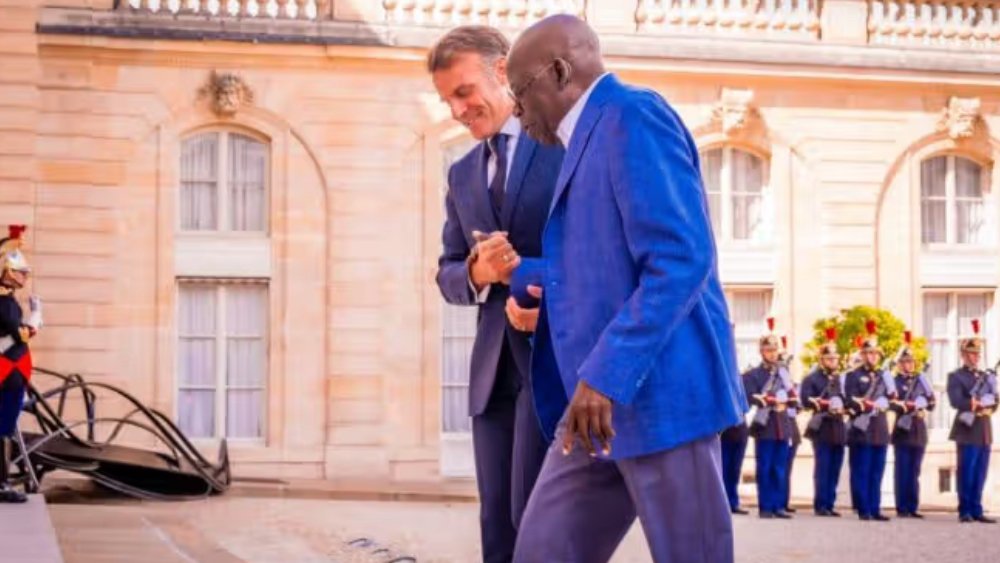
Macron’s planned visit will also serve as a reciprocal engagement following Tinubu’s state visit to France in November 2024.
During that visit, the two presidents discussed areas including finance, energy transition, solid minerals, trade and investment, communications and other sectors of mutual interest.
The discussions also produced several agreements and commitments aimed at strengthening the France Nigeria partnership.
Consequently, Macron’s planned arrival in Nigeria could provide an opportunity to assess progress on those commitments and identify additional areas where both countries can cooperate.
Trade and Investment Expected to Feature
Economic cooperation is likely to remain a major part of the discussions.
Nigeria is seeking to attract more foreign investment into productive sectors of the economy, while French companies have maintained interests in areas including infrastructure, energy, logistics, banking, agriculture and creative industries.
Furthermore, France’s development agency has maintained a significant presence in Nigeria, supporting development projects across different parts of the country.
The state visit could therefore create opportunities for new investment commitments and stronger partnerships between Nigerian and French businesses.
Energy and Infrastructure on the Agenda
Energy is another area where both countries have significant interests.
Nigeria continues to seek investment that can expand energy production, improve infrastructure and support industrial development. France, meanwhile, has continued to position its companies and financial institutions as partners in Africa’s energy transition and infrastructure development.
Therefore, discussions between Tinubu and Macron could explore opportunities for French investment in Nigeria’s energy and infrastructure sectors.
Security Cooperation Remains Important
Security is also expected to remain an important component of the bilateral relationship.
Nigeria continues to confront terrorism, kidnapping, banditry and other forms of organised crime, particularly in parts of the North and the wider West African region.
France has previously cooperated with Nigeria on counter-terrorism, maritime security, intelligence and regional stabilisation efforts.
The French government says its security and defence cooperation with Nigeria includes support for the army, navy and police, as well as areas such as maritime cybersecurity and the fight against drug trafficking.
Consequently, Macron’s visit could provide an opportunity for both governments to examine how their security partnership can evolve in response to changing threats.
Strengthening Nigeria’s Regional Role
The planned visit also comes against the background of Nigeria’s position as a major political and economic power in West Africa.
France has increasingly sought to reshape its engagement with African countries around partnerships, economic cooperation and security collaboration.
Nigeria’s strategic importance means that stronger relations with Abuja could form an important part of France’s wider engagement with the continent.
At the same time, Nigeria can use the relationship to expand its access to investment, technology and international partnerships.
Culture and Youth Could Receive Attention
Beyond government-to-government relations, France and Nigeria also maintain strong cultural connections.
Macron’s previous visit to Nigeria included engagements with young entrepreneurs and Nigeria’s creative sector, highlighting the importance of culture, innovation and youth entrepreneurship in the relationship.
Nigeria’s large and youthful population provides opportunities for cooperation in technology, creative industries, education and entrepreneurship.
Therefore, the state visit could also reinforce people-to-people relations while creating new opportunities for young Nigerians and creative businesses.
A New Phase in Nigeria France Relations
The planned visit comes as both countries seek to build what French officials have described as a more balanced and mutually beneficial relationship.
In July, France’s ambassador to Nigeria and ECOWAS, Marc Fonbaustier, announced Macron’s planned state visit and said the two presidents would assess the progress of their existing roadmap and identify new areas of cooperation.
He also described security, agriculture, democracy and governance as areas of shared interest between the two countries.
Meanwhile, Macron received Tinubu for a private dinner at the Élysée Palace in September during the Nigerian president’s working visit to France, providing another recent high-level contact between the two leaders.
What the Visit Could Deliver
Ultimately, the significance of Macron’s visit will depend on the concrete outcomes that emerge from the discussions.
New investment agreements, stronger security cooperation, expanded trade and fresh partnerships in energy, technology and infrastructure could give the relationship greater practical value.
For Nigeria, the visit presents an opportunity to showcase its investment potential while pursuing partnerships that can support economic growth and national development.
For France, deeper engagement with Nigeria provides access to one of Africa’s largest economies and an important partner in addressing regional security and development challenges.
As Macron prepares to travel to Nigeria, therefore, attention will focus not only on the symbolism of the state visit but also on the agreements, investments and areas of cooperation that could define the next phase of Nigeria France relations.