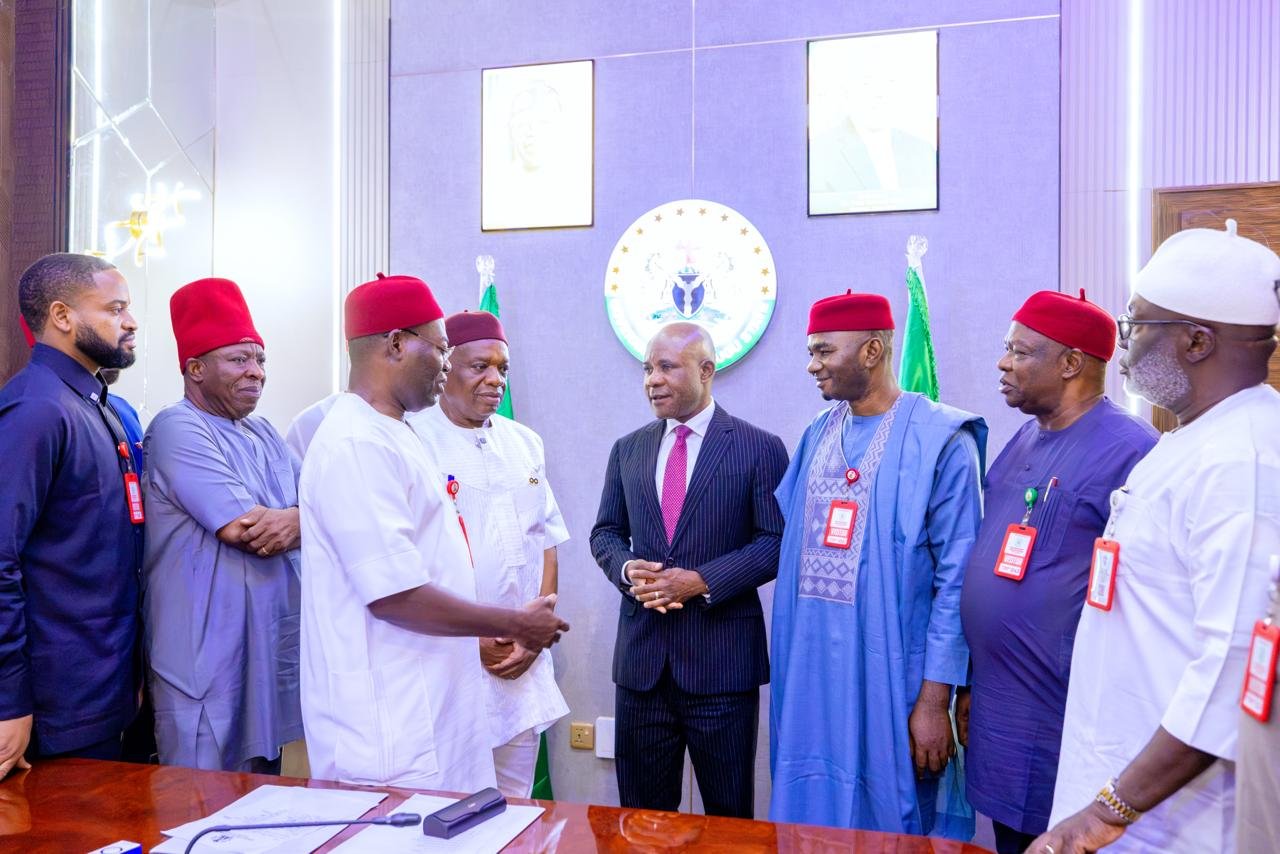
Enugu State Governor Peter Mbah has advocated increased funding for the South-East Development Commission (SEDC), urging the commission to prioritise strategic infrastructure projects, including gas pipelines and regional railway networks, to unlock the economic potential of the region.
Mbah’s position highlights the importance of sustained investment in infrastructure and regional development as the South-East seeks to strengthen industrial activity, improve transportation links and expand economic opportunities.
The governor’s call also places emphasis on the need for development institutions to move beyond broad policy commitments and focus on projects capable of addressing long-standing infrastructure gaps across the region.
Mbah Seeks Stronger Financial Support for SEDC
The South-East Development Commission was established to support development across the region through interventions addressing infrastructure, economic growth and other regional priorities.
Increased funding, according to the position advanced by Mbah, would provide the commission with greater capacity to plan and implement projects across the five South-East states.
Development initiatives often require substantial capital, particularly where projects involve transportation networks, energy infrastructure, industrial facilities and other investments with long construction timelines.
Reliable financing can help development institutions establish clear priorities, coordinate projects across state boundaries and sustain implementation beyond annual budget cycles.
However, funding must be accompanied by effective project selection, transparent procurement, proper monitoring and measurable delivery targets. These safeguards are important to ensuring that additional resources translate into practical benefits for communities and businesses.
Gas Pipeline Development as an Industrial Priority
Mbah’s emphasis on gas pipeline infrastructure reflects the role energy availability can play in supporting industrial development.
Reliable gas supply can serve as an important input for manufacturing, power generation and other commercial activities. For businesses operating in areas with limited or unreliable energy infrastructure, improved access to gas could create opportunities to reduce operating constraints and support expansion.
A regional gas pipeline network could also help connect industrial clusters and potential investment locations to energy supply infrastructure.
Nevertheless, such projects require detailed feasibility assessments, substantial capital investment, appropriate regulatory approvals and coordination among relevant public and private-sector stakeholders.
Security, maintenance, commercial viability and environmental considerations would also need to be addressed to ensure the long-term sustainability of any pipeline development.
For the SEDC, a clear framework for evaluating energy infrastructure proposals would be important in determining which projects offer the greatest potential regional benefits.
Regional Railways and Improved Connectivity
The governor’s call for regional railway development also highlights the importance of transportation infrastructure in strengthening economic integration across the South-East.
Rail networks can support the movement of passengers and freight, potentially reducing pressure on roads and improving links between commercial centres, industrial areas and markets.
For a region with established trading networks and manufacturing activities, improved rail connectivity could create additional options for moving goods and raw materials.
Regional railway development could also complement existing road infrastructure and help improve access to major transport corridors.
However, successful implementation would require careful route planning, demand assessments, land-use coordination, funding arrangements and cooperation among the relevant federal and state authorities.
The commission would also need to consider how proposed railway projects could connect with existing transport infrastructure and whether projected passenger and freight demand would justify the investment.
Regional Cooperation and Economic Integration
The South-East’s development challenges and opportunities extend beyond the boundaries of individual states. Infrastructure projects involving gas supply, rail transportation and industrial development may require coordination among several governments and institutions.
The SEDC provides a framework through which regional priorities can be identified and development interventions coordinated.
Stronger collaboration could help reduce duplication, improve project planning and encourage investment in infrastructure with benefits extending across multiple states.
Such coordination would also be important in aligning development plans with the needs of businesses, local communities and potential investors.
Clear responsibilities, realistic timelines and transparent reporting would help ensure that regional projects remain focused on agreed objectives.
Financing Must Translate Into Measurable Results
While increased funding can expand the range of projects available to a development commission, the quality of implementation remains essential.
Large infrastructure investments require rigorous planning, appropriate financing structures and consistent monitoring to manage costs and construction risks.
For the SEDC, this means identifying projects based on demonstrable needs, evaluating their economic viability and establishing measurable indicators of progress.
Public reporting on project selection, funding commitments, procurement and implementation would also help strengthen accountability.
Equally important is the need to ensure that infrastructure investments create opportunities for local businesses, improve access to markets and contribute to employment and productive economic activity.
A Long-Term Vision for South-East Development
Mbah’s advocacy for increased SEDC funding, gas pipeline infrastructure and regional railways places energy and transportation at the centre of the region’s development conversation.
The proposed priorities reflect the importance of infrastructure that can support industrial activity, improve connectivity and encourage investment across state boundaries.
Turning these priorities into completed projects will require sustained financing, cooperation among governments, careful technical planning and transparent implementation.
Ultimately, the impact of the SEDC will depend on its ability to translate its development mandate into practical outcomes for the region.
With clear priorities and effective project delivery, investments in energy and transportation infrastructure could contribute to stronger economic links, improved business conditions and broader development opportunities across the South-East.