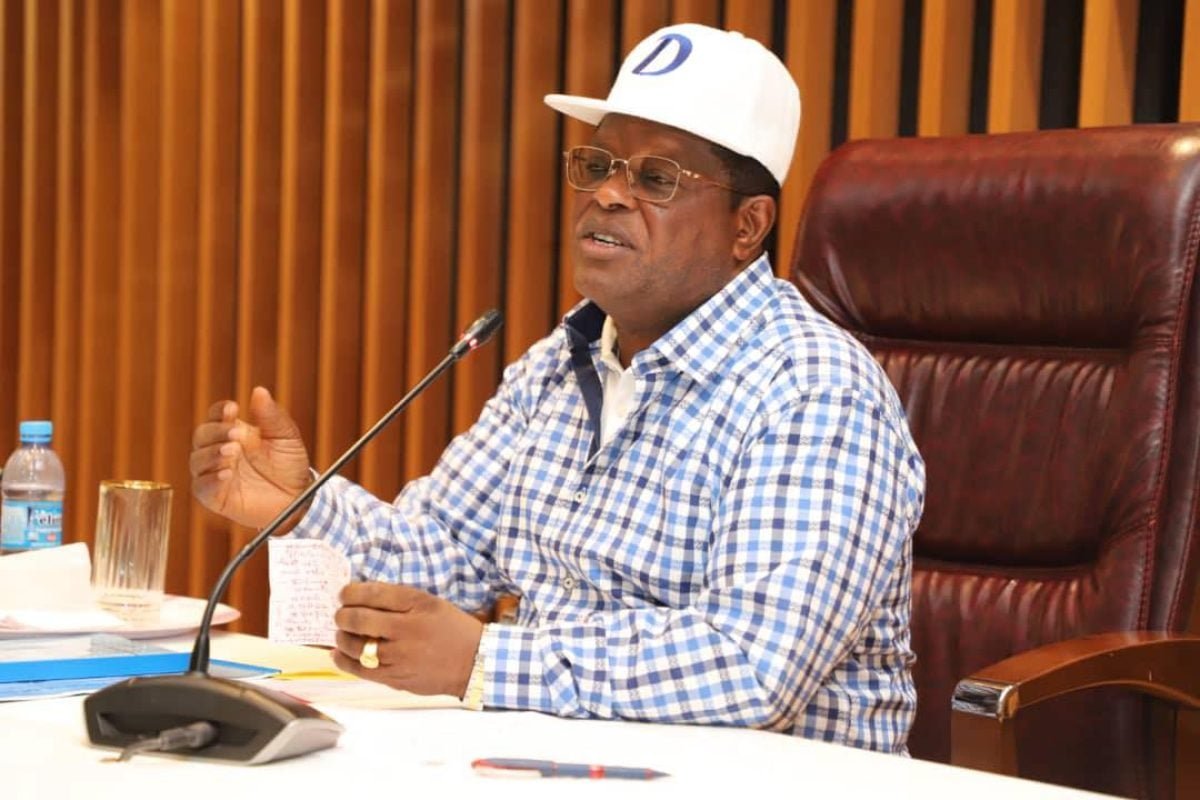
The Minister of Works, Senator David Umahi, has defended the Federal Government’s decision to divert the Ondo section of the Lagos-Calabar Coastal Highway, explaining that the original route crossed terrain containing pits more than 100 metres deep that would have significantly increased construction costs.
Umahi said the revised alignment was informed by engineering considerations, including the difficulty of constructing a highway across the affected terrain. His explanation comes amid public discussion over changes to the route of the multibillion-naira coastal road project and questions about the factors guiding its implementation.
The diversion highlights the engineering and financial challenges involved in delivering major road infrastructure across varied landscapes. It also places renewed attention on the need to balance construction costs, technical feasibility, environmental considerations and the interests of communities affected by route changes.
Original Route Presented Major Engineering Challenges
According to Umahi, the original alignment crossed areas with pits exceeding 100 metres in depth and lacked suitable sharp sand in some locations to a depth of 300 metres. He argued that these conditions would have made construction substantially more expensive than work on sections with more conventional terrain.
The minister said the ministry therefore opted for a detour and redesign to avoid the most difficult areas. He added that filling operations exceeding 10 metres in some locations, using sharp sand, were nearing completion at the time of his update.
The affected portions are Sections 4A and 4B, covering a combined 67 kilometres, including approximately 27 kilometres in Ogun State and 40 kilometres in Ondo State. The section is expected to terminate around the Ondo-Edo axis.
Route Diversion Attracts Public Scrutiny
The decision has attracted petitions and questions about the revised alignment. Umahi acknowledged the petitions and said public scrutiny was appropriate for officials responsible for public projects.
He maintained that the government had no regrets about the decisions taken in Ondo, arguing that the priority was to adopt an engineering solution that could deliver the road while avoiding unnecessary construction costs.
However, the debate highlights the importance of making the technical and financial basis for major infrastructure decisions accessible to the public. Clear explanations of route changes, revised costs and the effects on affected communities can help Nigerians assess whether adjustments serve the project’s objectives.
Balancing Cost, Durability and Public Accountability
Large highway projects require decisions about terrain, soil conditions, drainage, construction materials and the long-term stability of road foundations. Where the original alignment presents serious technical difficulties, redesign may be necessary to ensure safety and durability.
At the same time, changes to an approved route can affect communities, land use and the overall cost and distance of a project. These considerations make transparent documentation and effective oversight important throughout implementation.
For the Lagos-Calabar Coastal Highway, the central issue is whether the revised alignment can achieve the project’s transport objectives while providing value for public funds.
Umahi’s explanation places difficult terrain and construction costs at the centre of the government’s decision. The eventual assessment of the diversion will depend on the engineering evidence, the costs of the revised route and the quality of the infrastructure ultimately delivered.