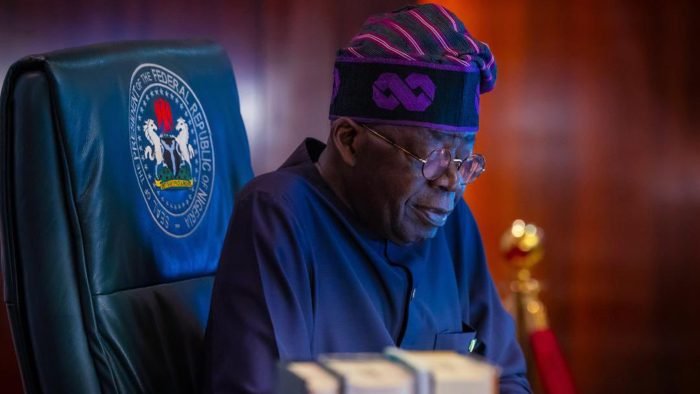
President Bola Ahmed Tinubu’s intervention in the controversy surrounding the freezing of Osun State Government accounts has renewed discussions about democratic leadership, institutional boundaries, and respect for constitutional governance in Nigeria.
The President directed the Economic and Financial Crimes Commission (EFCC) to return to court and seek the vacation of the order freezing the accounts of the Osun State Government.
The directive has attracted attention because of its implications for the relationship between federal institutions and state governments.
Furthermore, the intervention presents an opportunity to examine how democratic institutions should manage disputes while protecting public resources and maintaining constitutional balance.
Protecting Constitutional Democracy
Democratic governance depends on clear institutional responsibilities.
Furthermore, federal agencies must operate within the law while state governments must remain accountable for public finances and administrative decisions.
Constitutional boundaries protect democracy.
Institutional restraint strengthens governance.
Accountability protects public resources.
Why the Intervention Matters
The President’s directive places emphasis on resolving the matter through the appropriate judicial process.
Furthermore, asking the EFCC to return to court reinforces the principle that disputes involving government institutions should be handled through established legal procedures.
Courts provide legal oversight.
Due process protects institutions.
Judicial review strengthens accountability.
Balancing Accountability and Governance
The fight against financial crimes remains an important responsibility for Nigerian institutions.
Furthermore, efforts to investigate suspected wrongdoing must operate alongside the need to ensure that government functions and public services are not unnecessarily disrupted.
Accountability requires lawful action.
Investigations require proper procedures.
Governance requires continuity.
Federal and State Relations
Nigeria operates a federal system in which states have constitutionally recognised responsibilities.
Furthermore, actions affecting a state government’s financial operations can have wider consequences for workers, contractors, pensioners, and citizens who depend on public services.
State institutions require functional systems.
Public finances support essential services.
Federalism requires institutional balance.
A Test of Democratic Leadership
Leadership becomes particularly important when institutions face competing interests.
Furthermore, a willingness to intervene through lawful channels can demonstrate an understanding that strong governance requires both accountability and respect for institutional boundaries.
Courage requires difficult decisions.
Democracy requires restraint.
Leadership requires responsibility.
The Importance of Judicial Oversight
The President’s directive for the EFCC to return to court places the judiciary at the centre of the dispute.
Furthermore, judicial oversight provides an avenue for competing legal positions to be examined within a formal and transparent process.
Courts protect due process.
Legal review strengthens legitimacy.
Judicial oversight supports democracy.
Protecting Citizens From Institutional Disruption
Government institutions ultimately exist to serve citizens.
Furthermore, prolonged restrictions on public finances can potentially affect the delivery of salaries, infrastructure projects, healthcare, education, and other government responsibilities.
Public services require functioning institutions.
Citizens depend on government continuity.
Effective governance protects communities.
A Broader Democratic Lesson
The Osun accounts controversy also highlights the importance of institutional discipline in a democracy.
Furthermore, agencies must remain capable of investigating wrongdoing while respecting the legal rights and responsibilities of the institutions involved.
Strong institutions follow the law.
Independent agencies require clear boundaries.
Democratic systems depend on accountability.
Looking Ahead
President Tinubu’s intervention in the Osun State account-freezing matter has opened a wider conversation about democratic leadership, federalism, judicial oversight, and institutional restraint.
The directive does not remove the responsibility of public officials to account for government finances. Instead, it reinforces the importance of resolving such disputes through appropriate legal channels.
For democracy to remain strong, accountability and constitutional governance must work together.
The broader lesson is clear: effective leadership is not only about taking action. It is also about knowing when institutions must be allowed to resolve disputes through the law.
That balance between authority, accountability, and restraint remains essential to building a stronger democratic culture in Nigeria.