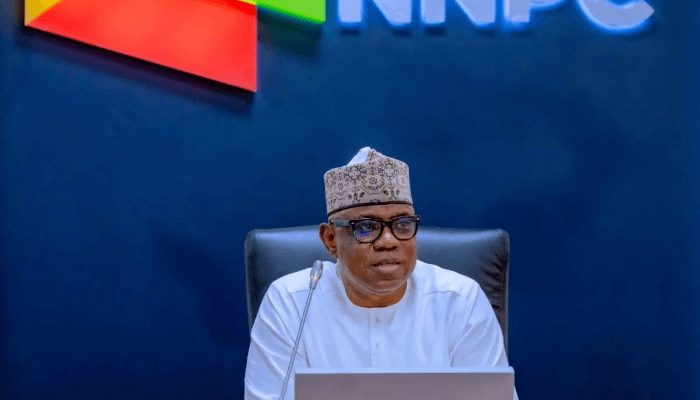
The Nigerian National Petroleum Company Limited (NNPC Ltd) has raised concerns over Nigeria’s widening energy workforce and technical skills gap, warning that the country could risk losing control of its energy future if urgent measures are not taken to address the challenge.
The warning highlights growing concerns about the availability of qualified professionals capable of supporting Nigeria’s evolving energy industry, particularly as the sector faces technological changes, changing investment patterns, and increasing demand for specialised expertise.
Energy Sector Faces Workforce Challenge
Nigeria’s energy industry requires a broad range of technical and professional skills to operate effectively.
Furthermore, the sector depends on engineers, geoscientists, technicians, data specialists, project managers, environmental experts, digital professionals, and other highly trained workers.
Without enough skilled professionals, projects can face delays.
Technical gaps can increase operating costs.
Companies may become more dependent on foreign expertise.
These challenges could weaken Nigeria’s ability to maximise the value of its energy resources.
Technical Skills Are Increasingly Important
The energy industry is undergoing significant technological changes that require workers to continuously develop new competencies.
Furthermore, modern energy operations increasingly involve automation, digital technologies, advanced data analysis, artificial intelligence, robotics, and sophisticated engineering systems.
Traditional skills remain important.
However, emerging technologies require additional expertise.
Workers must therefore receive continuous training to remain competitive as the industry changes.
Nigeria’s Energy Future at Stake
NNPC’s warning reflects concerns that Nigeria’s energy future could become increasingly dependent on external expertise if the domestic workforce does not develop quickly enough.
Furthermore, a country with significant energy resources needs a strong pool of professionals capable of designing, managing, operating, and maintaining critical infrastructure.
Local expertise can strengthen energy independence.
Domestic skills can reduce dependence on foreign professionals.
Strong technical capacity can improve project execution.
These factors can help Nigeria retain greater control over its energy development.
The Energy Transition Adds New Demands
The global energy industry is also changing as countries explore cleaner technologies and alternative energy sources.
Furthermore, Nigeria must prepare its workforce for developments involving natural gas, renewable energy, energy efficiency, hydrogen, digital systems, and other emerging areas.
Future energy professionals will need broader expertise.
Training institutions must update their programmes.
Industry players must support practical learning.
The workforce must therefore evolve alongside the energy sector.
Universities and Training Institutions Have a Role
Educational institutions remain central to addressing the skills gap.
Furthermore, universities, polytechnics, technical colleges, and specialised training centres need to ensure that their programmes reflect the practical requirements of the modern energy industry.
Academic knowledge provides a foundation.
Practical training develops competence.
Industry partnerships can provide real-world experience.
Closer collaboration between education providers and energy companies could therefore improve the quality of graduates entering the sector.
Industry Must Support Workforce Development
Energy companies also have an important role to play in developing Nigeria’s workforce.
Furthermore, companies can provide internships, apprenticeships, technical training, mentorship programmes, scholarships, and professional development opportunities.
Young professionals can gain practical experience.
Experienced workers can mentor new entrants.
Companies can identify future technical leaders.
Such investments can strengthen the industry’s long-term workforce.
Youth Employment Opportunities
Closing the energy skills gap could also create significant opportunities for Nigerian youths.
Furthermore, young Nigerians increasingly seek careers in engineering, technology, energy management, data science, environmental services, and other specialised fields.
Skills development can improve employability.
Technical education can create career opportunities.
Industry training can support entrepreneurship.
A stronger energy workforce could therefore contribute to both economic development and youth empowerment.
Reducing Dependence on Foreign Expertise
Nigeria has historically relied on international expertise in several areas of the oil and gas industry.
Furthermore, while international partnerships can provide valuable knowledge and technology, developing domestic capacity remains essential for long-term sustainability.
Local professionals understand domestic conditions.
Domestic expertise can strengthen knowledge transfer.
Nigerian companies can retain more technical value.
Building local capacity can therefore ensure that a larger share of the industry’s economic and intellectual benefits remains within the country.
Strengthening Local Content
The workforce challenge is also closely connected to Nigeria’s local-content objectives.
Furthermore, local companies require skilled professionals to compete effectively for contracts and participate meaningfully in complex energy projects.
Technical competence can improve competitiveness.
Skilled workers can support local companies.
Strong businesses can create additional employment.
Workforce development can therefore reinforce the wider goal of increasing Nigerian participation in the energy value chain.
Urgent Action Required
NNPC’s warning suggests that Nigeria cannot afford to delay efforts to address the workforce challenge.
Furthermore, developing highly skilled professionals takes time, meaning training and capacity-building programmes must begin well before critical shortages become more severe.
Government agencies can support policy development.
Industry players can provide training.
Educational institutions can modernise curricula.
Young Nigerians can pursue technical careers.
A coordinated national strategy can help close the gap.
Looking Ahead
The widening energy workforce and technical skills gap presents both a challenge and an opportunity for Nigeria.
If properly addressed, workforce development could strengthen the country’s energy independence, support local content, create jobs, improve project execution, and prepare Nigerian professionals for emerging technologies.
However, continued inaction could increase dependence on foreign expertise and weaken Nigeria’s ability to fully control and benefit from its energy resources.
Ultimately, NNPC’s warning underscores the urgent need for Nigeria to invest in technical education, professional training, industry partnerships, and emerging energy skills so that the country can build a capable workforce strong enough to shape and secure its energy future.