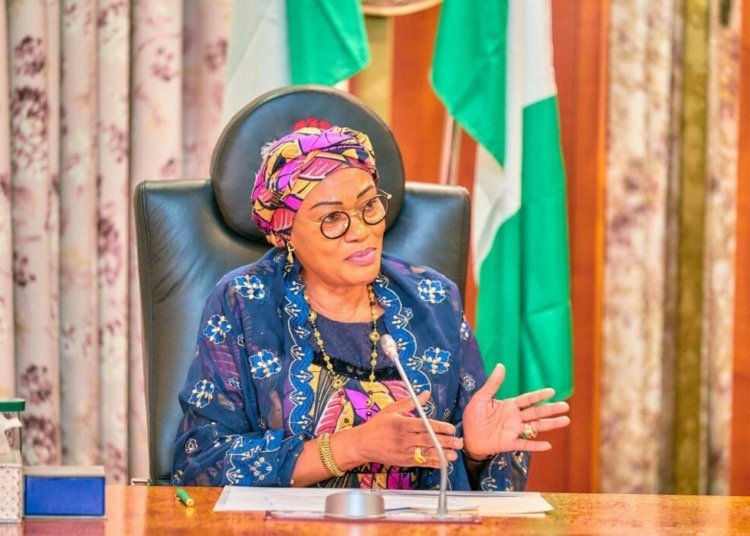
The recent public reaction to remarks by Nigeria’s First Lady, Senator Oluremi Tinubu, regarding empowering women with startup capital for a corn-selling business has once again highlighted a recurring pattern in the country’s public discourse: the tendency to judge first and reflect later.
Rather than carefully examining the broader objective of the initiative, many commentators quickly interpreted the statement as evidence of insensitivity to the economic realities facing millions of Nigerians. The criticism spread rapidly across social media and public discussions, with many questioning whether such a business could meaningfully address the country’s current economic challenges.
However, reducing the conversation to a single phrase risks overlooking the wider context of women’s economic empowerment and the practical realities of small-scale entrepreneurship. Public debates are most productive when policies and initiatives are evaluated based on their broader goals, implementation, and measurable impact rather than isolated comments.
The Purpose of Small Business Empowerment
Across Nigeria, thousands of households depend on micro and small businesses for their daily income. Street trading, food vending, agricultural produce sales, tailoring, hairdressing, and other informal enterprises provide livelihoods for millions of families.
Furthermore, many government and non-government empowerment programmes deliberately target these small-scale businesses because they often require relatively low startup capital while offering participants an opportunity to generate income quickly.
Although such businesses may appear modest, they frequently serve as the first step toward greater financial independence for many entrepreneurs.
Every Enterprise Starts Small
History shows that many successful businesses began with limited capital and simple products or services. Sustainable entrepreneurship often develops through gradual expansion rather than large initial investments.
Furthermore, supporting women with startup capital can help improve household incomes, encourage savings, and create opportunities for business growth over time. While not every beneficiary will build a large enterprise, access to even modest capital can provide an important starting point for economic participation.
The Need for Constructive Public Debate
Public officials should expect scrutiny, and citizens have every right to question government policies and public statements. Equally important, however, is ensuring that criticism remains informed, balanced, and focused on substance.
Furthermore, constructive debate allows policymakers to refine programmes while giving the public a clearer understanding of their objectives and expected outcomes. This approach strengthens democratic accountability without reducing complex issues to oversimplified narratives.
Supporting Women’s Economic Participation
Women continue to play a significant role in Nigeria’s informal economy, contributing to food distribution, retail trade, agriculture, and family welfare.
Furthermore, initiatives designed to improve women’s access to capital, skills training, and financial inclusion can strengthen local economies when implemented effectively and supported with proper monitoring, mentorship, and market access.
Empowerment programmes generally achieve greater success when financial assistance is combined with business education and continuous support.
Looking Beyond the Headlines
The discussion surrounding Senator Oluremi Tinubu’s remarks illustrates the importance of examining public initiatives within their full context.
Furthermore, while citizens should continue demanding effective policies that address unemployment, inflation, and poverty, public conversations also benefit from careful analysis rather than immediate conclusions. Balanced evaluation encourages more meaningful dialogue, better policy design, and greater public understanding of initiatives intended to improve livelihoods across the country.