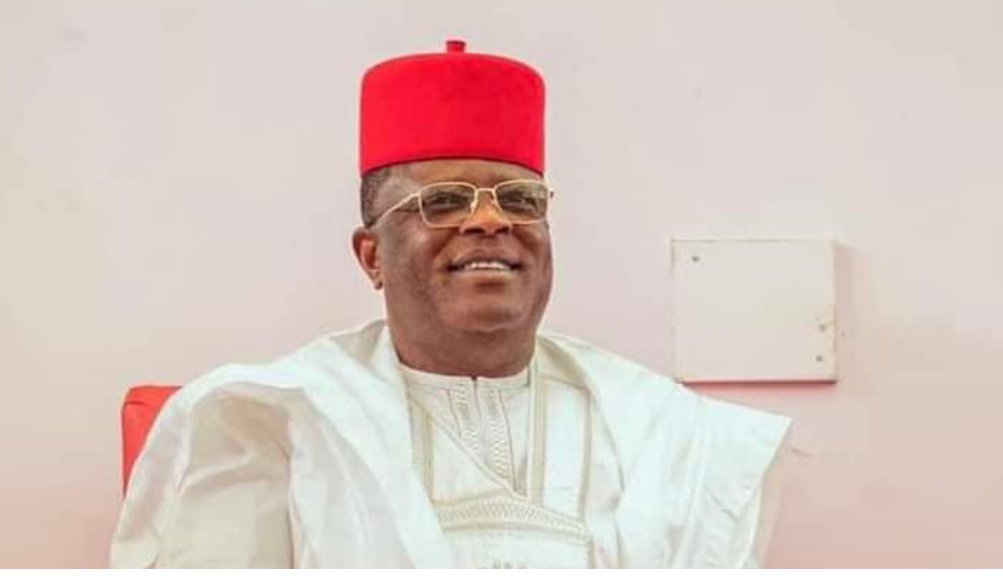
Minister of Works and former Ebonyi State Governor, Senator David Umahi, has declared that there is no “Rainbow Coalition” in Ebonyi State, insisting that the state remains aligned with the All Progressives Congress (APC) and its candidates ahead of the 2027 general elections.
Umahi made the declaration amid growing political discussions surrounding the Rainbow Coalition associated with Minister of the Federal Capital Territory, Nyesom Wike. The minister said his relationship with Wike remains cordial but stressed that any political arrangement involving Wike does not translate into a Rainbow Coalition structure in Ebonyi.
Umahi Draws the Line in Ebonyi
Speaking during an inspection of Section Two of the Calabar-Abuja Superhighway in Ado, Benue State, Umahi responded to questions about reports of a possible political arrangement involving Wike and political actors in Ebonyi.
The Works Minister said he was not aware of any Wike-backed candidates in the state and maintained that such candidates would not alter his political relationship with the FCT Minister.
According to Umahi, Wike remains his friend and brother, but the political relationship between them should not be interpreted as an endorsement of a separate coalition structure in Ebonyi.
He therefore made his position clear: there is no Rainbow Coalition in the state.
What the Rainbow Coalition Means
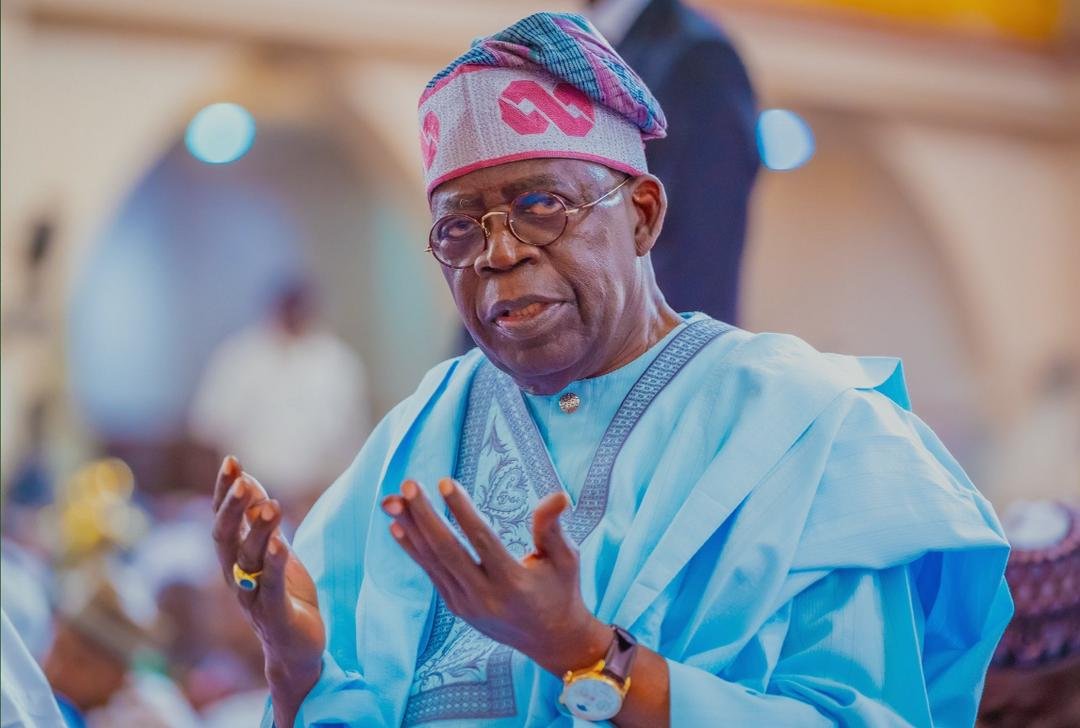
The Rainbow Coalition has emerged as a multi-party political platform associated with Wike and supporters of President Bola Tinubu ahead of the 2027 presidential election.
The arrangement involves politicians from different political backgrounds supporting Tinubu while maintaining their individual party affiliations and political interests in other contests.
However, the emergence of such cross-party arrangements has also generated political debate within the APC, particularly where state-level political interests are involved.
In Ebonyi, Umahi has now rejected the idea that a similar structure exists or has political standing in the state.
His declaration places his current political position firmly within the APC structure.
Ebonyi’s Political Alignment
Umahi, who previously served as governor of Ebonyi State, said the state remains committed to the APC and its candidates.
His comments come as political parties and political actors gradually strengthen their structures ahead of the 2027 elections.
For the former governor, maintaining a clear political structure in Ebonyi is important as the party prepares for another electoral cycle.
At the same time, Umahi acknowledged that politicians from other parties are free to campaign in the state. His objection, he said, is to political activities that could promote hate speech, disorder or instability.
Consequently, his position combines political competition with a call for campaign activities to remain peaceful.
Wike Remains Umahi’s Friend
Despite rejecting the Rainbow Coalition in Ebonyi, Umahi did not portray his relationship with Wike as hostile.
Instead, he described Wike as a friend and brother while drawing a distinction between their personal relationship and political arrangements that may emerge in different states.
This distinction is important because political relationships in Nigeria often extend across party lines, even when politicians belong to competing political organisations.
Therefore, Umahi’s comments suggest that his disagreement concerns the political structure being discussed in Ebonyi rather than his personal relationship with Wike.
Umahi Revisits His Departure From the PDP
The Works Minister also revisited his decision to leave the Peoples Democratic Party (PDP).
Umahi left the PDP in 2020 and joined the APC, a move that marked a major change in Ebonyi’s political landscape.
Explaining his continued alignment with the APC, he criticised the PDP over what he described as its failure to adequately recognise the political interests of the South-East.
Umahi argued that the region had supported PDP presidential candidates in previous elections but believed that the party failed to reciprocate that support when the South-East expected greater political recognition.
His comments therefore provide additional context for his current position within the APC.
A Call for Peaceful Political Competition
Although Umahi rejected the existence of a Rainbow Coalition in Ebonyi, he said political actors from other parties should be free to campaign.
However, he warned against hate speech and actions that could create tension.
That message places emphasis on the manner in which political competition is conducted.
As the 2027 electoral cycle approaches, campaigns are expected to involve competing interests, alliances and political messages. Therefore, the ability of political actors to compete without provoking violence or disorder will remain an important issue.
Umahi’s warning also reflects the broader concern that increasingly intense political competition can create tensions at community and grassroots levels.
Infrastructure and Politics Converge
Umahi made his political remarks while inspecting the Calabar-Abuja Superhighway project.
The inspection focused on construction progress, engineering challenges and the need to accelerate work on sections of the highway.
The minister directed contractors to continue construction while avoiding the demolition of buildings along sections where the Federal Government is reviewing the existing alignment.
He also directed project teams to explore alternative solutions around the Ado Bridge and accelerate work on additional sections.
The combination of infrastructure oversight and political commentary highlights how Umahi’s role as a federal minister intersects with his continued involvement in political discussions surrounding Ebonyi.
The 2027 Political Landscape
The debate over the Rainbow Coalition reflects the broader realignment of political relationships ahead of the 2027 elections.
National political alliances can create different dynamics at the state level, particularly when politicians maintain personal relationships across party boundaries.
In Ebonyi, however, Umahi has publicly stated that such an arrangement does not exist.
His position is significant because of his previous role as governor and his continuing influence in discussions concerning the state’s political direction. Nevertheless, his statement represents his own political position and does not independently establish the preferences of every political actor or voter in Ebonyi.
A Clear Political Messaged
Umahi’s declaration ultimately sends a straightforward political message: he does not recognise a Rainbow Coalition structure in Ebonyi and continues to identify with the APC and its candidates.
At the same time, he has acknowledged the right of other political actors to campaign in the state, provided they conduct their activities peacefully.
As preparations for 2027 continue, political alliances may evolve, new structures may emerge and existing relationships may change. For now, however, Umahi has drawn a clear distinction between his personal relationship with Wike and the political structure operating in Ebonyi.
The coming electoral period will show how these competing political interests develop at the grassroots. For Umahi, the position is already established: Ebonyi remains within the APC political framework, while the so-called Rainbow Coalition has no place in the state.