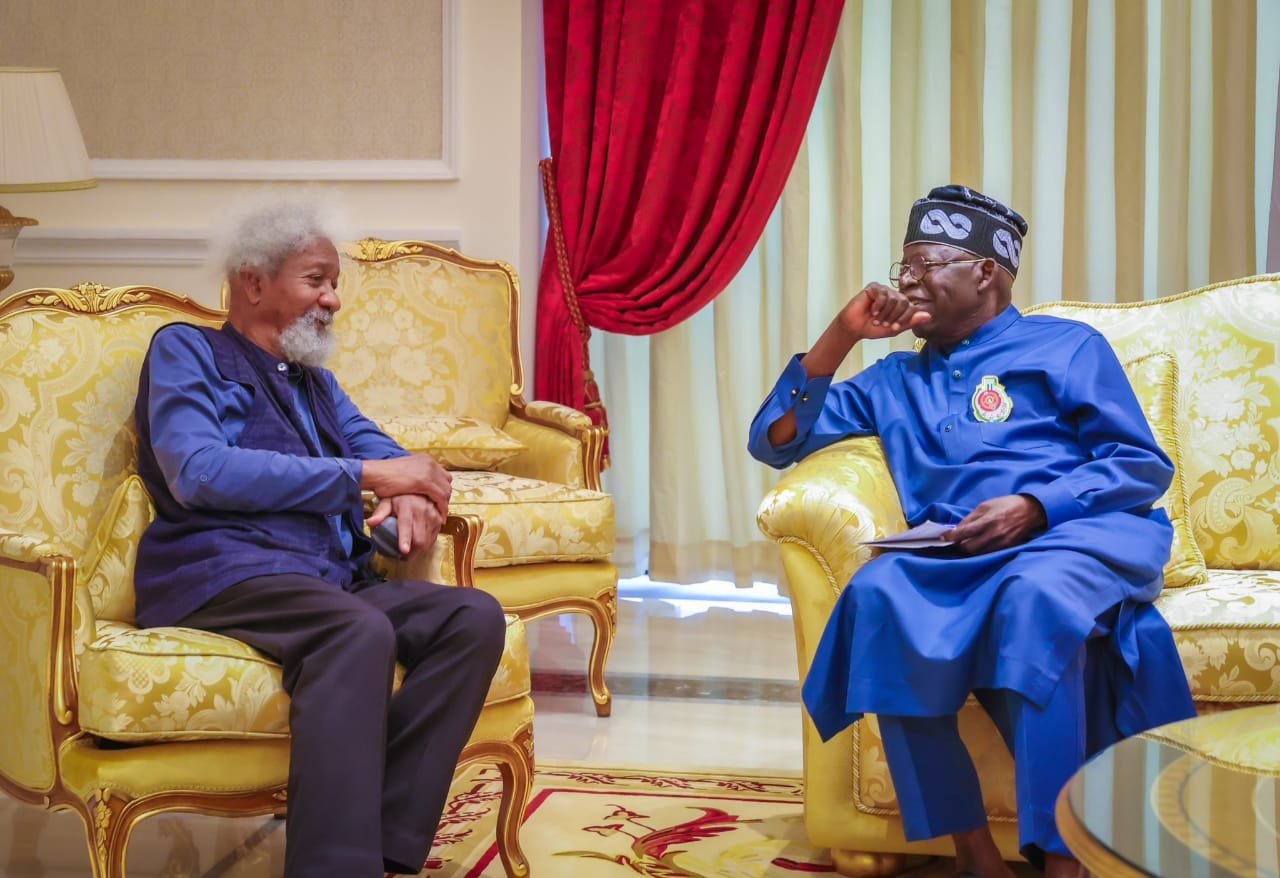
Business leader Femi Otedola has highlighted recent developments in Nigeria’s capital market, foreign exchange market and external reserves after meeting President Bola Ahmed Tinubu during a private dinner in Paris.
Otedola said the indicators reflected what he described as the growing impact of the Federal Government’s economic reforms, pointing specifically to developments in the Nigerian Exchange, the inclusion of Nigerian companies in the FTSE Russell Frontier 50 Index, increased foreign investment and stronger foreign reserves.
The meeting took place as Tinubu continued his engagements in France following an extended working visit to Europe.
Otedola Points to Market Performance
Otedola identified the performance of Nigeria’s capital market as one of the indicators he believes reflects changing investor sentiment.
He pointed to the inclusion of leading Nigerian companies in the FTSE Russell Frontier 50 Index, describing the development as evidence of increasing international visibility for Nigerian businesses.
He also highlighted what he described as historic highs on the Nigerian Exchange.
For companies listed on the exchange, stronger market performance can provide greater opportunities to attract investment and raise capital. Moreover, increased investor participation can improve the ability of businesses to finance expansion and pursue new opportunities.
However, market performance remains only one measure of broader economic conditions.
Foreign Investment Adds Another Indicator
Otedola also pointed to increased foreign direct investment as another sign of renewed interest in Nigeria’s economy.
Foreign investment can provide capital for businesses while also bringing technology, expertise and access to international markets.
For Nigeria, attracting and retaining such investment has remained an important part of efforts to strengthen economic growth.
A more predictable foreign exchange environment can also influence investor decisions because businesses need greater certainty when converting earnings, importing equipment or repatriating legitimate investment proceeds.
Consequently, Otedola linked improvements in foreign exchange conditions with the broader investment picture.
Foreign Reserves Reach About $55 Billion
Another major indicator highlighted by the business leader was Nigeria’s foreign reserves.
Otedola pointed to reserves of about $55 billion, describing the figure as evidence of stronger external financial conditions.
Foreign reserves provide a buffer that can support a country’s ability to meet external obligations and manage periods of pressure in the foreign exchange market.
Therefore, changes in reserve levels attract significant attention from investors, businesses and policymakers.
At the same time, reserve figures need to be considered alongside other economic indicators, including external debt obligations, oil revenues, foreign exchange demand and the wider balance of payments.
Exchange Rate Stability Remains Important
The foreign exchange market has been central to Nigeria’s economic reforms since the Tinubu administration introduced major changes to the country’s currency regime.
The administration has pursued greater exchange-rate unification and reduced multiple official exchange-rate windows.
These changes have significantly altered the way businesses and investors operate in the foreign exchange market.
Otedola pointed to what he described as greater stability in the market, suggesting that improved predictability could support investor confidence.
For businesses, currency stability can make it easier to plan investments, calculate costs and manage transactions involving foreign currencies.
Nevertheless, the effects of exchange-rate reforms extend across different parts of the economy, meaning their benefits and pressures can be experienced differently by businesses and households.
The Reform Debate Continues
Otedola’s comments come amid an ongoing national debate about the effects of the Federal Government’s economic reforms.
The administration has defended reforms including fuel subsidy removal and exchange-rate changes as necessary measures to address long-standing fiscal and structural problems.
Supporters of the reforms have pointed to improvements in selected macroeconomic indicators and increased investor interest.
However, the transition has also placed significant pressure on households and businesses through higher living costs, changes in fuel prices and elevated operating expenses.
Consequently, positive developments in capital markets and foreign reserves do not automatically mean that all Nigerians are experiencing the economy in the same way.
The transmission of macroeconomic gains into household incomes, employment, affordable credit and lower business costs remains an important part of the wider economic discussion.
Capital Markets and the Real Economy
The relationship between capital-market performance and everyday economic activity is particularly important.
A stronger stock market can improve access to capital for listed companies, but businesses still need to translate that capital into production, investment and employment.
Similarly, increased foreign investment can contribute to economic expansion when investments flow into productive sectors and generate wider economic activity.
Therefore, the longer-term significance of the indicators highlighted by Otedola will depend partly on how they translate into increased productive capacity.
For businesses, access to finance, infrastructure, energy, foreign exchange and predictable regulation will continue to influence investment decisions.
Otedola’s Assessment of the Tinubu Reforms
Otedola described Tinubu’s reforms as bold and forward-looking and said the developments he cited placed Nigeria on what he regarded as a sustainable growth path.
His comments represent his assessment of the administration’s economic direction.
As a major Nigerian business figure and chairman of First HoldCo, Otedola’s views add to the conversation among private-sector stakeholders about the country’s economic outlook.
However, his assessment does not eliminate the broader debate over the distribution of economic gains and the continuing challenges faced by businesses and households.
That distinction is important because macroeconomic indicators can improve while some segments of the population continue to experience financial pressure.
A Private Dinner With Wider Economic Significance
The Paris meeting also brought together two prominent figures from Nigeria’s political and business spheres.
While the dinner was private, Otedola subsequently drew attention to economic developments that he believes demonstrate progress under the current reform programme.
The interaction therefore provided an opportunity for a prominent private-sector voice to publicly discuss market performance, investment confidence and external reserves.
At the same time, the meeting comes during a period in which the administration is seeking to attract greater domestic and international investment into Nigeria.
The Next Stage Is Sustaining the Gains
The indicators highlighted by Otedola point to several areas that will remain important for Nigeria’s economic trajectory.
Capital-market depth, foreign investment, exchange-rate stability and adequate external reserves can all contribute to a more predictable economic environment.
However, sustaining these indicators will require continued attention to fiscal management, monetary policy, production, investment and the wider business environment.
The bigger challenge is also to ensure that improvements at the macroeconomic level translate into tangible economic opportunities.
That means stronger businesses, increased productive investment, employment opportunities, accessible financing and improved purchasing power.
From Indicators to Economic Impact
Otedola’s meeting with Tinubu has once again placed Nigeria’s economic reforms in the spotlight.
His focus on capital-market performance, FTSE Russell inclusion, foreign investment, exchange-rate stability and foreign reserves presents a picture of an economy showing signs of change in several important areas.
At the same time, the broader impact of those changes will ultimately depend on whether they can be sustained and translated into improvements across the wider economy.
For investors, businesses and policymakers, the coming period will therefore be about more than headline indicators. It will be about converting market confidence and macroeconomic stability into productive investment, stronger businesses and broader economic opportunities.
Otedola has expressed confidence in that direction. The continuing task for the Nigerian economy will be to turn those positive indicators into durable and widely felt economic outcomes.