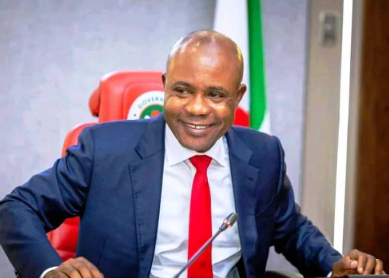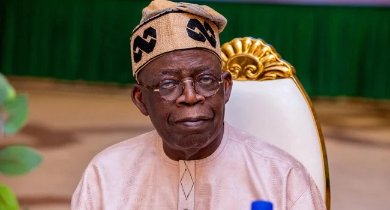
The Senior Special Assistant to President Bola Tinubu on Protocol, Issah Niniola, says the President has laid a solid foundation in the education sector to permanently address the recurring strikes that have disrupted academic activities in Nigeria’s tertiary institutions.
The statement comes as the Federal Government continues to pursue reforms aimed at tackling some of the longstanding challenges affecting universities and other higher institutions, including funding pressures, staff welfare, infrastructure deficits and disagreements between government and academic unions. In January 2026, the Federal Government and the Academic Staff Union of Universities, ASUU, unveiled a renegotiated agreement designed to address disputes that had contributed to repeated university closures.
Moving Beyond a Cycle of Disruptions
For decades, industrial disputes have repeatedly interrupted academic calendars across Nigeria’s public universities. Consequently, students have sometimes spent additional years completing programmes, while institutions have struggled to maintain predictable teaching and examination schedules.
Niniola’s argument therefore places the current administration’s education reforms within a broader effort to break that cycle.
In July 2025, Education Minister Tunji Alausa said President Tinubu had directed that ASUU and other tertiary education unions should no longer resort to strikes, with the government intending to pursue dialogue, maintain relationships with union leadership and address outstanding demands.
More importantly, the Federal Government and ASUU eventually reached a new agreement in January 2026 after a renegotiation process that had lasted for years. The agreement covers issues including conditions of service, funding, university autonomy and academic freedom.
Funding Becomes Central to the Reform Agenda
Beyond negotiations with unions, the administration has also increased its emphasis on financing tertiary education.
The Nigerian Education Loan Fund has become one of the most prominent components of that strategy. In his 2026 budget speech, President Tinubu said more than 788,000 students had received support through NELFUND in partnership with 229 tertiary institutions at that point.
The Presidency subsequently reported a higher cumulative figure in May 2026, saying NELFUND had provided more than 1.5 million students with access to higher education and disbursed over ₦282 billion.
These figures point to a broader policy objective: reducing financial barriers for students while strengthening the mechanisms through which young Nigerians can remain in school.
However, student financing alone cannot prevent industrial disputes. Stable academic calendars also depend on institutional funding, staff welfare, infrastructure and sustained communication between government and university unions.
Infrastructure Investment Adds Another Layer
Meanwhile, the administration has continued to channel resources into physical infrastructure across tertiary institutions through Tertiary Education Trust Fund interventions.
In May 2026, President Tinubu commissioned projects at several institutions, including a science complex at Nasarawa State College of Education, facilities at the Nigerian Defence Academy, a classroom complex at Hussaini Adamu Federal Polytechnic and a students’ hostel at Sa’adu Zungur University.
The President described investment in colleges of education, polytechnics and universities as an investment in the quality of Nigeria’s future workforce.
Importantly, infrastructure investment addresses another source of pressure within the tertiary system. Overcrowded classrooms, inadequate laboratories, limited accommodation and outdated academic facilities can weaken the learning environment even when institutions remain open.
Therefore, the government’s approach extends beyond preventing strikes to improving the conditions under which teaching and research take place.
A New Framework for Government and Unions
The January agreement with ASUU could prove particularly important because it emerged from a renegotiation process that began with the review of the 2009 agreement.
The new framework focuses on several issues that have historically generated tension between the government and university lecturers. These include remuneration and working conditions, funding, university autonomy and academic freedom.
At the same time, the implementation of any agreement remains critical.
A signed agreement can establish commitments, but sustained implementation determines whether those commitments translate into lasting industrial peace. Consequently, government agencies, university authorities and unions will need to maintain dialogue and monitor compliance with agreed obligations.
This is especially significant because education-sector disputes do not always arise from a single issue. Financial obligations, allowances, infrastructure, salaries, university governance and funding arrangements can intersect and create new tensions.
Keeping Students in Class
The central objective of preventing recurring strikes ultimately goes beyond government and unions.
For students, every prolonged shutdown can affect graduation timelines, professional plans and family finances. For universities, repeated disruptions can interfere with research programmes, international partnerships and institutional planning.
For employers, meanwhile, unstable academic calendars can complicate workforce planning because graduates enter the labour market at irregular intervals.
That is why the administration has increasingly presented education as part of its broader human-capital strategy.
President Tinubu has repeatedly linked tertiary education investment to Nigeria’s skills needs. During the commissioning of TETFund projects, he said tertiary institutions were central to closing the country’s skills gap and improving learning outcomes.
The Test Will Be Long-Term Stability
Niniola’s statement highlights the administration’s confidence that the foundation now being built can address one of the most persistent problems in Nigeria’s tertiary education system.
There is, however, an important distinction between laying a foundation and guaranteeing a permanent outcome. The durability of the reforms will depend on continued funding, implementation of agreements, effective engagement with academic unions and the ability of future administrations to sustain the framework.
The Presidency has pointed to the absence of a nationwide university strike as evidence of progress. In August 2026, President Tinubu said that, for the first time in a long period, Nigerian universities were operating without strikes and that students were in class.
That development provides an important measure of current stability, although maintaining it over successive academic years will be the more significant test.
From Short-Term Peace to Lasting Reform
Nigeria’s tertiary education system has spent years moving between negotiations, agreements and industrial actions. The latest reforms seek to change that pattern by combining union engagement with funding, student support, infrastructure development and institutional reform.
Niniola’s assessment therefore reflects a wider argument within the administration: that preventing another cycle of prolonged strikes requires structural solutions rather than temporary settlements.
Ultimately, the success of that approach will be measured not only by whether lecturers remain in classrooms, but by whether Nigerian universities can sustain uninterrupted academic calendars, receive predictable funding, support their staff and provide students with the quality of education needed for a changing economy.
For now, the administration has established several components of that framework. The next challenge is ensuring that the foundation remains strong enough to support long-term stability across Nigeria’s tertiary education system.