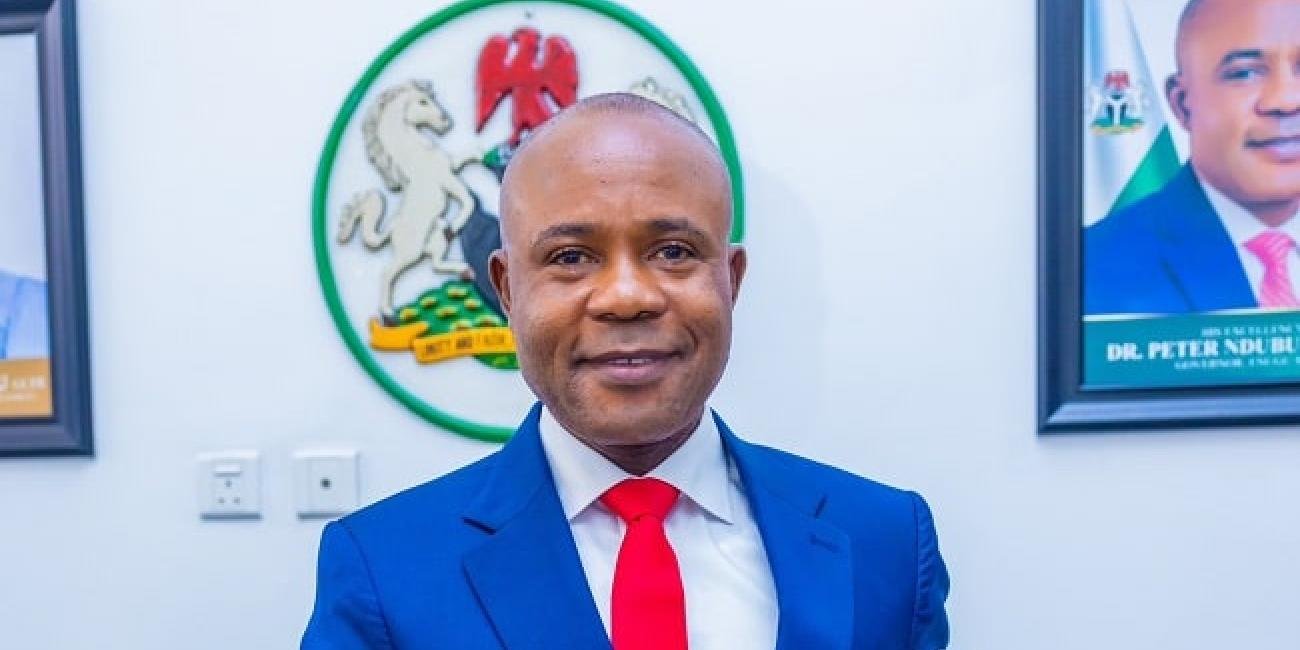
Governor Peter Mbah of Enugu State has called for financial autonomy and sustained investment in modern security infrastructure for proposed state police services, stressing that any legal framework establishing state police must balance national standards with local capability and decision-making.
The governor said creating state police would only achieve its intended objectives if the new policing system is supported by adequate funding, modern equipment, professional training, and a clear constitutional framework that promotes accountability and operational efficiency.
Furthermore, he emphasised that effective policing requires both national coordination and sufficient operational flexibility for individual states to respond to their unique security challenges.
Financial Independence Is Essential
Governor Mbah stated that financial autonomy should remain a central component of any state police structure.
Furthermore, he explained that predictable and independent funding would enable state police organisations to maintain operational effectiveness, invest in personnel, and respond promptly to emerging security threats without unnecessary financial constraints.
Stable funding strengthens security institutions.
Investment in Modern Security Infrastructure
The governor also stressed the importance of equipping future state police services with modern technology and operational resources.
Furthermore, investment in surveillance systems, communication networks, forensic capabilities, intelligence platforms, mobility assets, and digital policing tools would improve crime prevention and law enforcement efficiency.
Modern technology enhances public safety.
Balancing National Standards with Local Flexibility
According to Mbah, the proposed legal framework should establish uniform national policing standards while allowing states sufficient flexibility to address local security concerns.
Furthermore, national oversight should promote professionalism, discipline, and accountability, while state authorities retain the ability to make operational decisions based on local realities.
Balanced governance improves policing effectiveness.
Strengthening Local Security Capacity
The governor noted that security challenges often differ from one state to another.
Furthermore, empowering state police with adequate resources and local operational authority would improve intelligence gathering, community engagement, and rapid emergency response.
Local capacity strengthens public security.
Supporting Community-Based Policing
Governor Mbah emphasised that state policing should encourage stronger relationships between security agencies and local communities.
Furthermore, officers who understand local languages, culture, and community dynamics are better positioned to build public trust and prevent criminal activities before they escalate.
Community partnership improves policing outcomes.
Promoting Professionalism and Accountability
The governor maintained that operational independence must be accompanied by strong accountability mechanisms.
Furthermore, clear legal safeguards, professional recruitment standards, continuous training, and effective oversight will help ensure that state police services operate responsibly while protecting the rights of citizens.
Professional institutions inspire public confidence.
Towards a Stronger National Security Framework
Governor Peter Mbah reaffirmed that the creation of state police offers an opportunity to strengthen Nigeria’s overall security architecture.
Furthermore, by combining financial autonomy, modern security infrastructure, national standards, effective oversight, and strong local decision-making, the proposed system can improve public safety, enhance crime prevention, and contribute to a more secure and stable Nigeria.