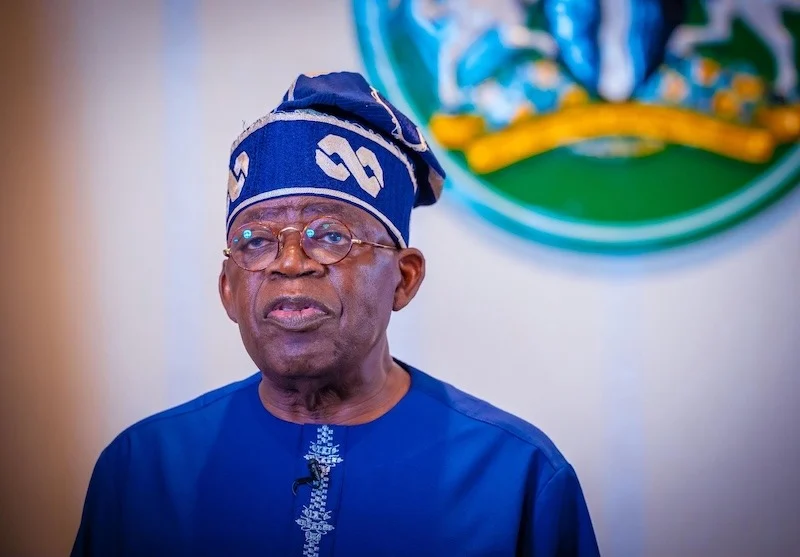
The Presidency has rejected a recent assessment by The Economist that Nigerians are dissatisfied with President Bola Tinubu, describing the publication’s conclusion as “intellectual fraud” and defending the administration’s economic overhaul.
The response came after the international publication examined Tinubu’s political position, economic reforms, security challenges and public sentiment ahead of the 2027 elections.
In a statement and accompanying article, Special Adviser to the President on Media and Public Communications, Sunday Dare, challenged the publication’s interpretation of public sentiment and argued that it failed to fully account for the structural problems the administration inherited in May 2023.
However, the Presidency’s response represents the administration’s assessment of its record, while The Economist presented a different interpretation of Nigeria’s economic and political situation.
Presidency Challenges The Economist’s Assessment
The controversy followed a The Economist article examining Tinubu’s political position and the challenges facing his administration.
The publication pointed to economic difficulties, insecurity and political competition while discussing the President’s position ahead of the 2027 election.
Dare strongly rejected that assessment.
According to the presidential aide, portraying Nigerians as broadly hostile to Tinubu oversimplifies a complex political and economic environment.
He described the publication’s interpretation as “lazy analysis” and “intellectual fraud”, arguing that it overlooked what the administration considers significant changes to Nigeria’s economic structure since 2023.
Presidency Defends Economic Overhaul
At the centre of the Presidency’s response is Tinubu’s economic reform programme.
Dare argued that the administration inherited serious structural weaknesses, including a costly fuel subsidy regime, multiple foreign exchange windows and substantial fiscal pressures.
He maintained that the government chose to address those problems rather than postpone difficult decisions.
The removal of the petrol subsidy became one of the administration’s earliest and most consequential policies.
The Presidency argues that ending the subsidy reduced pressure on public finances and created room for government to redirect resources towards other areas.
However, the policy also contributed to a sharp increase in living costs and transport expenses, making its economic and social effects a major part of public debate.
Forex Reform Also Comes Under Defence
The Presidency also defended the administration’s foreign exchange reforms.
Dare argued that the previous multiple-rate system created distortions and encouraged arbitrage, while the move towards a more unified foreign exchange market was intended to establish greater transparency.
According to the Presidency, the reforms have contributed to improved external balances and stronger investor confidence.
Nevertheless, the transition also produced significant exchange-rate adjustments and contributed to higher costs for businesses and consumers.
Therefore, the debate over the reforms involves both the government’s argument about correcting structural distortions and the immediate economic pressures experienced by households and businesses.
NELFUND and Social Interventions
The Presidency also pointed to social programmes as evidence that the administration’s policies extend beyond macroeconomic reforms.
Dare highlighted the Nigerian Education Loan Fund, arguing that the programme has enabled hundreds of thousands of students to pursue higher education with financial support.
He also cited increases in the national minimum wage, local government financial autonomy, agricultural interventions and the deployment of Compressed Natural Gas buses.
According to the Presidency, these measures demonstrate that the government is attempting to cushion the effects of economic adjustment while pursuing longer-term reforms.
The administration has also presented agricultural support, including fertiliser distribution, agricultural financing and mechanisation initiatives, as part of its efforts to strengthen food production.
Security Remains a Major Challenge
Despite the Presidency’s defence of its economic record, security remains an important part of the wider debate surrounding the administration.
Insecurity in parts of the country, particularly in northern communities affected by insurgency and banditry, continues to affect livelihoods and economic activity.
The security situation also affects economic performance because insecurity can disrupt farming, trade, transportation and investment.
Consequently, economic reforms and security outcomes are closely connected.
Improved fiscal conditions may create greater room for government intervention, but citizens ultimately experience the effects through issues such as personal safety, food availability, employment and household purchasing power.
Economic Gains Versus Household Pressure
The disagreement between the Presidency and The Economist also reflects a broader question about how economic reforms should be evaluated.
The administration has emphasised structural indicators and reforms, including changes to the foreign exchange system, public finances and energy markets.
Critics and other observers have focused more heavily on the immediate effect of those policies on household living standards.
Both dimensions matter when assessing a major economic restructuring programme.
A reform can address a longstanding structural weakness while simultaneously creating significant short-term costs.
Therefore, the longer-term assessment will depend partly on whether improved fiscal and economic conditions translate into stronger incomes, lower inflationary pressure, greater employment and improved living standards.
Political Interpretation Remains Contested
The dispute also carries a political dimension because the debate is taking place ahead of the 2027 elections.
The Economist assessed Tinubu’s political position in the context of public dissatisfaction, opposition activity and Nigeria’s electoral dynamics.
The Presidency, meanwhile, argues that its reforms and interventions are creating a different political reality from the one portrayed by external observers.
Neither position should be treated as a definitive measure of future voter behaviour.
Ultimately, electoral outcomes will depend on voters and the political process, while public assessments of the administration may continue to change as economic and security conditions evolve.
The Bigger Debate Is About Results
The disagreement has therefore moved beyond whether Nigerians are satisfied or dissatisfied with the President.
At its core, the debate concerns how Nigeria should measure the results of economic reform.
For the Presidency, the emphasis is on structural changes, fiscal sustainability, investment, education financing, agricultural support and institutional reforms.
For critics, the focus remains on whether those changes have translated quickly enough into better living conditions for ordinary Nigerians.
That distinction will remain important as the administration continues implementing its economic programme.
What Comes Next
Ultimately, the Presidency’s response demonstrates how contested the interpretation of Nigeria’s current economic and political situation remains.
The administration insists that its reforms are correcting longstanding structural weaknesses and that the process should be judged over a longer period.
At the same time, concerns about insecurity, living costs, employment and household welfare continue to shape public discussion.
The coming period will therefore provide a clearer test of whether the government’s reforms can translate structural changes into tangible improvements in everyday life.
For now, the disagreement between the Presidency and The Economist reflects two sharply different interpretations of Nigeria’s current trajectory: one centred on economic restructuring and institutional reform, and another focused more heavily on the immediate pressures facing citizens.