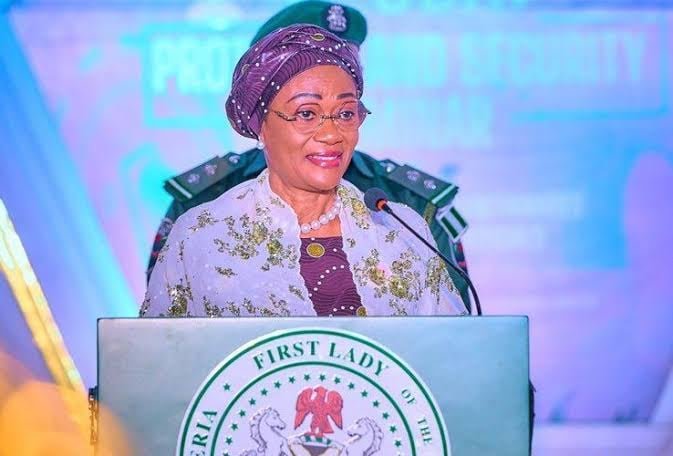
Nigeria’s First Lady, Senator Oluremi Tinubu, has assured citizens that the Food Outreach Scheme of the Renewed Hope Initiative will remain in operation, providing continuous support to disadvantaged groups across the country.
The assurance underscores the First Lady’s commitment to sustaining humanitarian interventions aimed at helping vulnerable Nigerians access food and easing some of the pressures confronting households with limited resources.
Through the Renewed Hope Initiative, the Food Outreach Scheme has become part of the First Lady’s broader humanitarian engagement, with its focus on reaching people who require additional support. Her commitment to sustaining the programme also highlights the importance of continuity in social interventions, particularly at a time when food affordability and household welfare remain major concerns for many Nigerians.
For disadvantaged families, access to food goes beyond immediate relief. It affects health, education, productivity and the ability of individuals to participate meaningfully in society. Therefore, programmes that provide assistance to vulnerable communities can play an important role in addressing immediate needs while complementing broader efforts to improve living conditions.
Renewed Commitment to Supporting Disadvantaged Nigerians
The First Lady’s assurance that the Food Outreach Scheme will continue provides an indication that the Renewed Hope Initiative intends to maintain its humanitarian support for disadvantaged groups.
Food assistance remains an important intervention in communities where families struggle to meet basic household needs. For low-income households, rising expenses can make it increasingly difficult to balance food purchases with other essential responsibilities, including healthcare, transportation, education and accommodation.
In such circumstances, targeted food support can help reduce some of the immediate pressure on families and individuals who have limited financial resources.
By committing to sustain the scheme, Senator Oluremi Tinubu is emphasising the importance of maintaining a support system that reaches people who may otherwise struggle to access basic necessities.
The assurance also draws attention to the need for humanitarian programmes to operate consistently rather than appear only during isolated occasions. Vulnerable households often require support beyond a single intervention, making continuity an important consideration in the design and implementation of social assistance initiatives.
The Renewed Hope Initiative’s Humanitarian Focus
The Renewed Hope Initiative provides a platform for the First Lady’s humanitarian and social support activities. Its Food Outreach Scheme reflects the role that targeted interventions can play in supporting communities facing economic and social difficulties.
While government policies address wider economic and development priorities, humanitarian programmes can help respond to immediate needs among groups that require additional assistance.
Food outreach is particularly relevant because food security affects several aspects of human development. When families have difficulty accessing adequate food, the consequences can extend to children’s wellbeing, educational participation, household stability and general health.
Consequently, sustained food assistance can offer temporary relief while drawing attention to the wider importance of policies that improve food availability, affordability and household purchasing power.
The First Lady’s commitment to continuing the scheme therefore reinforces the importance of maintaining humanitarian support alongside broader national development efforts.
Addressing the Challenges Facing Vulnerable Households
Food affordability remains an important issue for Nigerian households, particularly those with limited or irregular incomes. Families facing financial pressure often have to make difficult decisions about how to distribute available resources among food, healthcare, education and other basic needs.
These pressures can affect older people, persons with disabilities, unemployed individuals, low-income families and other disadvantaged groups.
For such households, food outreach programmes can provide meaningful assistance by helping to address immediate nutritional needs and reducing some of the financial burden associated with daily living.
However, the impact of humanitarian support depends partly on how effectively programmes identify and reach their intended beneficiaries. Transparent selection processes, appropriate distribution arrangements and regular assessment can help ensure that assistance reaches people who need it most.
Sustaining the Food Outreach Scheme will therefore require continued attention to the needs of vulnerable communities and the practical arrangements necessary to deliver support effectively.
Why Continuity Matters in Social Intervention
One of the most important aspects of the First Lady’s assurance is the emphasis on continuity.
Humanitarian programmes can provide immediate relief, but their wider value depends on whether they remain responsive to the changing needs of beneficiaries. A one-time intervention may offer temporary assistance, while a sustained programme can provide a more dependable channel of support.
Continuity also helps organisations build stronger relationships with communities and understand the challenges affecting different groups.
As social and economic conditions change, regular engagement can help identify areas where additional assistance may be required. It can also improve the ability of programme administrators to assess whether interventions are achieving their intended objectives.
For the Renewed Hope Initiative, sustaining the Food Outreach Scheme presents an opportunity to strengthen its humanitarian presence and maintain attention on disadvantaged Nigerians.
At the same time, long-term social progress requires interventions that complement broader efforts to expand employment, improve household incomes, strengthen agricultural production and increase access to essential services.
The Role of Humanitarian Support in National Development
Nigeria’s development priorities extend beyond economic growth figures and infrastructure projects. They also include improving the living conditions of citizens, reducing vulnerability and ensuring that disadvantaged groups are not excluded from opportunities for progress.
Humanitarian interventions contribute to this objective by addressing immediate challenges that can prevent individuals and families from meeting their basic needs.
Food assistance, in particular, can help protect vulnerable households from some of the consequences of economic hardship. It can also complement wider efforts by government institutions, development organisations and community groups to improve social welfare.
Nevertheless, food outreach should form part of a broader approach to addressing poverty and food insecurity. Sustainable improvements will also depend on stronger livelihoods, productive agriculture, effective social protection and economic opportunities that enable families to support themselves.
The continuation of the Renewed Hope Initiative’s Food Outreach Scheme therefore represents one aspect of the wider responsibility to improve the welfare of Nigerians.
Sustaining Support Across the Country
The First Lady’s assurance sends a message of continuity to disadvantaged groups who depend on humanitarian assistance. It also places renewed attention on the importance of reaching communities across the country rather than concentrating support in a limited number of locations.
Nigeria’s diverse population presents different social and economic challenges across its communities. Consequently, effective outreach requires an understanding of local circumstances and the needs of the people programmes intend to support.
As the Renewed Hope Initiative continues its Food Outreach Scheme, the consistency of its interventions, the reach of its distribution efforts and the ability to support intended beneficiaries will remain important measures of its impact.
Ultimately, Senator Oluremi Tinubu’s commitment to sustaining the programme reinforces the importance of humanitarian support in addressing immediate hardship. For vulnerable Nigerians, the continuation of food assistance could provide an important source of relief, while the broader goal remains building an economy and social support system in which more households can meet their basic needs with greater security and dignity.