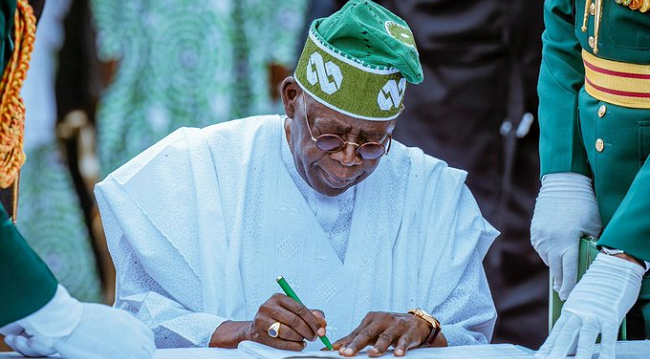
President Bola Ahmed Tinubu has paid tribute to the Sultan of Sokoto, His Eminence Muhammad Sa’ad Abubakar III, on the 20th anniversary of his ascension to the throne, recognising his longstanding contributions to traditional leadership, religious guidance and national unity.
The milestone marks two decades since Sultan Abubakar assumed one of Nigeria’s most prominent traditional institutions, a position that carries considerable religious, cultural and historical significance.
Over the years, the Sultan has remained an influential figure in conversations surrounding peaceful coexistence, interfaith relations and the responsibilities of traditional institutions in addressing national challenges.
President Tinubu’s tribute highlights the importance of the Sultanate in Nigeria’s traditional leadership structure and acknowledges the role of respected traditional rulers in promoting dialogue, stability and cooperation among communities.
Two Decades of Leadership at the Sokoto Sultanate
The Sultan of Sokoto occupies a significant position in Nigeria’s traditional and religious landscape. Beyond his responsibilities as the traditional ruler of the Sokoto Caliphate, the Sultan serves as the President-General of the Nigerian Supreme Council for Islamic Affairs (NSCIA), giving him an important platform in national religious affairs.
Since ascending the throne in 2006, Sultan Muhammad Sa’ad Abubakar III has remained a prominent voice in discussions concerning religious harmony, national development and the relationship between different communities.
His position places him at the intersection of traditional authority, religious leadership and public engagement. Consequently, his contributions often extend beyond the immediate responsibilities of the Sokoto traditional institution.
The 20th anniversary therefore provides an opportunity to reflect on the significance of the Sultanate and the responsibilities that come with leading an institution deeply connected to Nigeria’s history and cultural identity.
Tinubu Recognises the Sultan’s Contributions to National Unity
President Tinubu’s tribute draws attention to the role the Sultan has played in promoting unity and peaceful coexistence in a country characterised by considerable religious, ethnic and cultural diversity.
Nigeria’s diversity remains one of its defining features, but it also requires continuous efforts to strengthen understanding and cooperation among different groups.
Traditional and religious leaders can contribute to this process by encouraging dialogue, addressing misunderstandings and using their influence to promote peaceful relationships within their communities.
The Sultan’s national standing gives his interventions considerable visibility, particularly on issues affecting religious communities and the wider society.
In a country where tensions can sometimes emerge around religious, political and communal differences, constructive engagement among influential leaders remains important.
However, national unity requires participation beyond traditional institutions. Government authorities, civil society organisations, community leaders and ordinary citizens must also contribute to building trust and strengthening peaceful relationships.
The Importance of Traditional Institutions in Modern Nigeria
Although Nigeria operates a constitutional democratic system, traditional institutions continue to play important roles in community leadership and social development.
Traditional rulers often serve as links between communities and government authorities. Their familiarity with local concerns can help them communicate development needs, encourage participation in public programmes and support efforts to resolve disputes.
They also contribute to preserving cultural heritage, promoting social values and maintaining connections between generations.
In many communities, traditional institutions remain important platforms for consultation and conflict resolution. Their influence can support government efforts to address local challenges, particularly where community acceptance and cooperation are necessary.
The Sultanate of Sokoto holds a particularly important place in this structure because of its historical significance and religious influence.
The anniversary of Sultan Abubakar’s ascension therefore also highlights the continuing relevance of traditional leadership in a modern democratic society.
Religious Leadership and Interfaith Relations
Religious leadership remains an important part of Nigeria’s social and cultural environment. With citizens belonging to different faith traditions, maintaining respectful relationships requires sustained dialogue and responsible public engagement.
The Sultan has occupied a prominent position in national Islamic affairs, while his public role has also placed him within broader conversations about interfaith understanding and peaceful coexistence.
Such engagement is particularly important when communities face misunderstandings or tensions that could undermine social stability.
Religious leaders can help promote messages of tolerance, mutual respect and peaceful conduct, while encouraging their followers to reject violence and discrimination.
Nevertheless, interfaith harmony requires consistent commitment from leaders and institutions across religious communities. It also depends on the protection of citizens’ rights and the fair treatment of people regardless of their religious affiliations.
The Sultan’s anniversary provides an opportunity to recognise the importance of these responsibilities and the contribution religious institutions can make to national cohesion.
The Sultanate’s Historical and Cultural Significance
The Sokoto Sultanate carries a deep historical legacy within Nigeria. Its origins are closely associated with the Sokoto Caliphate, established in the nineteenth century under the leadership of Usman dan Fodio.
Over generations, the institution has remained an important centre of traditional authority and Islamic scholarship in northern Nigeria.
The Sultan’s position therefore represents more than a ceremonial title. It connects contemporary leadership with a historical institution whose influence has shaped religious, cultural and social life across generations.
Maintaining that legacy requires balancing established traditions with the changing expectations of modern society.
Traditional rulers must continue to engage with contemporary challenges involving education, security, social development and economic opportunities while preserving the cultural values associated with their institutions.
For the Sokoto Sultanate, the 20th anniversary of Sultan Abubakar’s ascension marks an important moment in that continuing responsibility.
Looking Ahead After 20 Years on the Throne
President Tinubu’s tribute to Sultan Muhammad Sa’ad Abubakar III recognises a significant milestone in Nigeria’s traditional leadership landscape.
Two decades on the throne provide an opportunity to reflect on the responsibilities of traditional authority and the influence respected institutions can have on national conversations.
As Nigeria continues to address challenges involving insecurity, economic development, social cohesion and religious relations, traditional and religious leaders remain important stakeholders in encouraging dialogue and community participation.
The effectiveness of their contributions, however, depends on continued engagement with citizens and cooperation with institutions working to address the country’s challenges.
Ultimately, the Sultan’s 20th anniversary is not only a celebration of his ascension but also a reminder of the enduring place of traditional institutions in Nigeria’s cultural and social development.
Tinubu’s tribute brings attention to the importance of leadership that promotes peaceful coexistence, preserves historical heritage and encourages cooperation across communities as the country continues its journey towards greater unity and development.