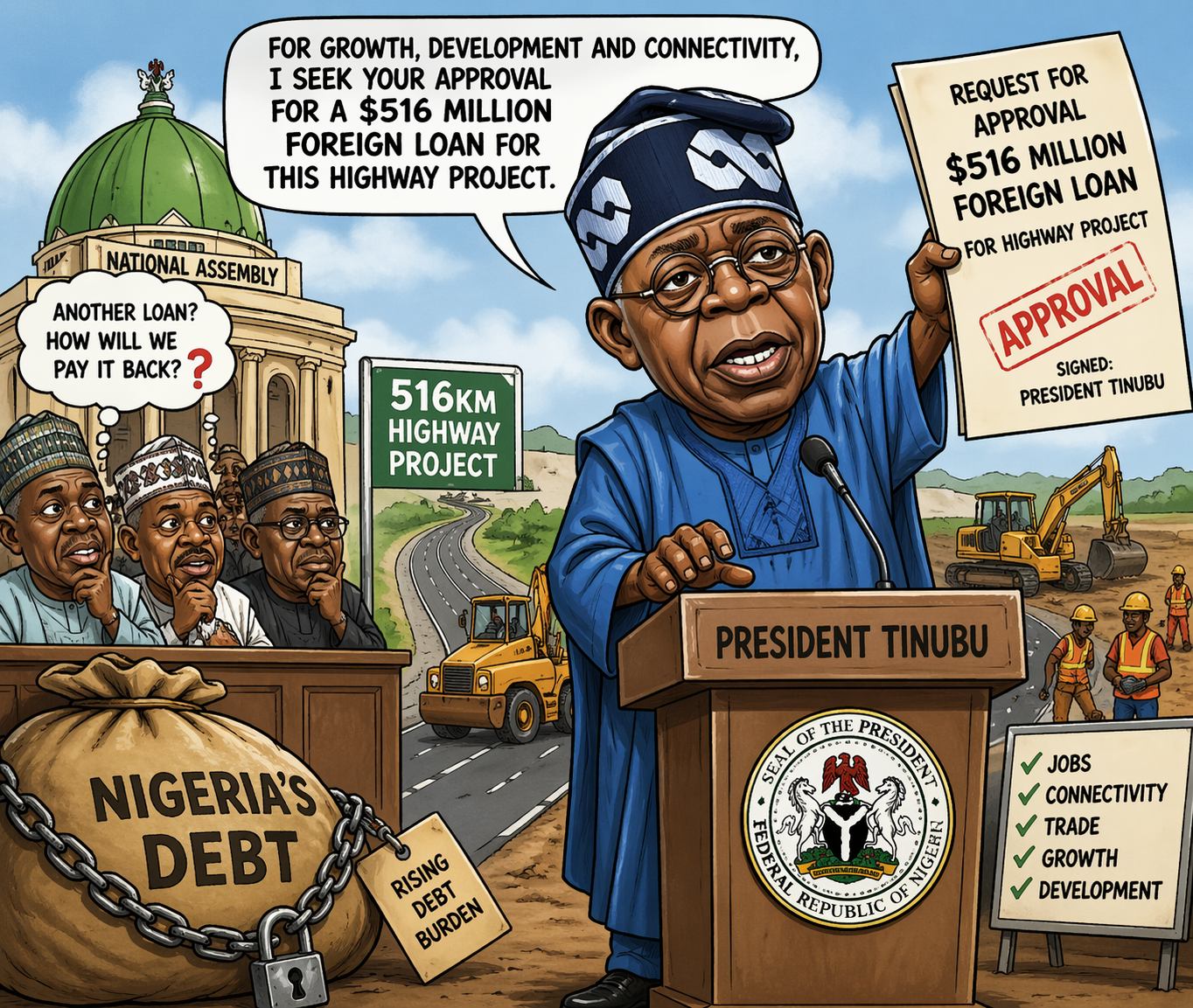
The recent request by Bola Ahmed Tinubu for a $516 million foreign loan has sparked intense debate. However, beyond the noise, a clearer narrative emerges. This move reflects a calculated effort to reposition Nigeria’s infrastructure for long-term growth.
At its core, the proposed highway project represents more than just a road. Instead, it signals a commitment to economic expansion, regional connectivity, and national integration. While critics focus on borrowing, supporters highlight the urgent need to invest in infrastructure that drives productivity.
Why Infrastructure Cannot Wait
Nigeria faces a significant infrastructure gap. Therefore, delaying critical projects only deepens economic challenges. Tinubu’s approach recognizes this reality. Rather than postponing development, he chooses to act decisively.
Modern highways do more than move vehicles. They facilitate trade, reduce transportation costs, and attract investment. Consequently, the proposed project could unlock new economic corridors and stimulate local industries.
Moreover, improved roads enhance national unity. They connect rural communities to urban markets. They also create opportunities for businesses to expand beyond regional limits.
Balancing Debt with Development
Admittedly, concerns about rising debt deserve attention. However, not all borrowing carries the same weight. Strategic borrowing, especially for infrastructure, often yields long-term returns.
Bola Ahmed Tinubu request aligns with this principle. Instead of funding recurrent expenses, the loan targets a capital project with measurable benefits. As a result, the investment has the potential to generate revenue, create jobs, and strengthen economic resilience.
Furthermore, many developing economies rely on external financing to accelerate growth. Nigeria, therefore, does not stand alone in this approach. The key lies in execution and accountability.
Economic Benefits That Extend Beyond Roads
The proposed highway project promises multiple economic advantages. First, it will likely create thousands of jobs during construction. This directly supports households and boosts local economies.
Second, better roads reduce travel time and logistics costs. Businesses can transport goods faster and more efficiently. Consequently, prices may stabilize, benefiting consumers.
Third, infrastructure development often attracts foreign investment. Investors prefer regions with reliable transport networks. Therefore, this project could position Nigeria as a more competitive destination.
Leadership Under Pressure
Despite these potential benefits, Bola Tinubu faces strong criticism. Many citizens worry about economic hardship and rising living costs. These concerns remain valid. However, leadership often requires making difficult decisions during challenging times.
Tinubu’s strategy reflects a long-term vision. While short-term discomfort may occur, the broader goal focuses on sustainable growth. Importantly, avoiding investment could lead to deeper stagnation.
In addition, the administration has emphasized transparency and oversight. This commitment aims to ensure that borrowed funds deliver tangible results.
Shifting the Narrative
Public discourse often frames borrowing as inherently negative. However, this perspective overlooks context. When managed properly, debt can serve as a tool for transformation.
Tinubu’s highway proposal fits within a broader development agenda. It seeks to modernize infrastructure, strengthen economic capacity, and improve national competitiveness. Therefore, the conversation should move beyond fear toward informed evaluation.
A Defining Moment for Nigeria’s Future
Ultimately, this controversy highlights a critical choice. Nigeria can either invest boldly in its future or remain constrained by existing limitations. Tinubu has chosen the path of action.
While debates will continue, the success of this initiative will depend on implementation. If executed effectively, the project could reshape economic opportunities across the country.
In conclusion, the $516 million loan request should not be viewed solely through the lens of debt. Instead, it should be understood as part of a broader vision for growth, connectivity, and national progress.